By Alex Cooper, Managing Editor, The Avalanche Journal
The 2026 International Snow Science Workshop in Whistler, B.C., has come and gone, but it will be a while to fully digest everything I experienced over the course of the week. With hundreds of presentations and posters to take in, I have come home with a long list of papers to follow-up on in the Montana State University online library. On the technical side, there were presentations that looked at the latest research on avalanche formation and others on developments in snowpack modelling. On the more practical end, I was struck by presentations that looked at how to incorporate all this new technology into different operations.
Of course, there was also daily panel discussions that explored AI, explosives, ice & alpine climbing, and big line riding. The social aspect was also a highlight and I enjoyed making connections from around the world. There was some great storytelling at the live recording of The Avalanche Hour podcast (available now where you get your podcasts from) and the closing banquet, where we heard stories from legends of Whistler Blackcomb’s past.
What follows is a selection of photos from the week focusing on Canadian contributors. Click on the top-right corner of the images to see the full size.
Photos are by me, unless indicated. If you have any photos you’d like to share in this gallery, please email them to acooper@avalancheassociation.ca.
Stay tuned to the Fall 2026 issue of The Avalanche Journal for more coverage of ISSW 2026.
Day 1, Monday, Sept. 28
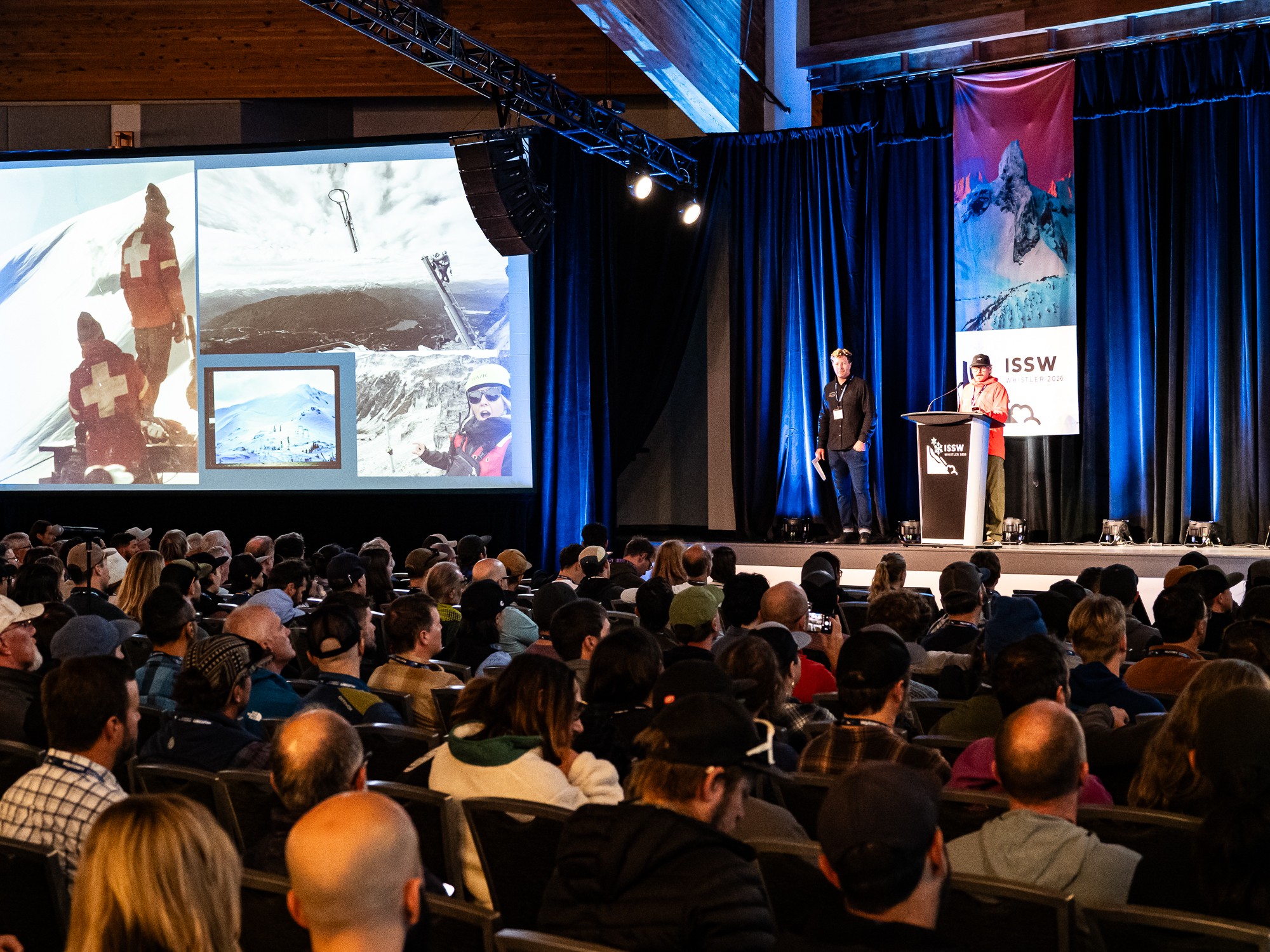
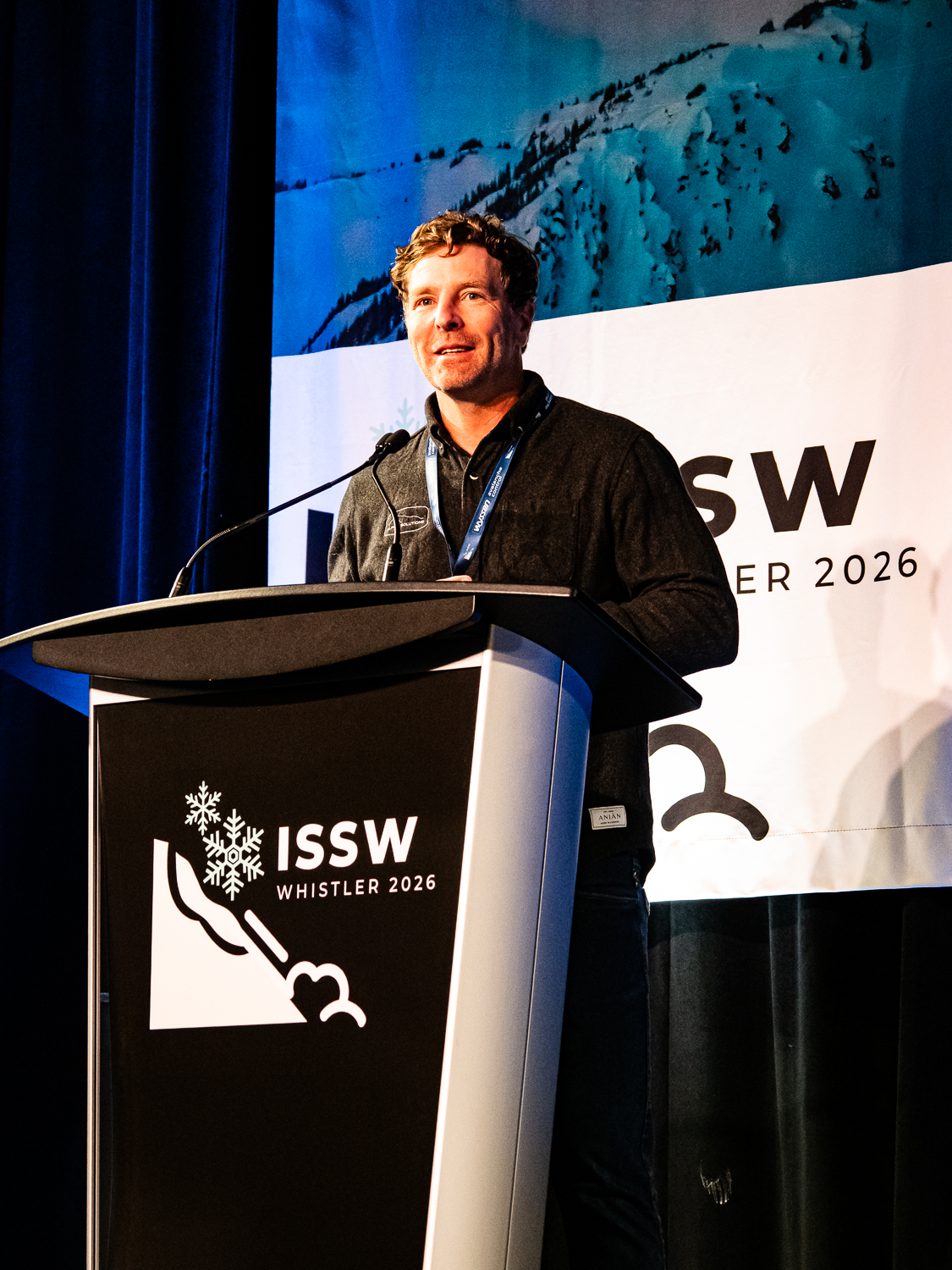
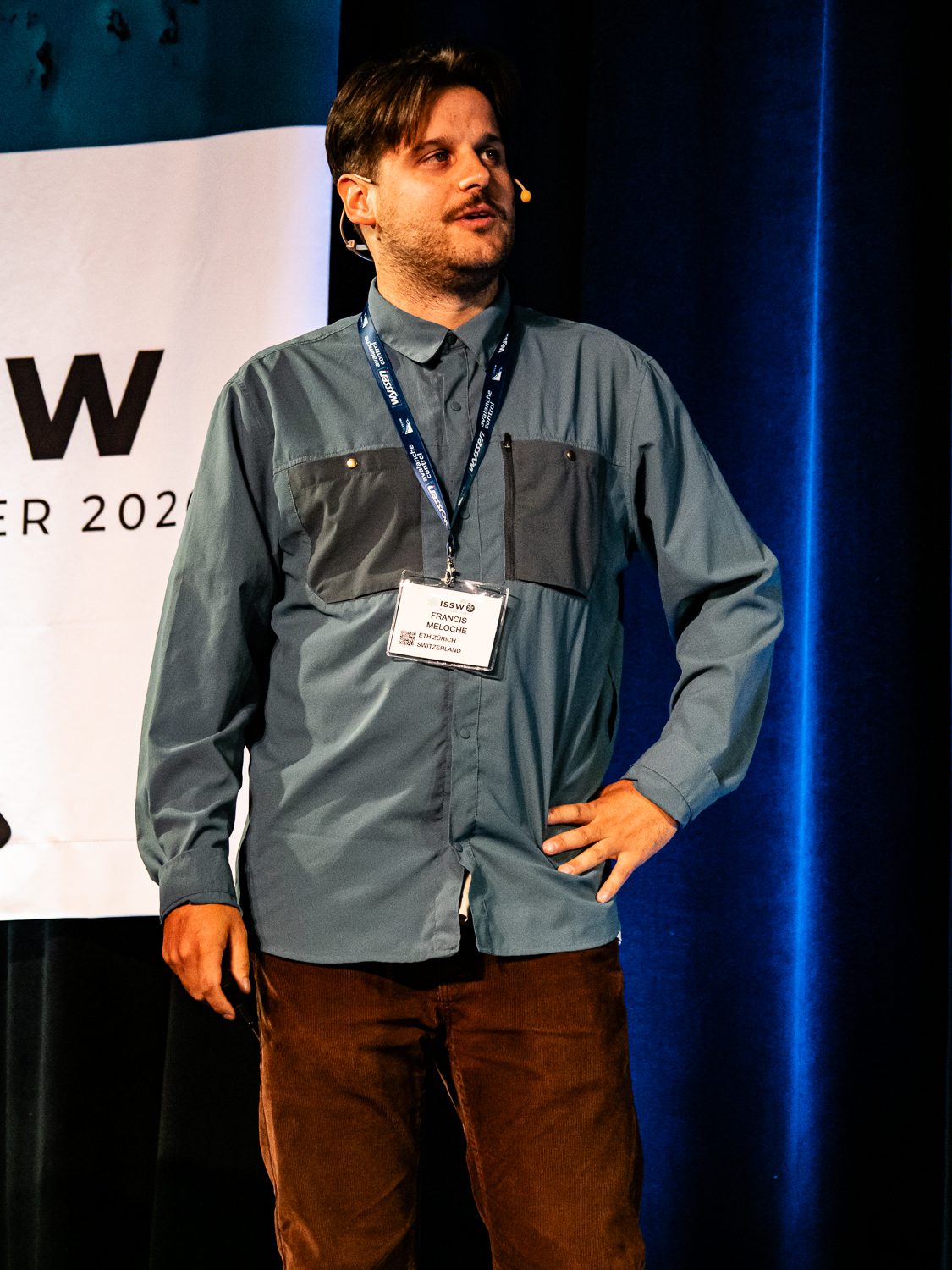
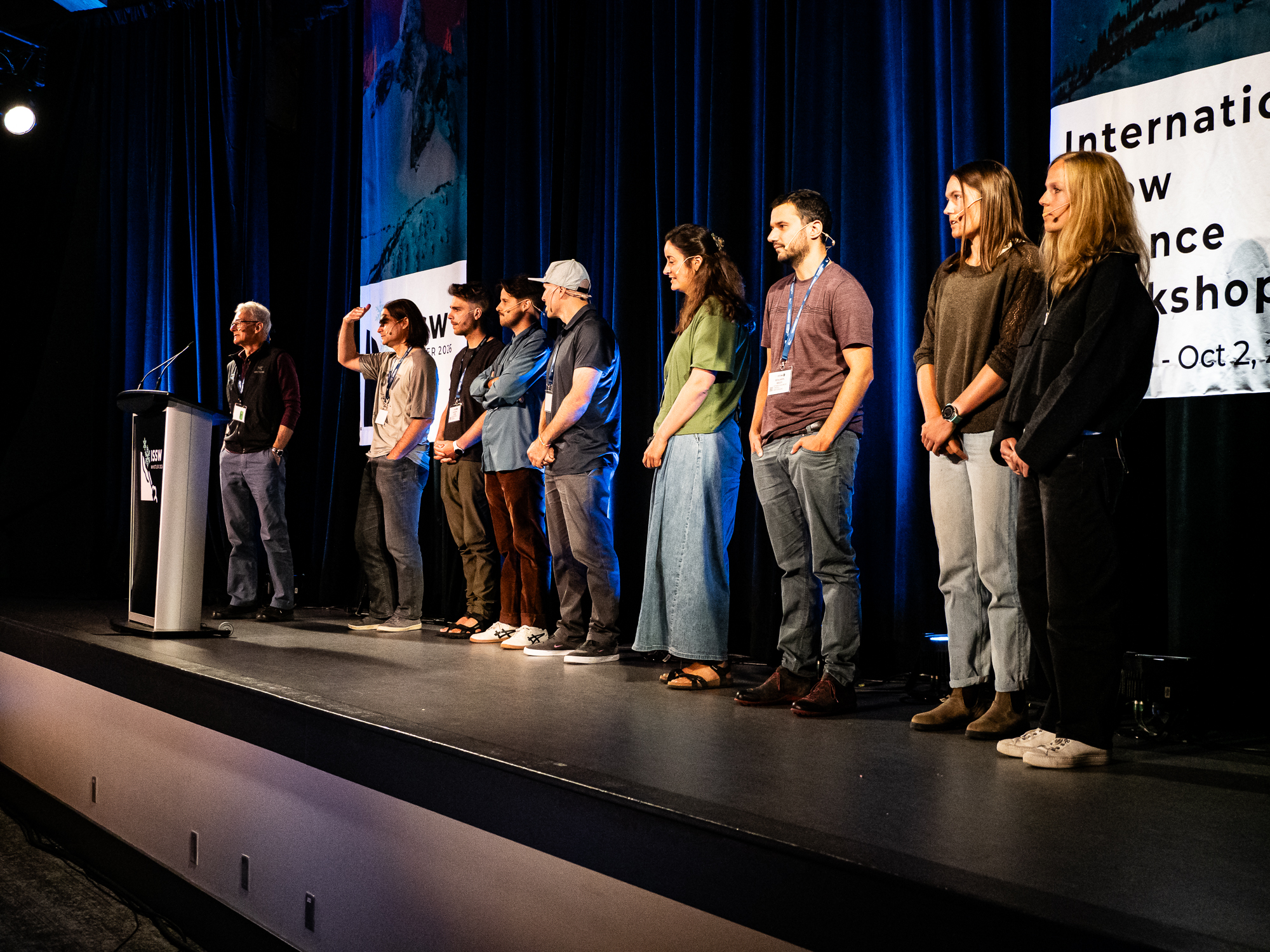
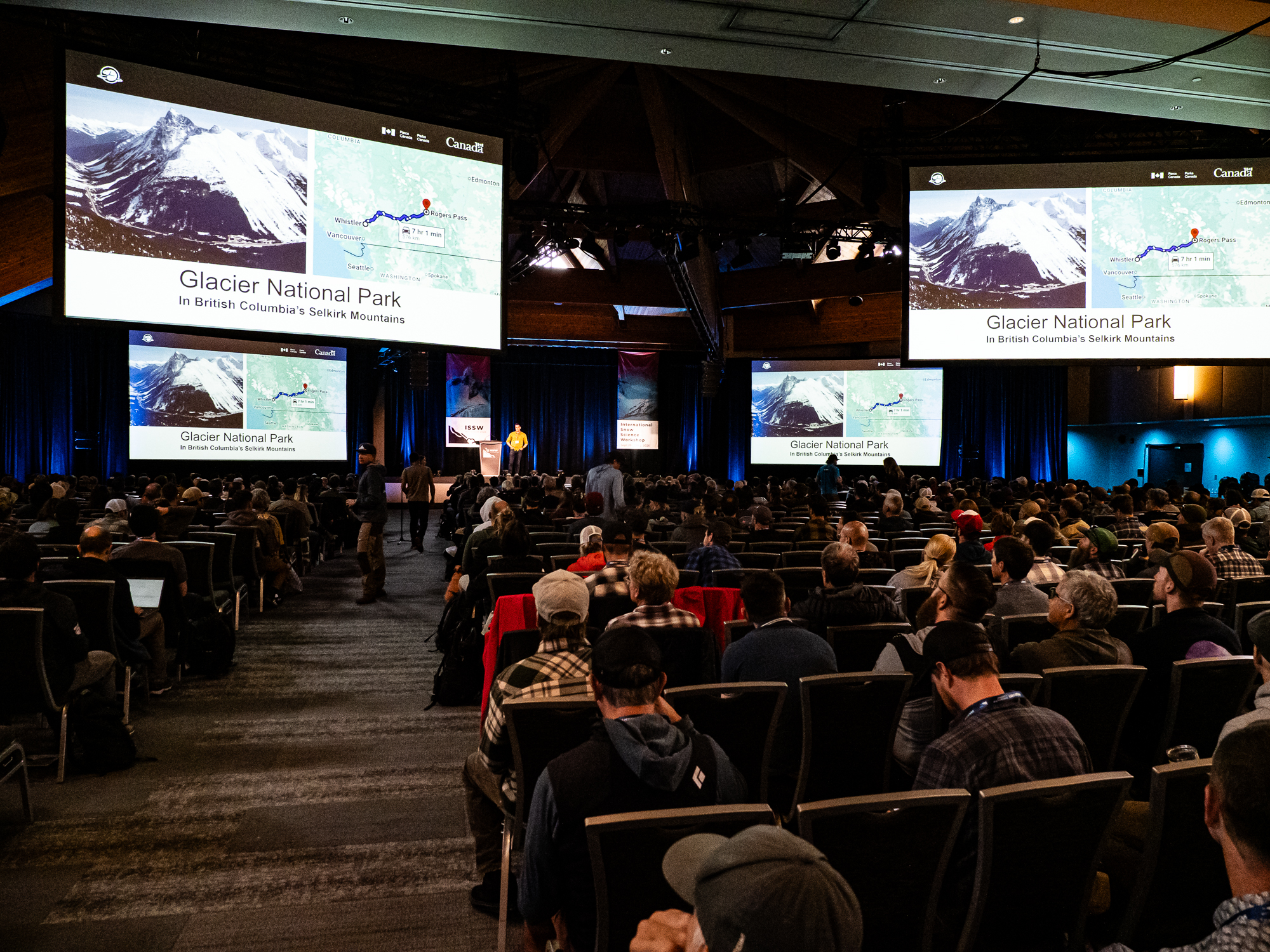
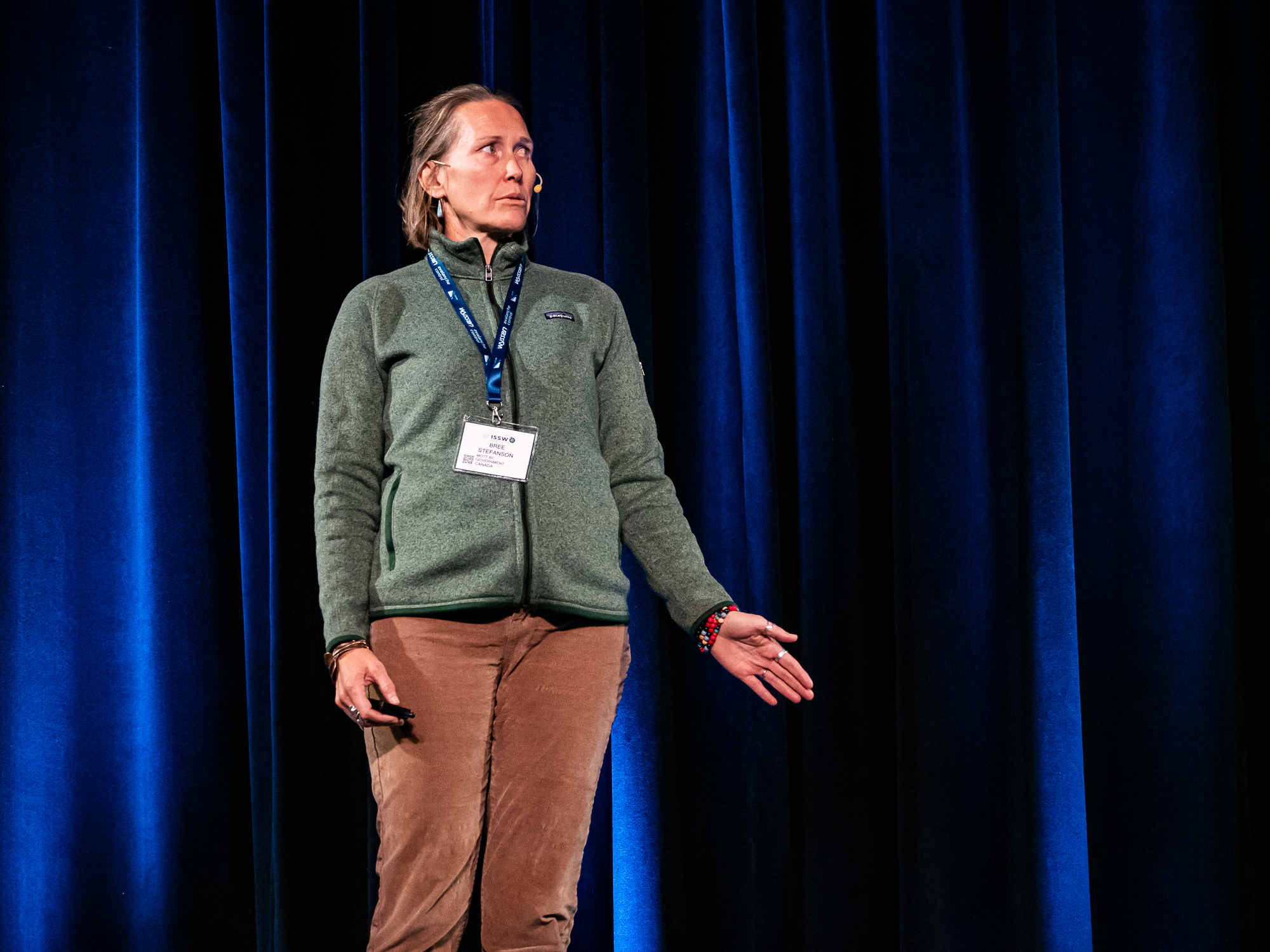
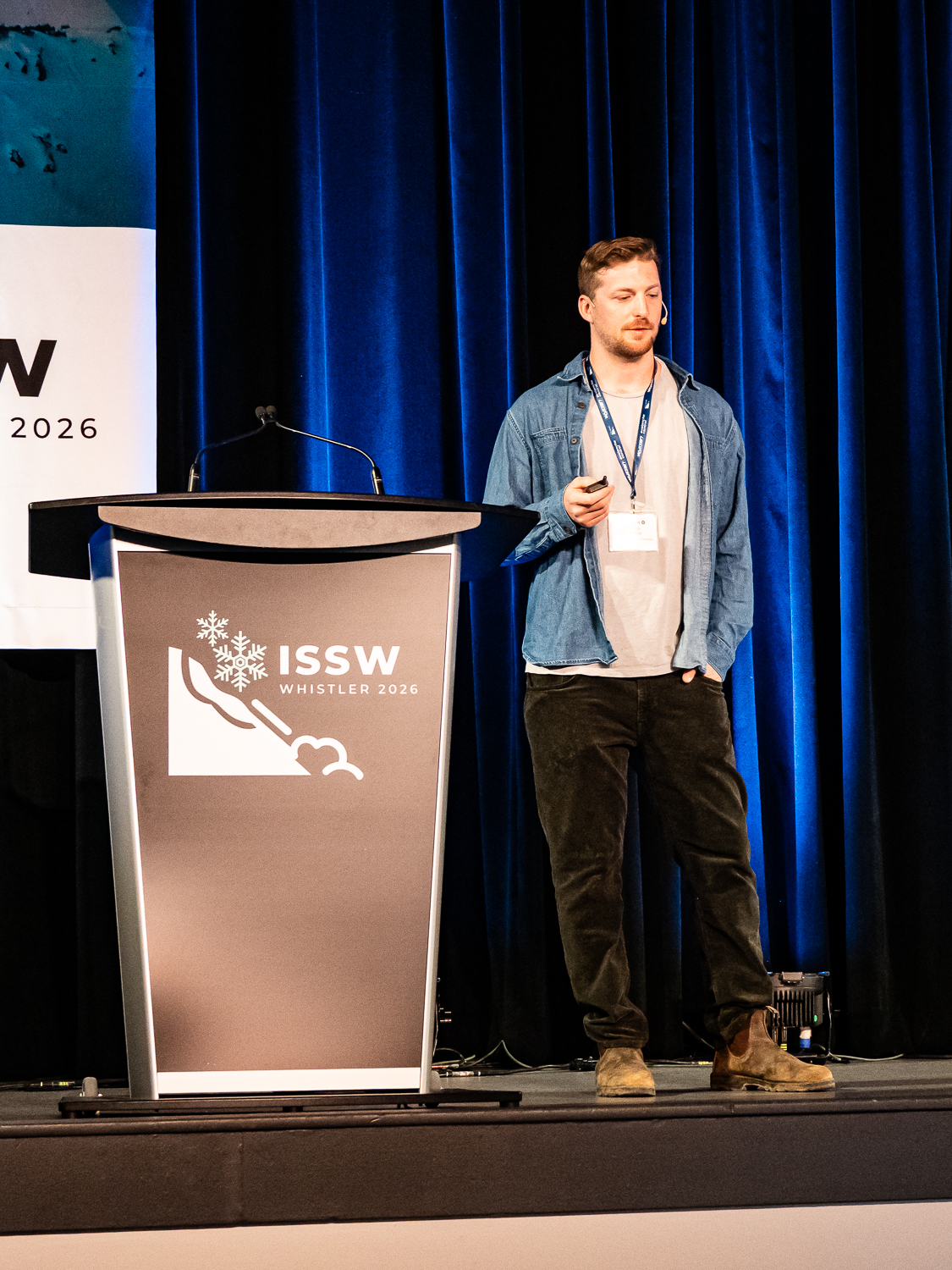
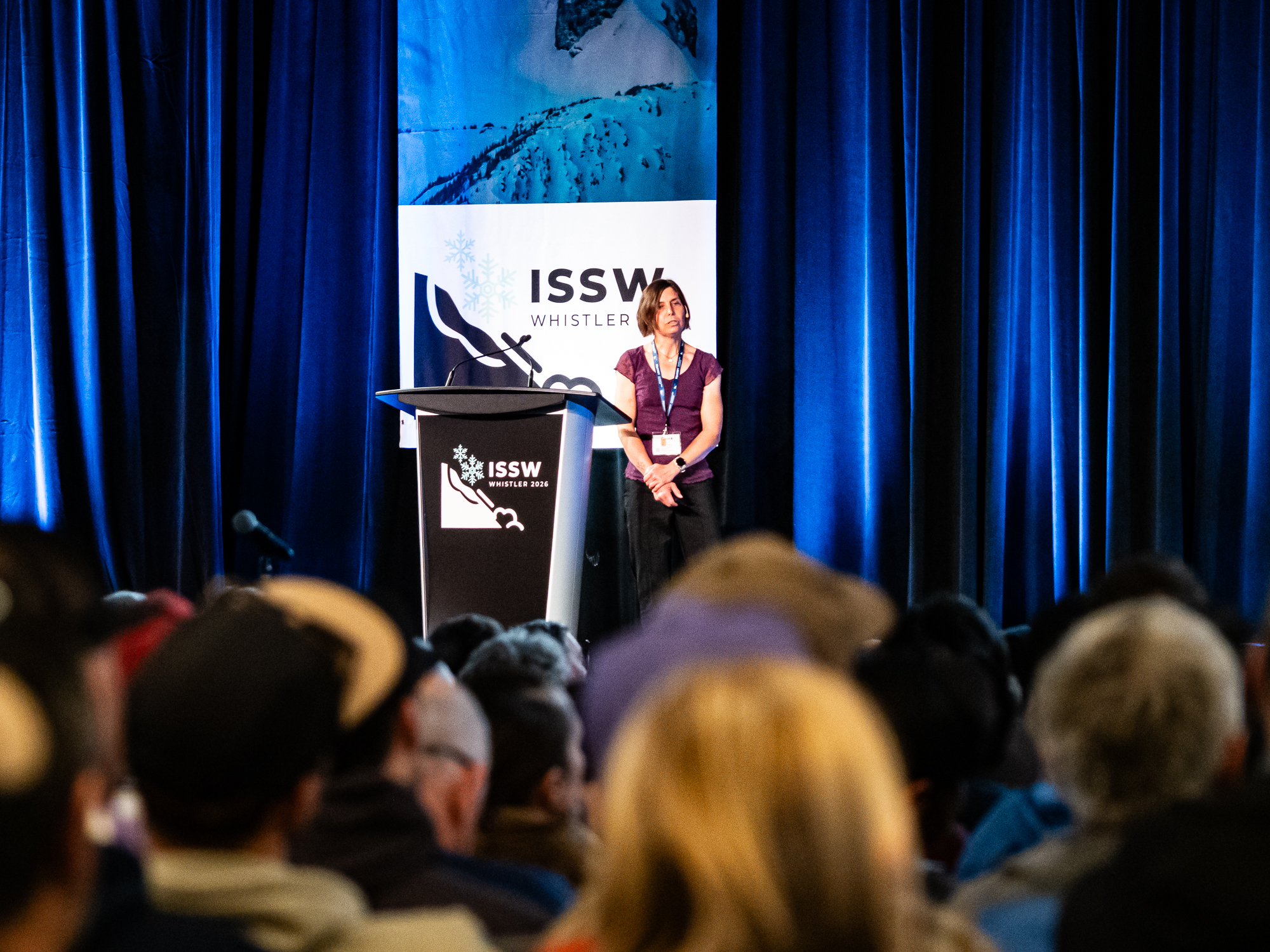
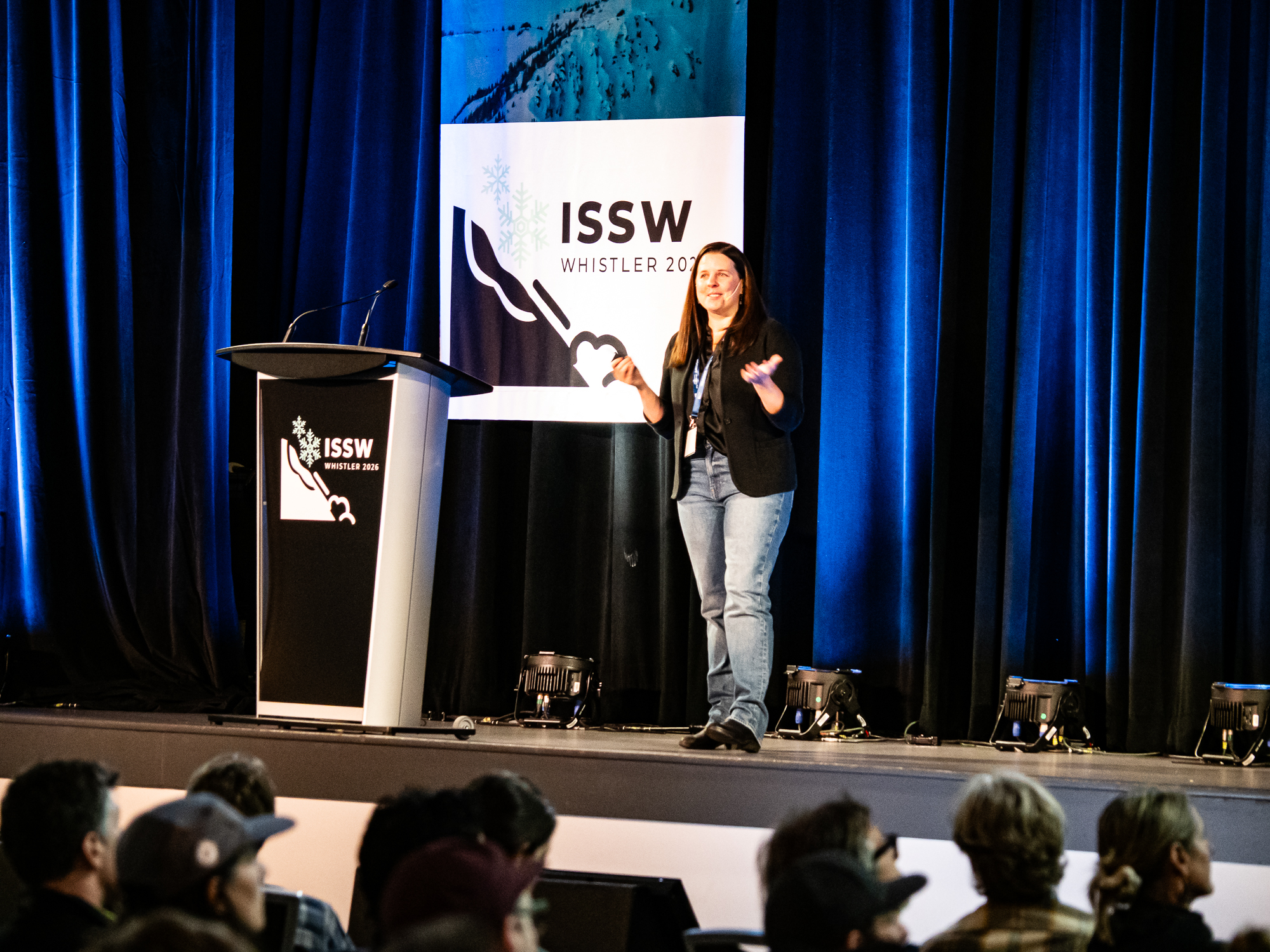
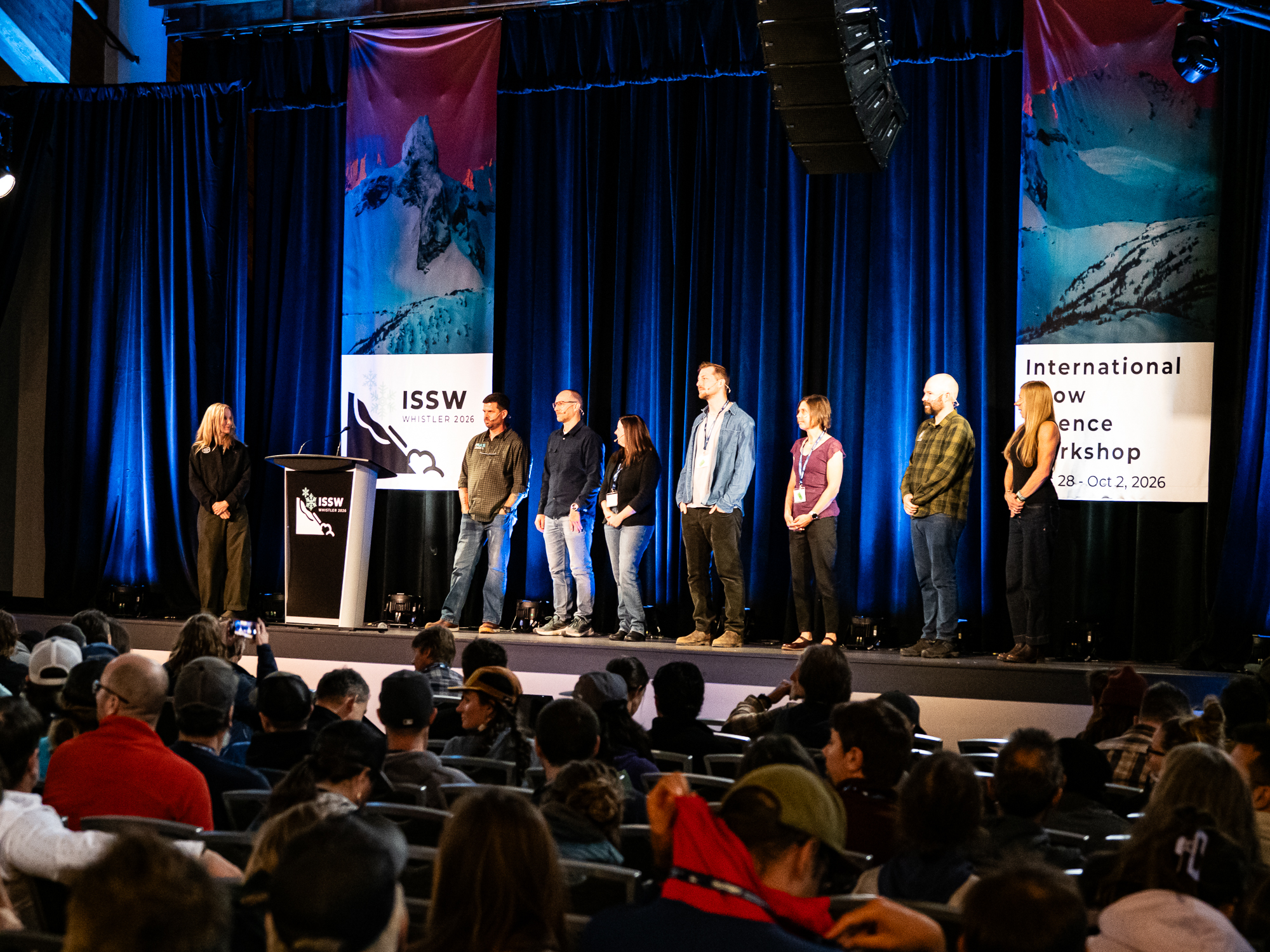
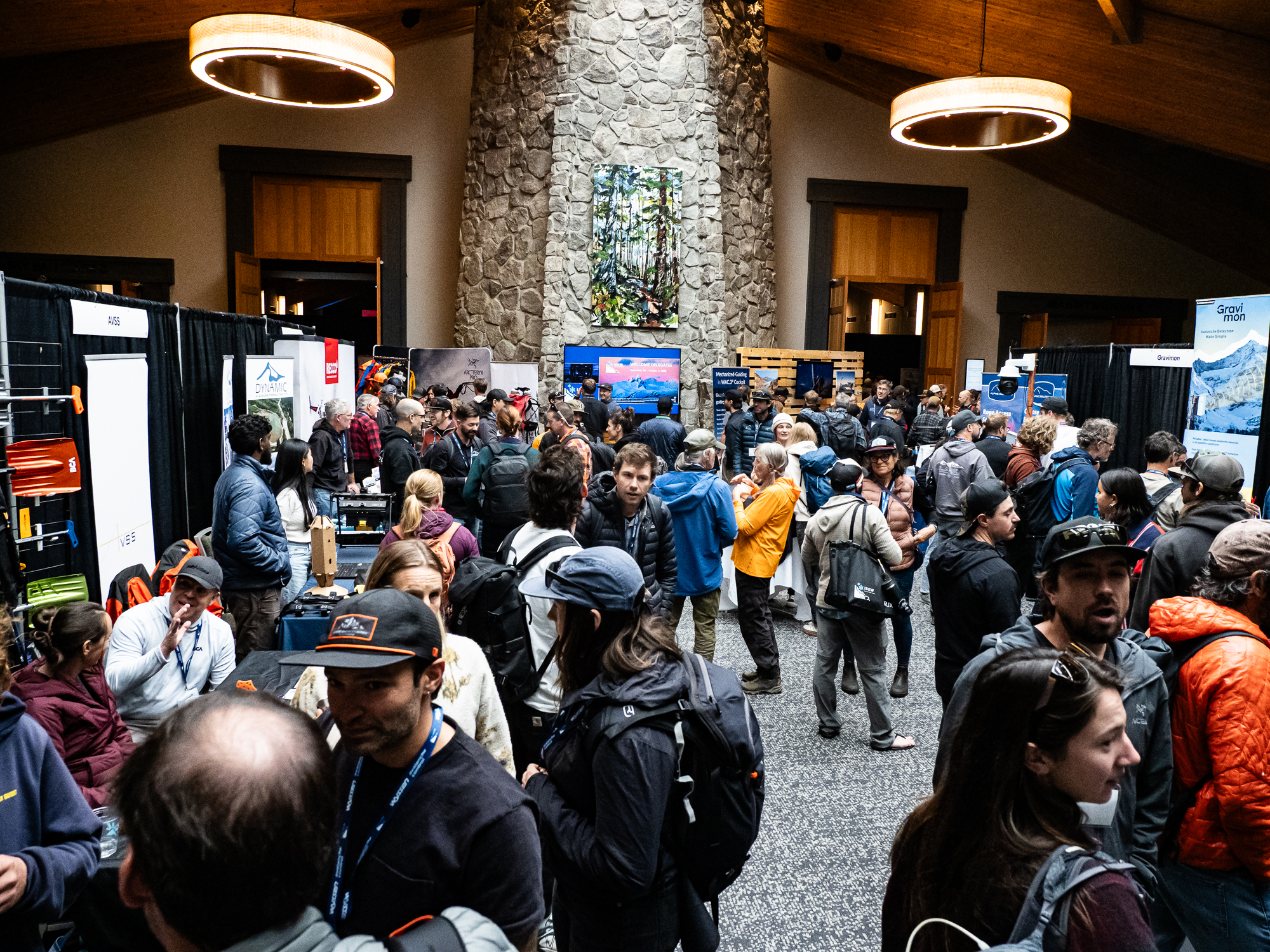
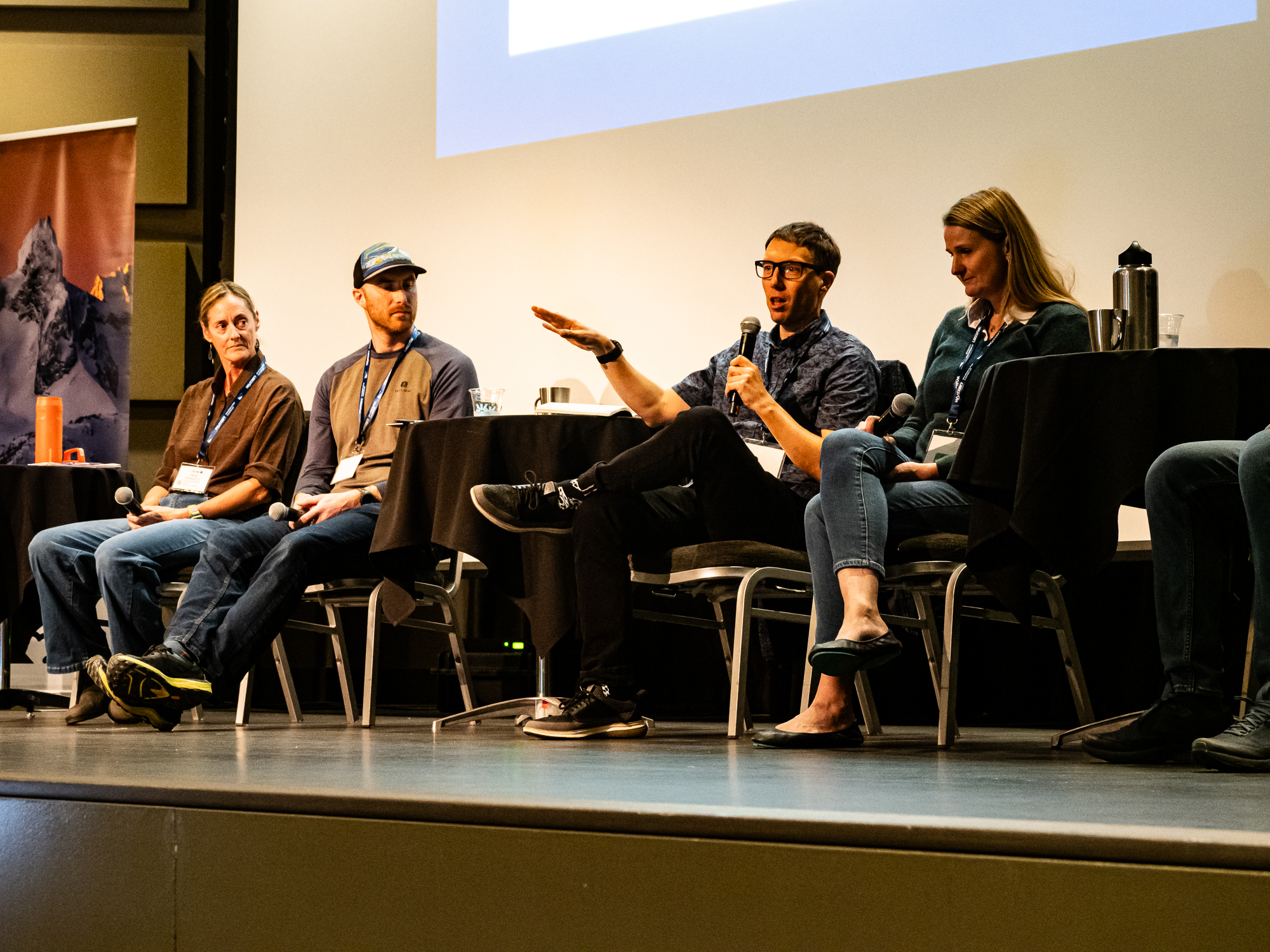
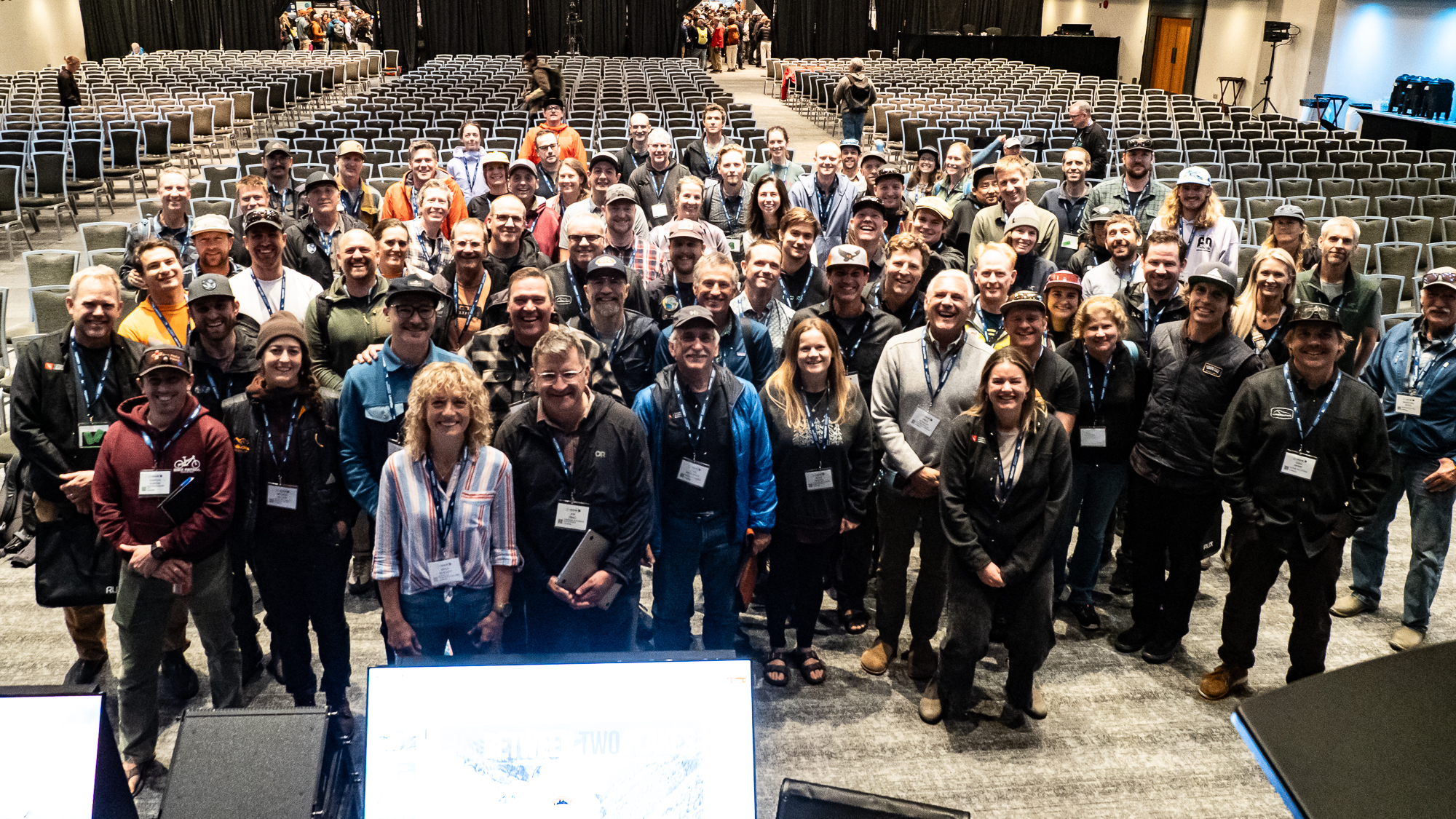
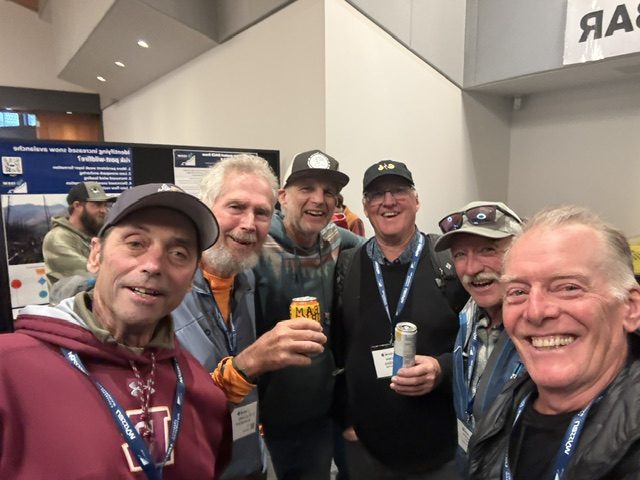
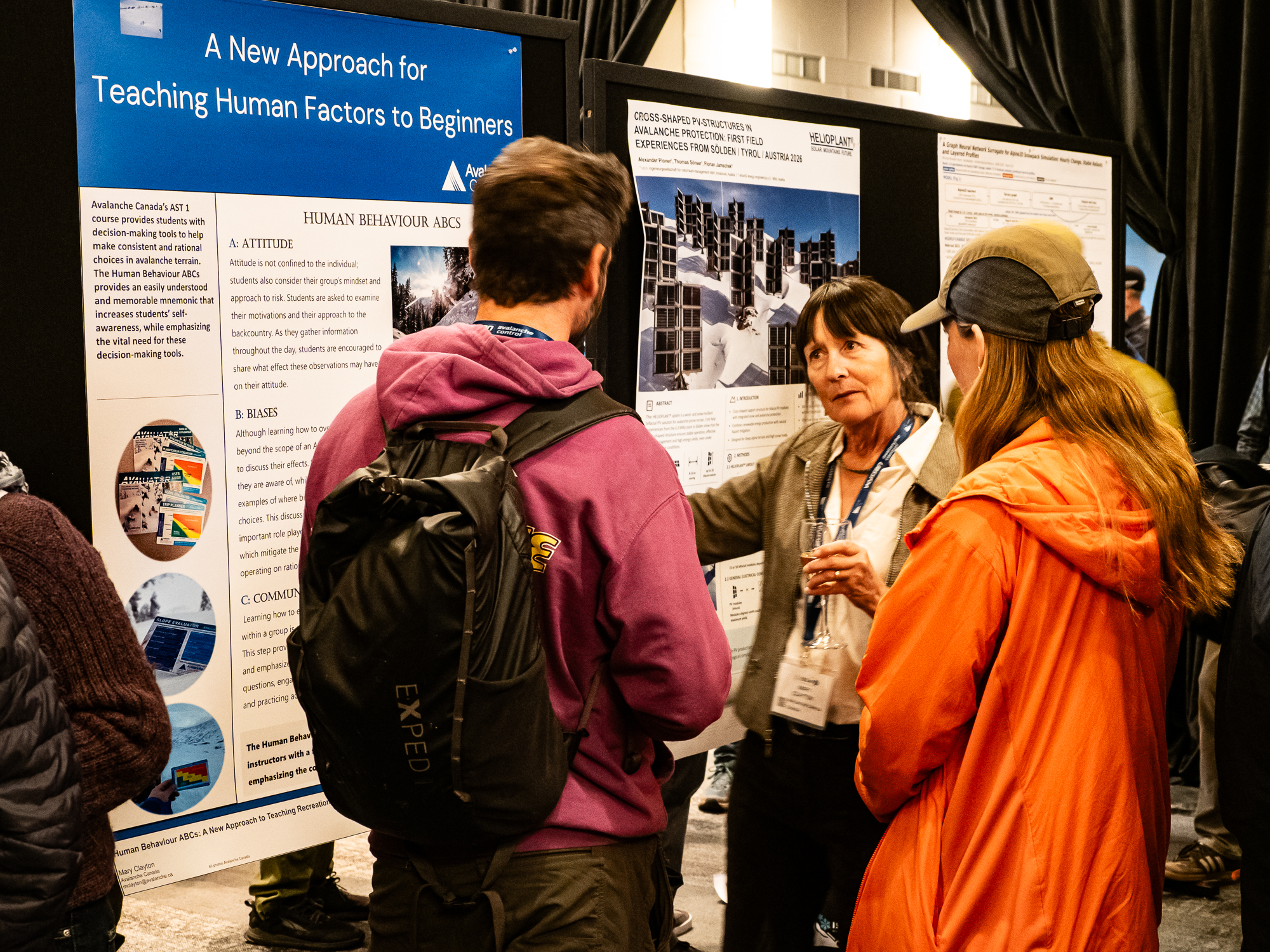
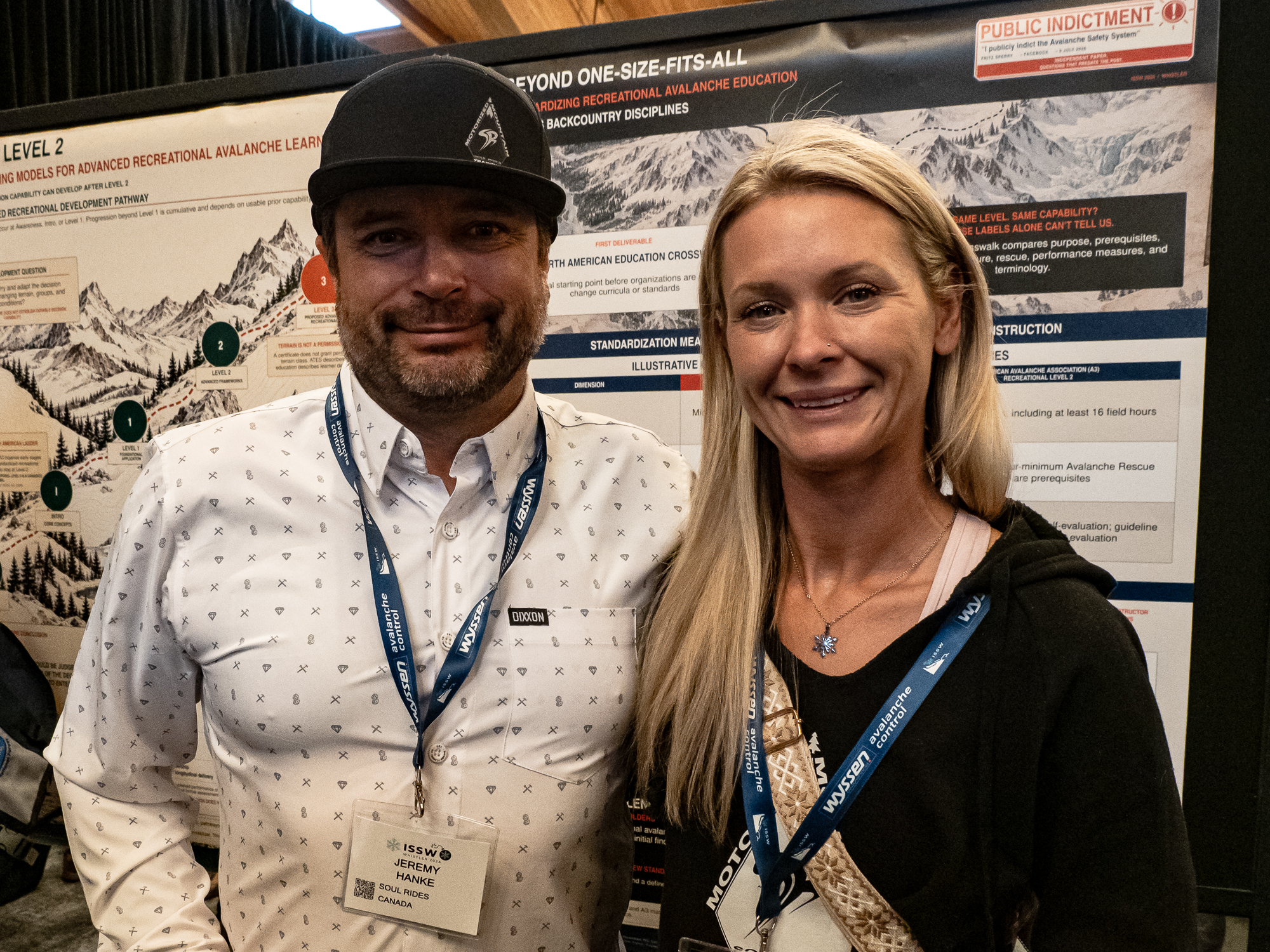
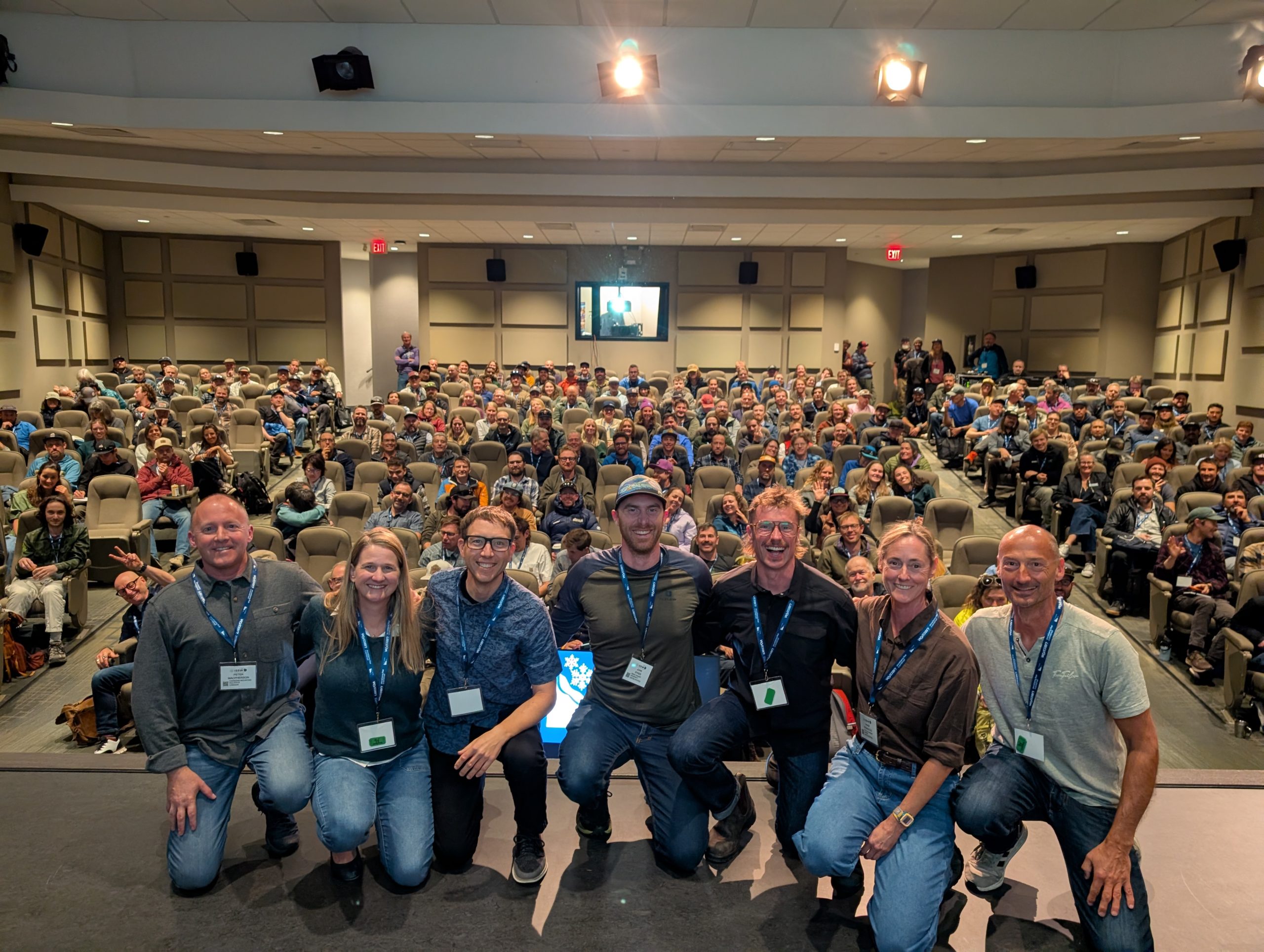
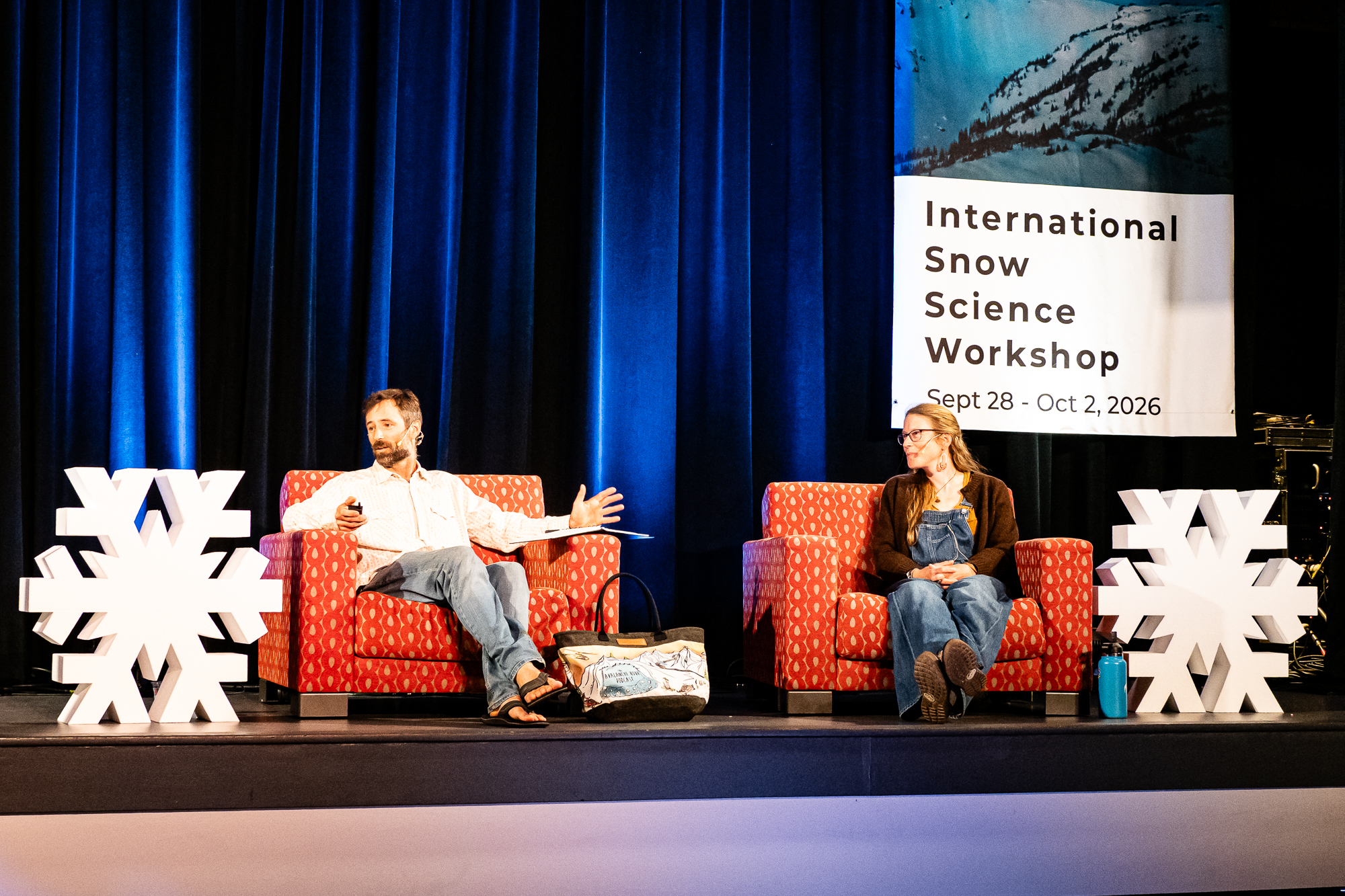
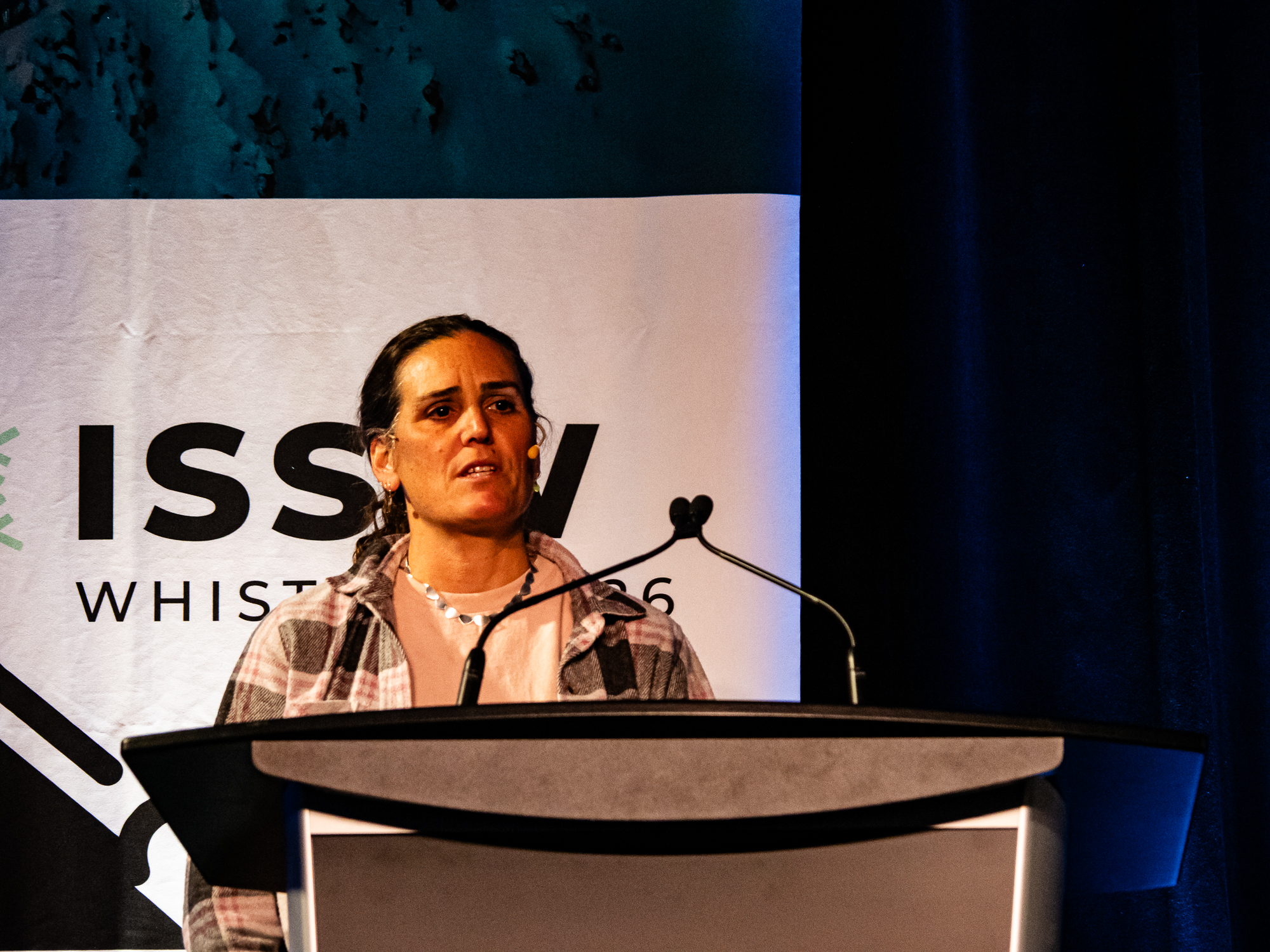
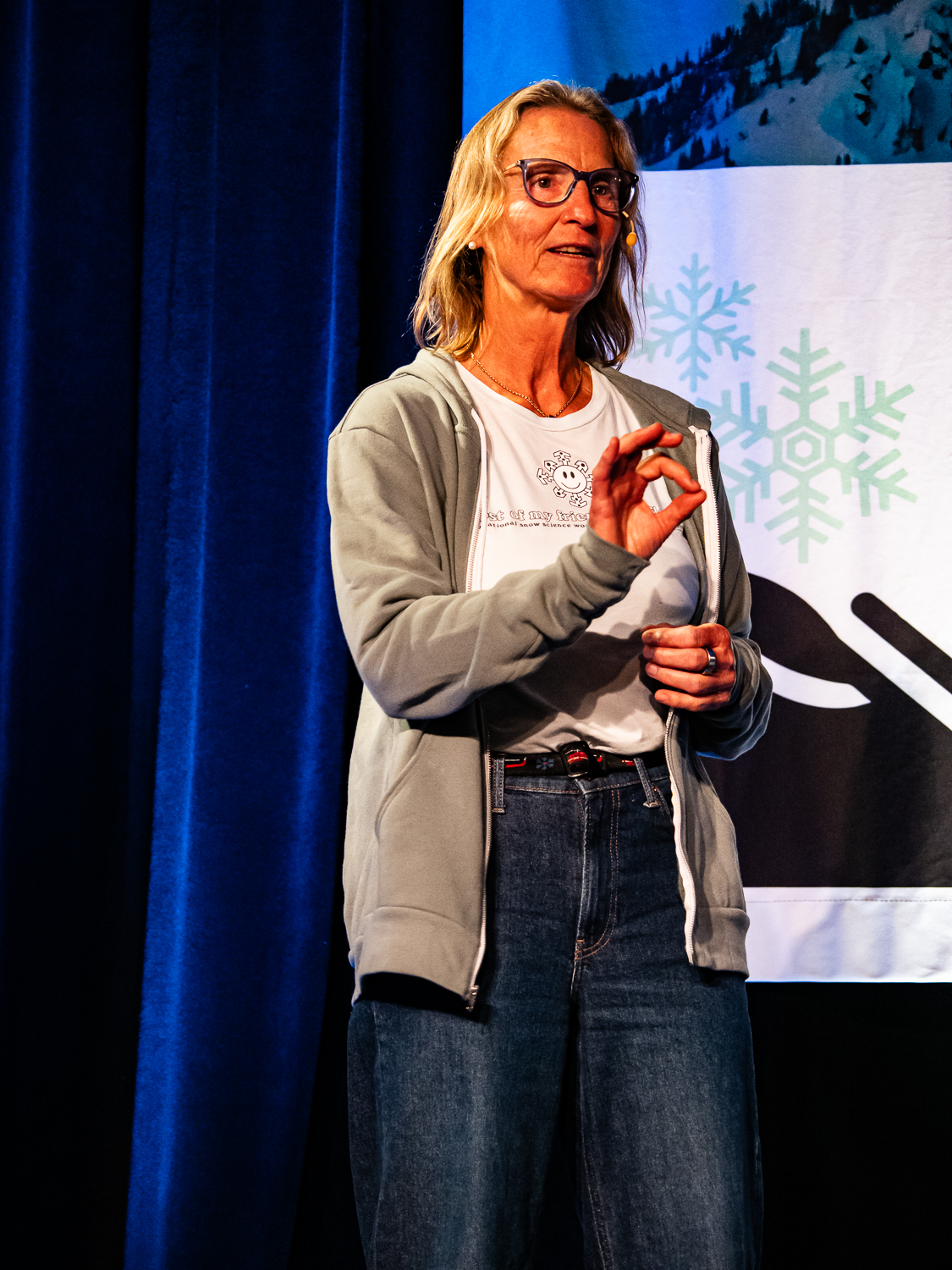
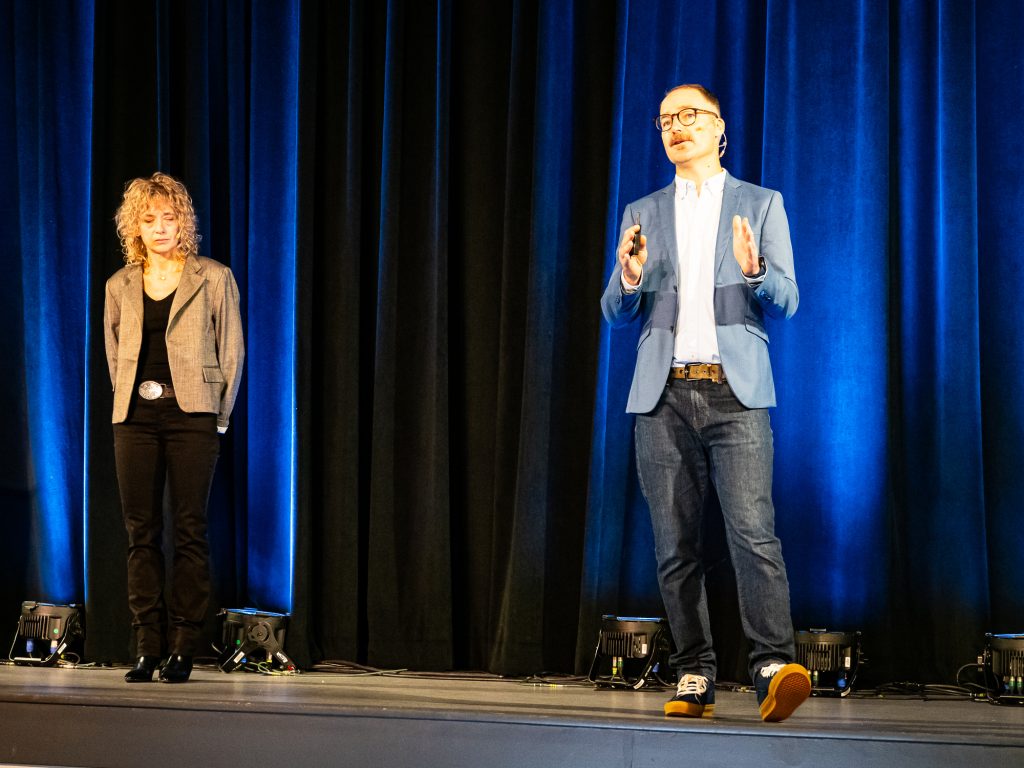
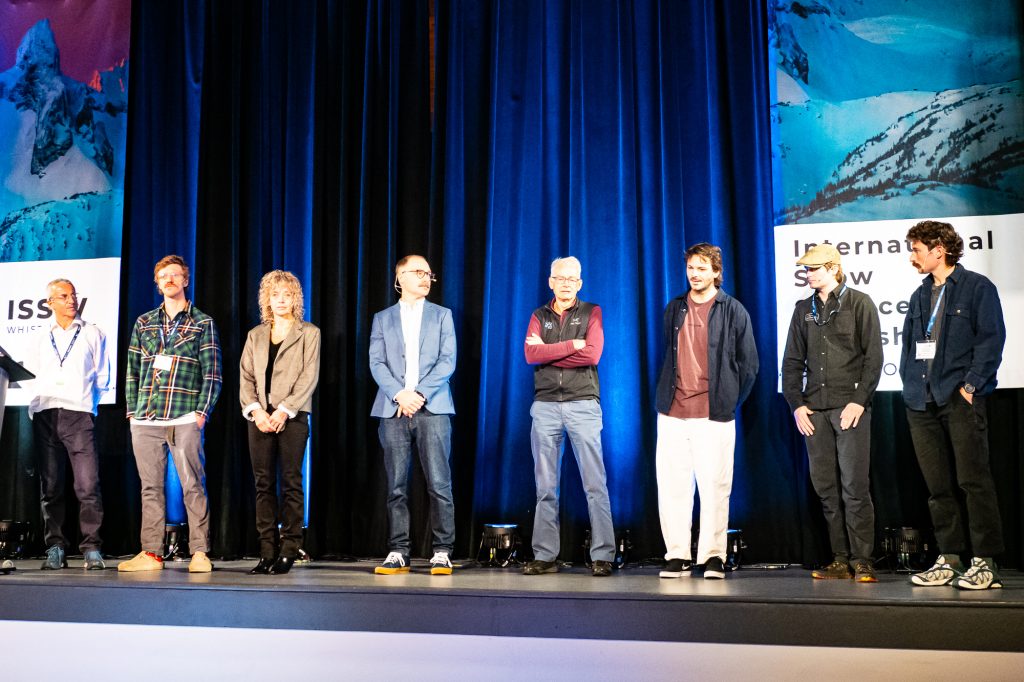
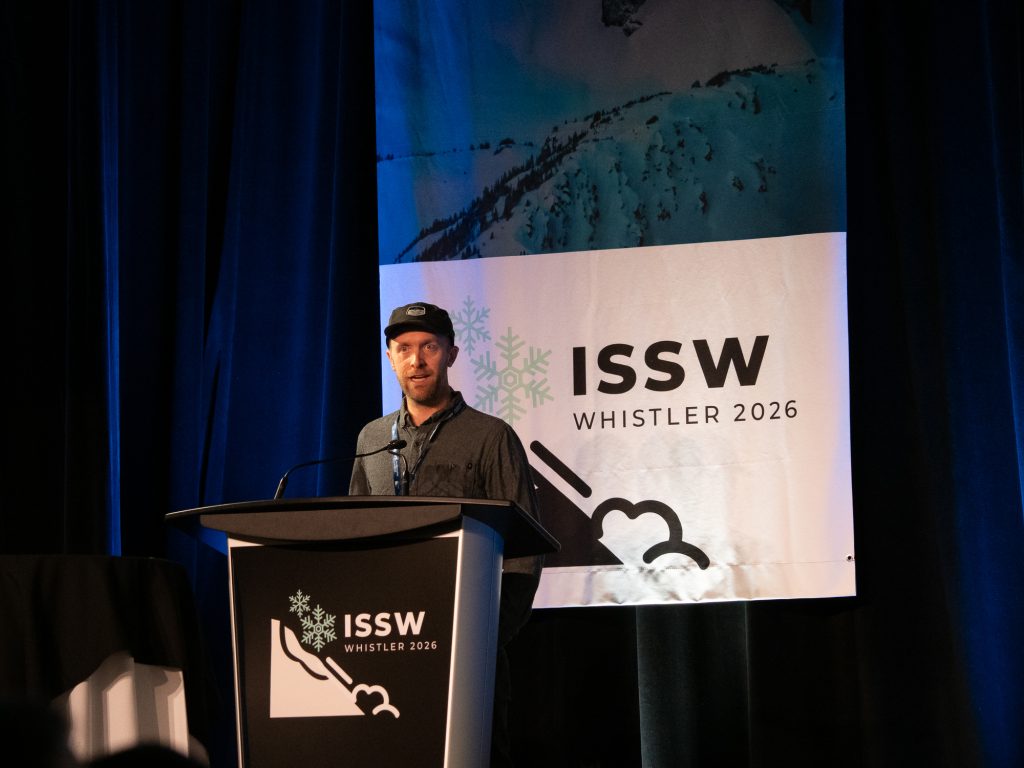
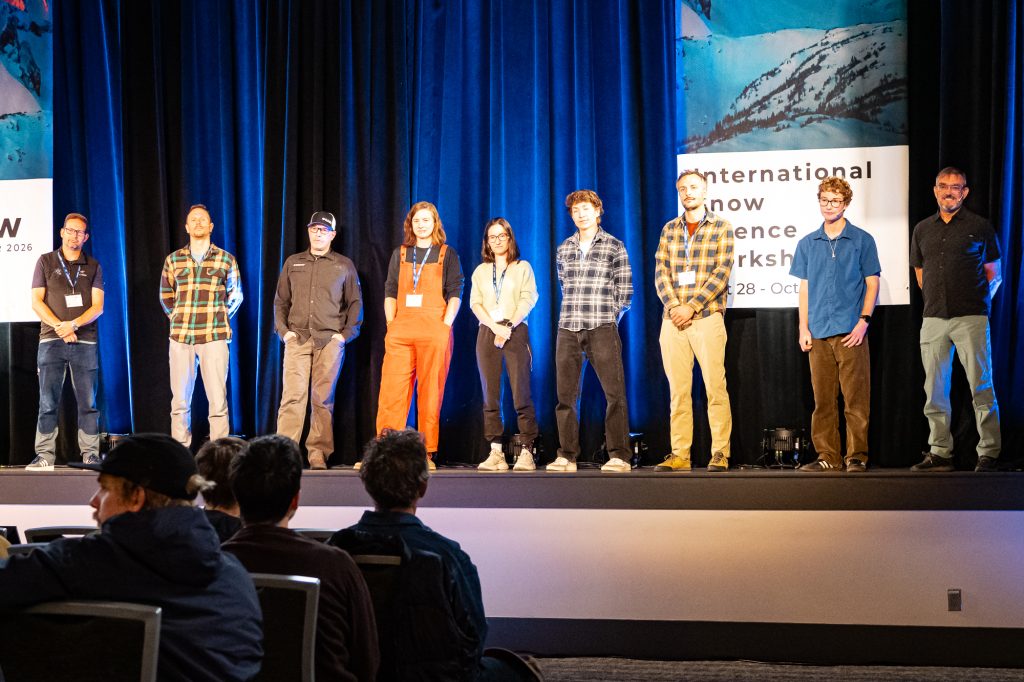
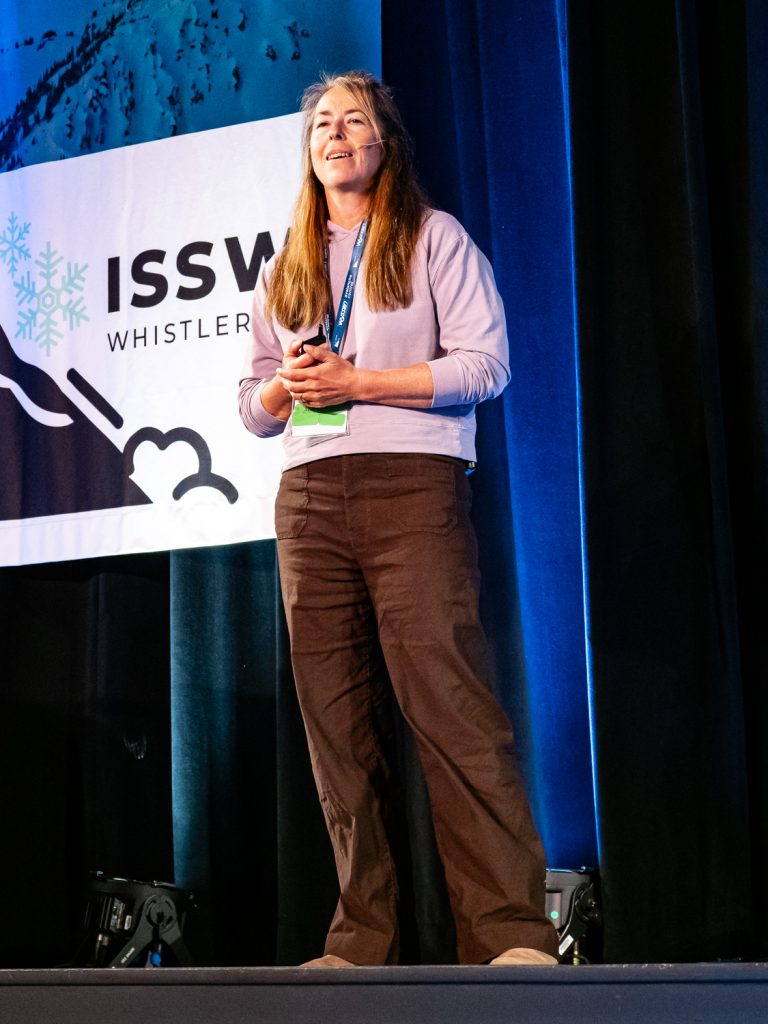
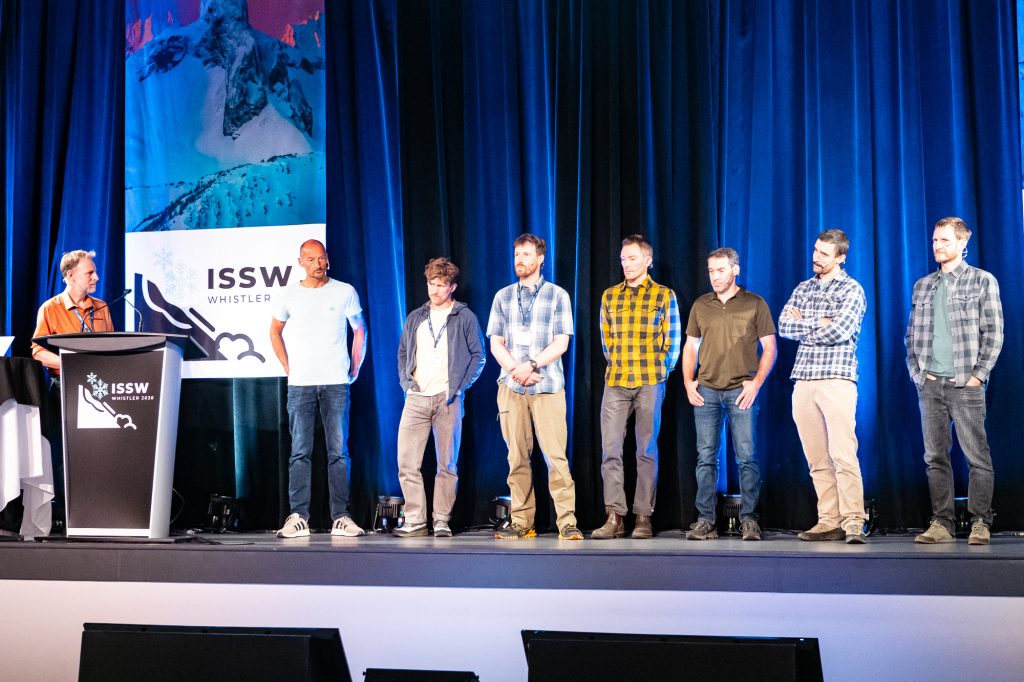
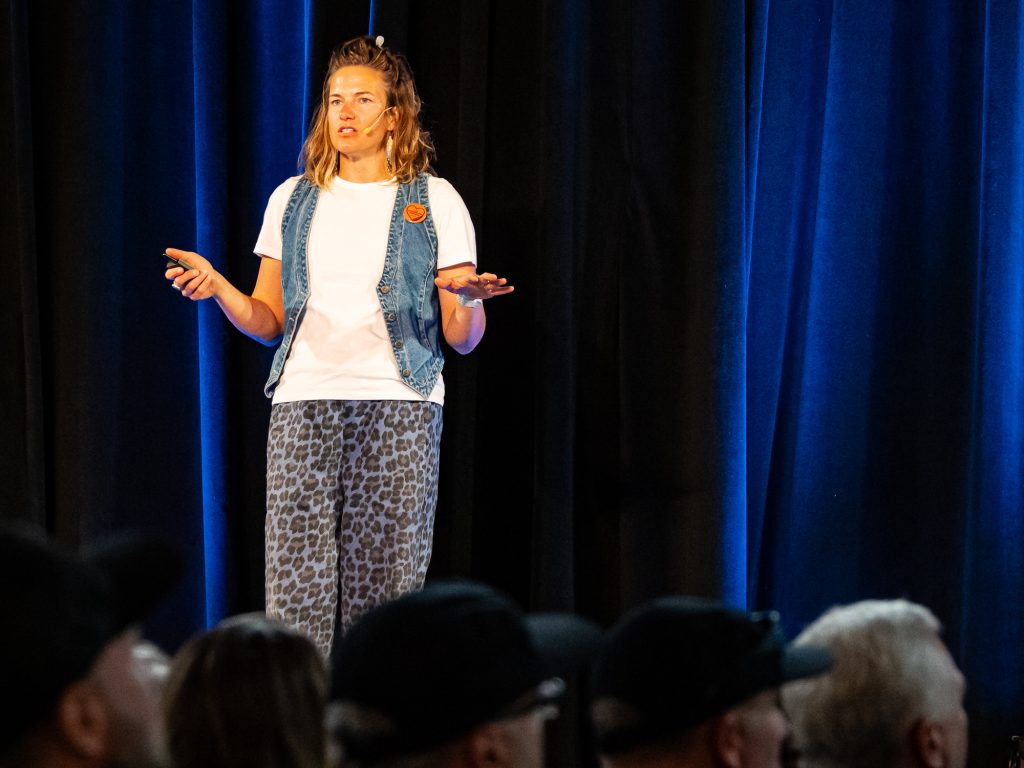
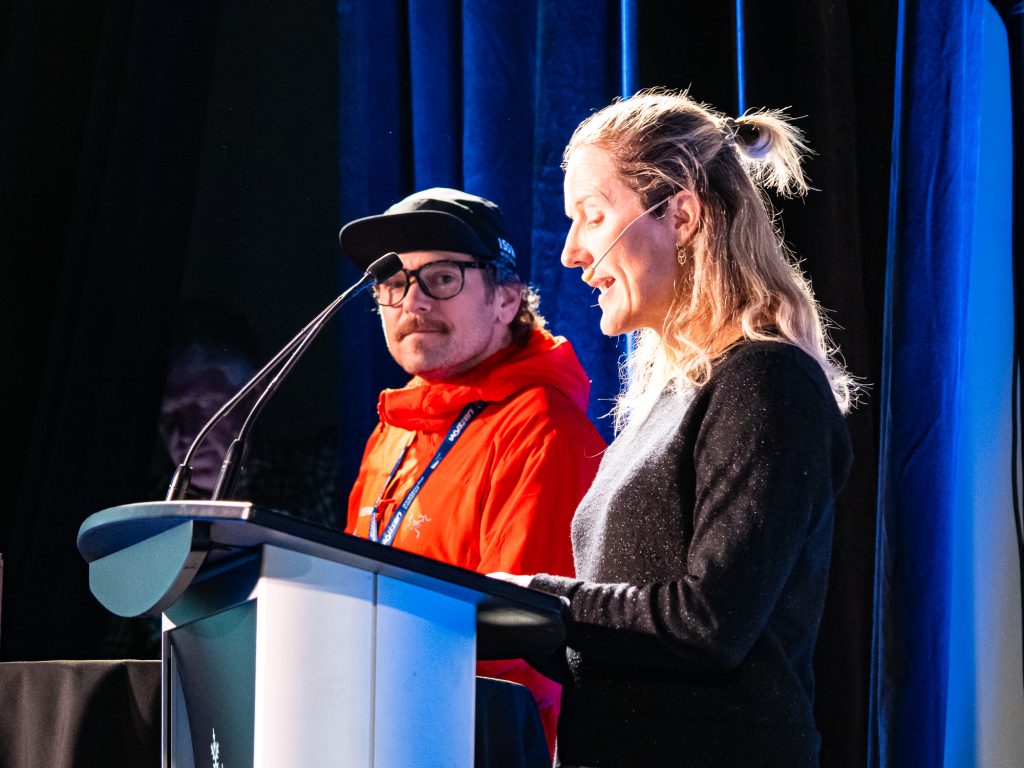
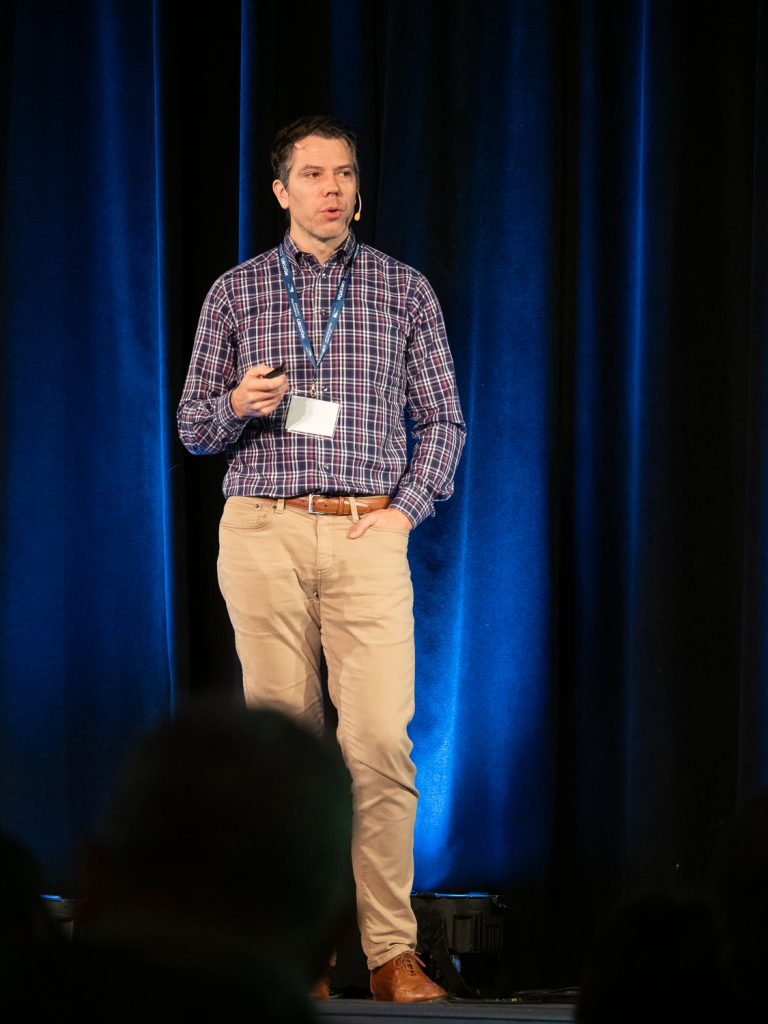
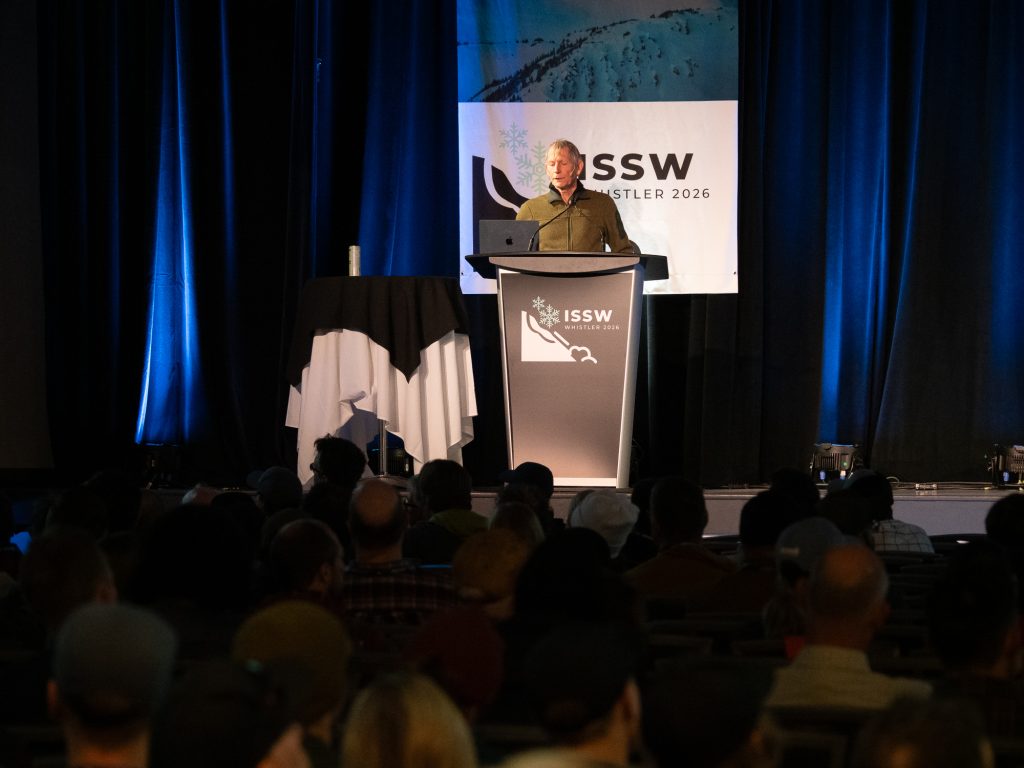
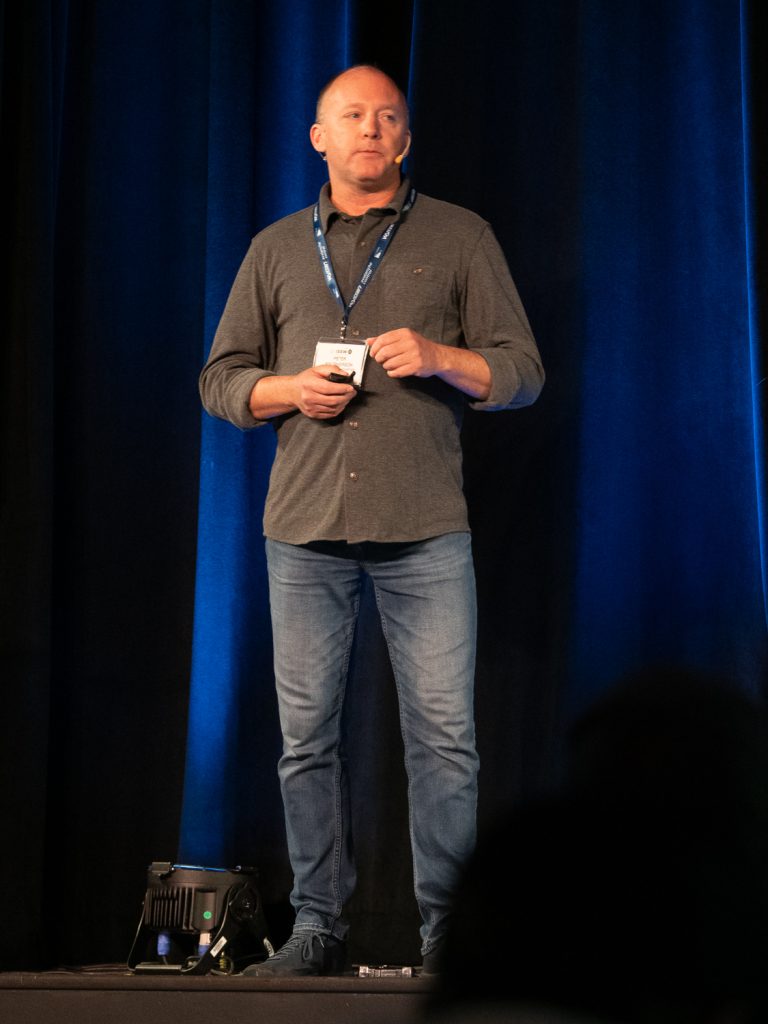
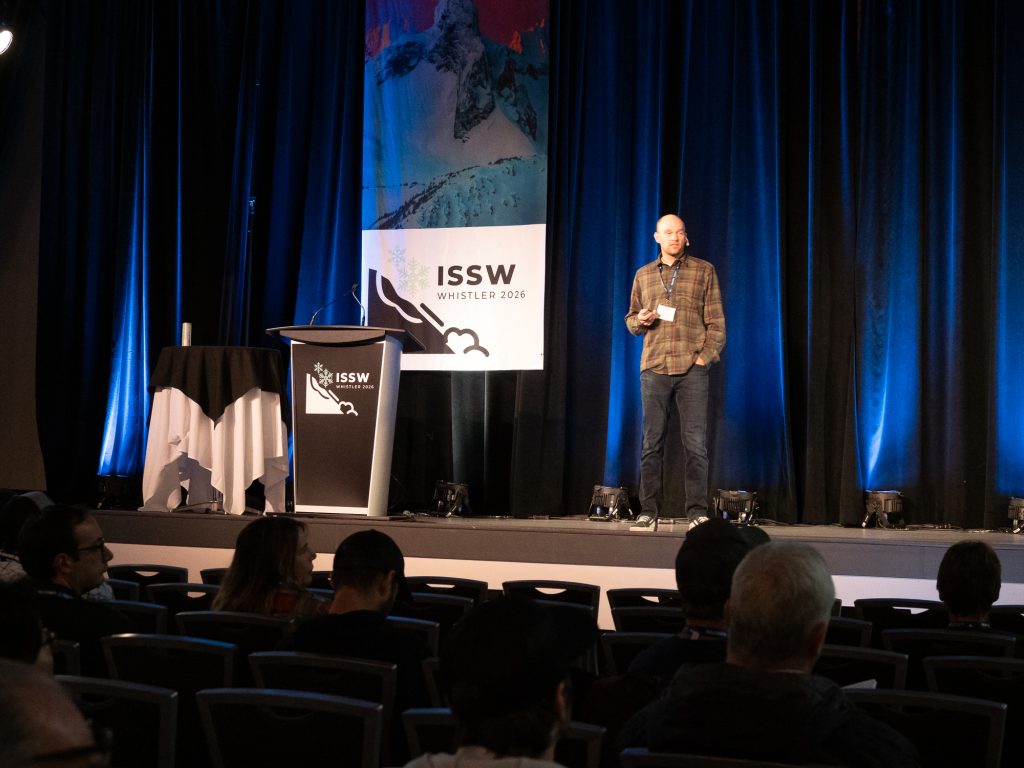
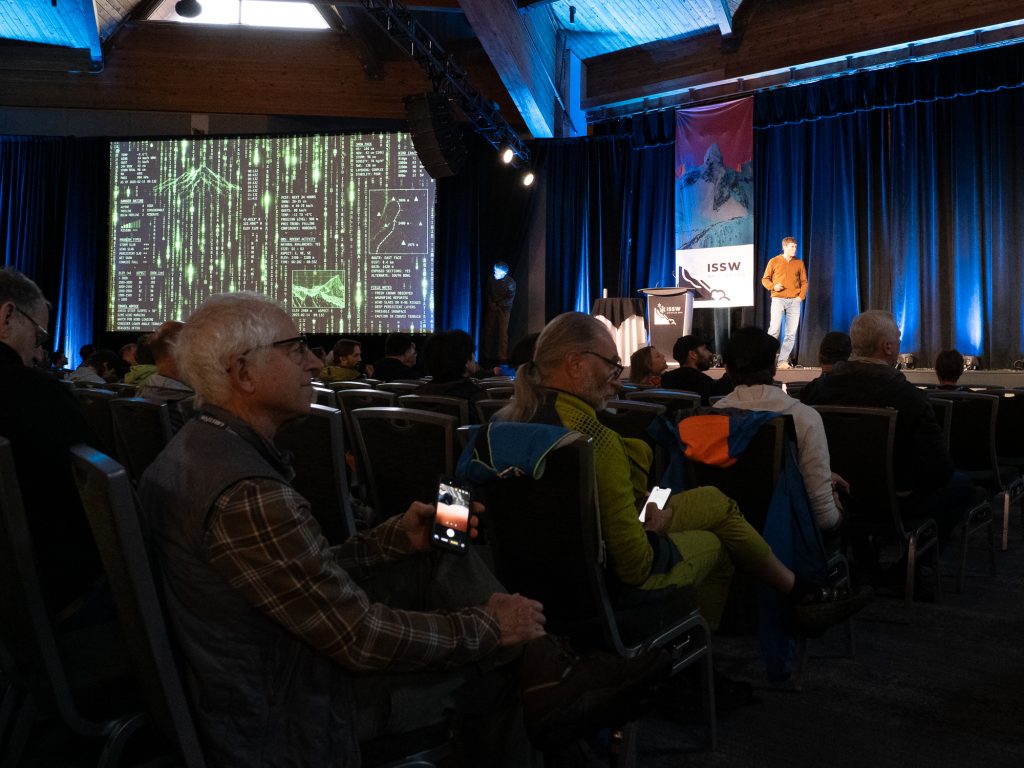
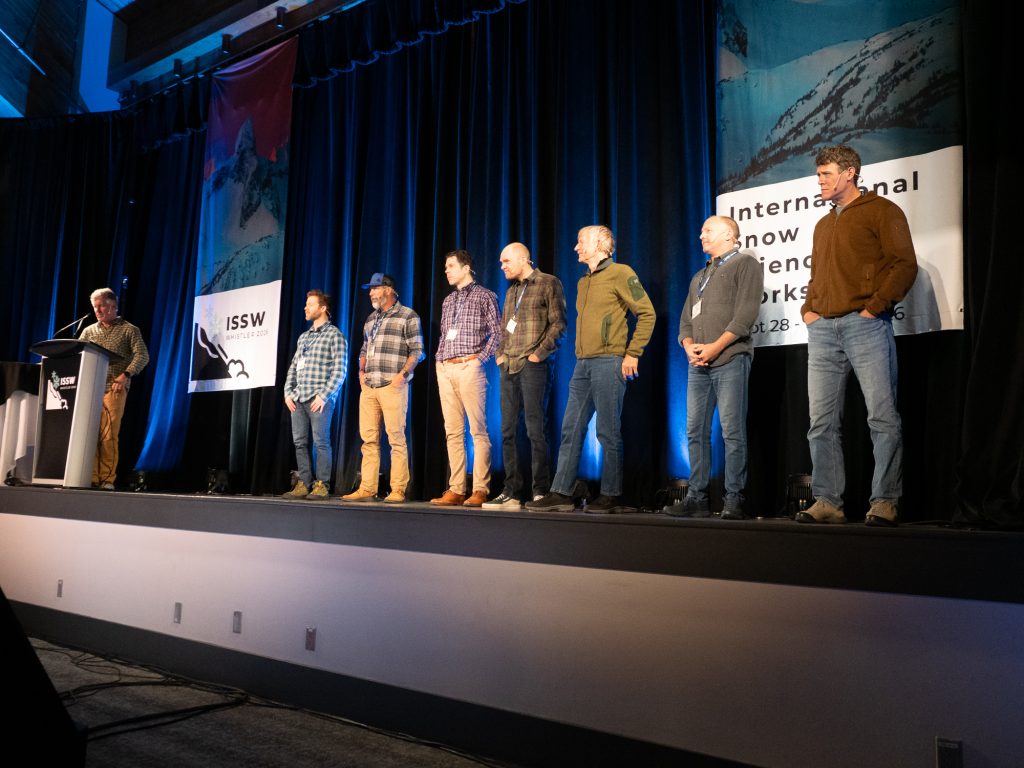
Scott Thumlert (left), chair of the Technical Committee, and Tim Haggerty, co-chair of the Local Organizing Committee, welcome all the attendees to ISSW 2026.Scott Thumlert, Chair of the ISSW 2026 Technical Committee.Francis Meloche, a Canadian researcher now working at the SLF in Davos, Switzerland, presents his paper, Slab Fractures During Dynamic Crack Propagation in Dry-Snow Slab Avalanches.The presenters from the opening session on avalanche initiation take questions from the audience.Andrew Jones, a forecaster with Parks Canada in Rogers Pass, delivers a presentation on the avalanche control program there.Bree Stefanson, an avalanche forecaster with the B.C. Ministry of Transportation in Bear Pass, delivers a presentation on the avalanche impact scale she developed. The scale is a framework for forecasting and recording impacts of avalanches on infrastructure, communities, and worksite safety.Presenters from the session on transportation corridor challenges take questions.Stan Nowak from Avalanche Canada presents on his research into how people read the forecast. His work looked at how users engage with the forecast by seeing which sections get read most, and for how long.Eeva Latosuo, a PhD student in the Simon Fraser University Avalanche Research Program, presents on discussing uncertainty in the avalanche forecast.Anne St. Clair, a PhD student at the Simon Fraser University Avalanche Research Program, talks about a framework for designing and evaluating avalanche risk reduction frameworks.Each day at ISSW was capped by a social and poster presentations.CAA members gather to hear from staff on the first day of ISSW.About two centuries of avalanche wisdom in one photo. From left: Rocket Miller, Rick Schroeder, Mark Bender, Robin Siggers, Brad White, and David Iles. Photo by David Iles.Mary Clayton presents a poster looking at a new way to teach human factors that is now part of Avalanche Canada’s AST curriculum.CMBGA snowmobile guides Jeremy Hanke and Sheena Thomas submitted six abstracts for ISSW that looked at topics such as motorized education, rescue, and snowpack compaction.The AI panel on Monday was a highlight for many people. From left: Peter Macpherson, Laura Maguire, ????, John Sykes, Grant Helgeson, ????, and Frank Techel. Photo by Simon Horton. Dominic Baker (left) and Sara Boilen host a live recording of the Avalanche Hour podcast dubbed Between Two Flakes.Erin Taylor, a Blackcomb patroller, shares a story on a first aid call that turned out to be much more than she expected during the Avalanche Hour podcast recording.Helene Steiner shares a story about a moment guiding where she thought she went wrong, but was celebrated for making the right decision.
Day 2: Tuesday, Sept. 29
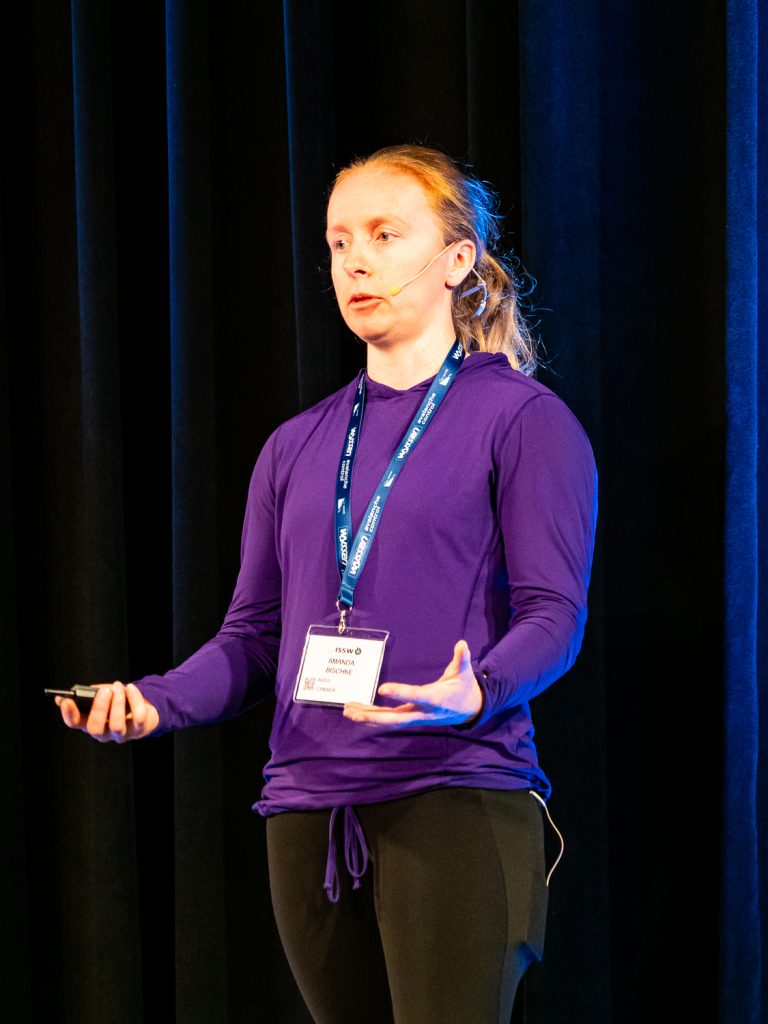
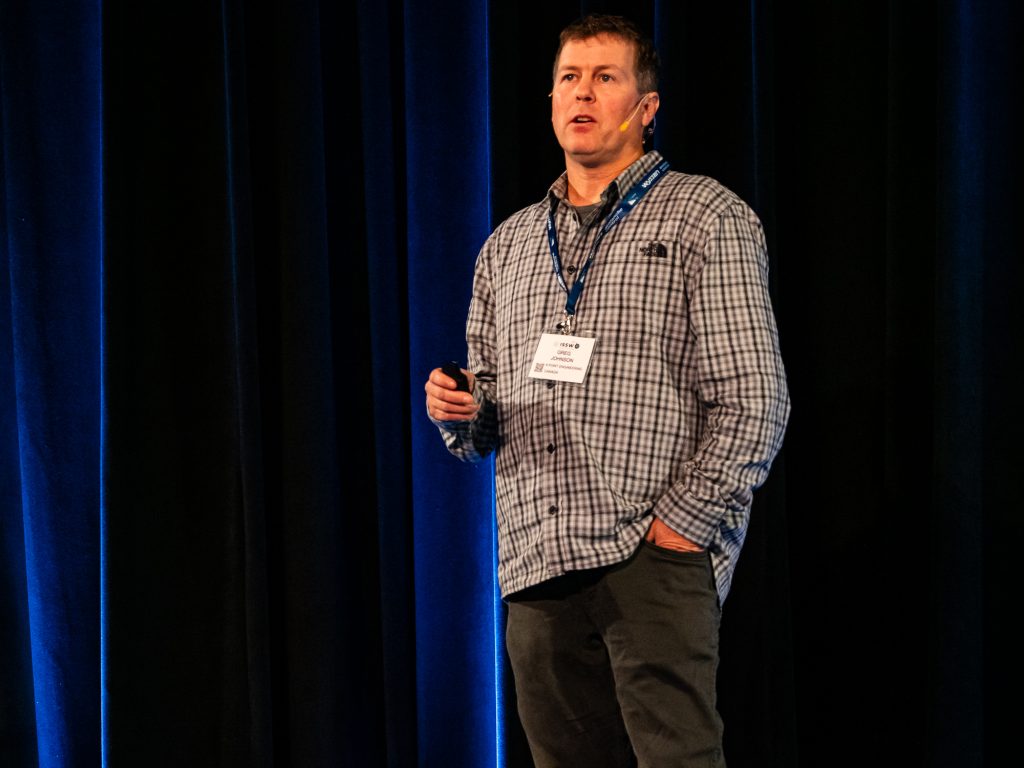
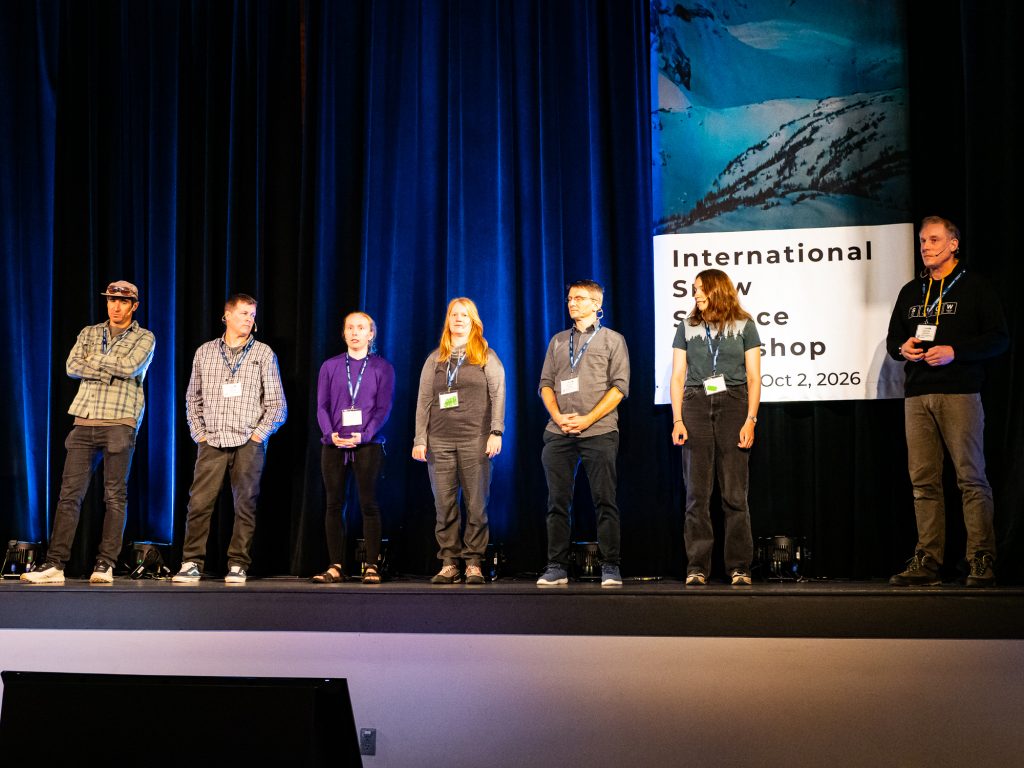
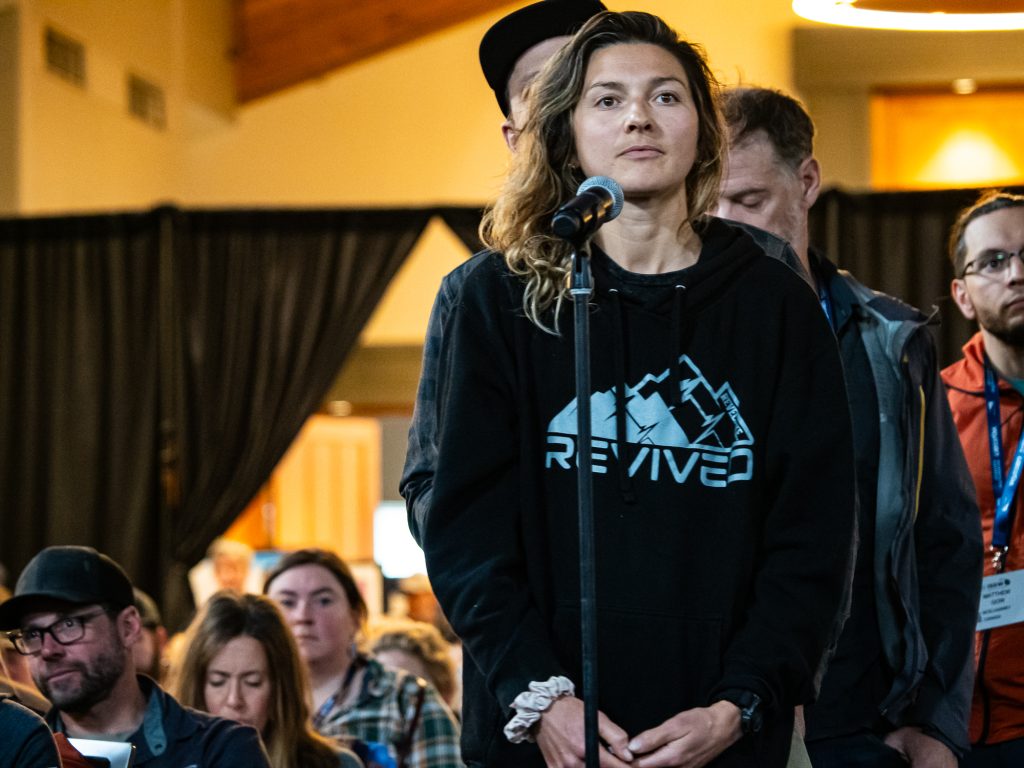
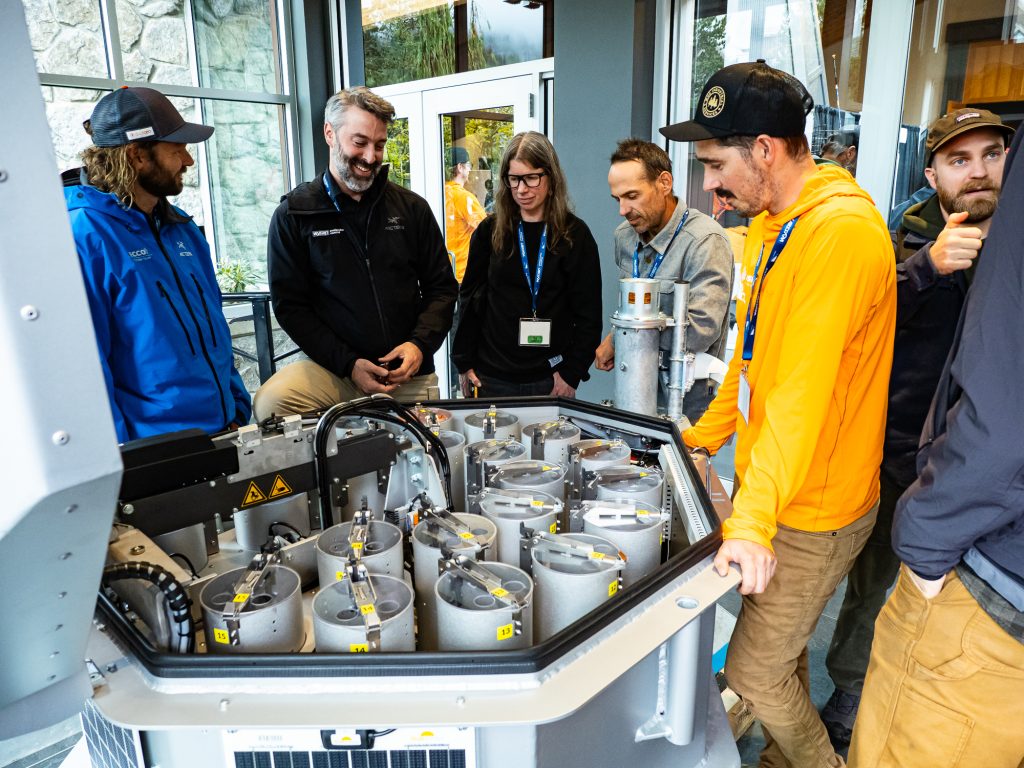
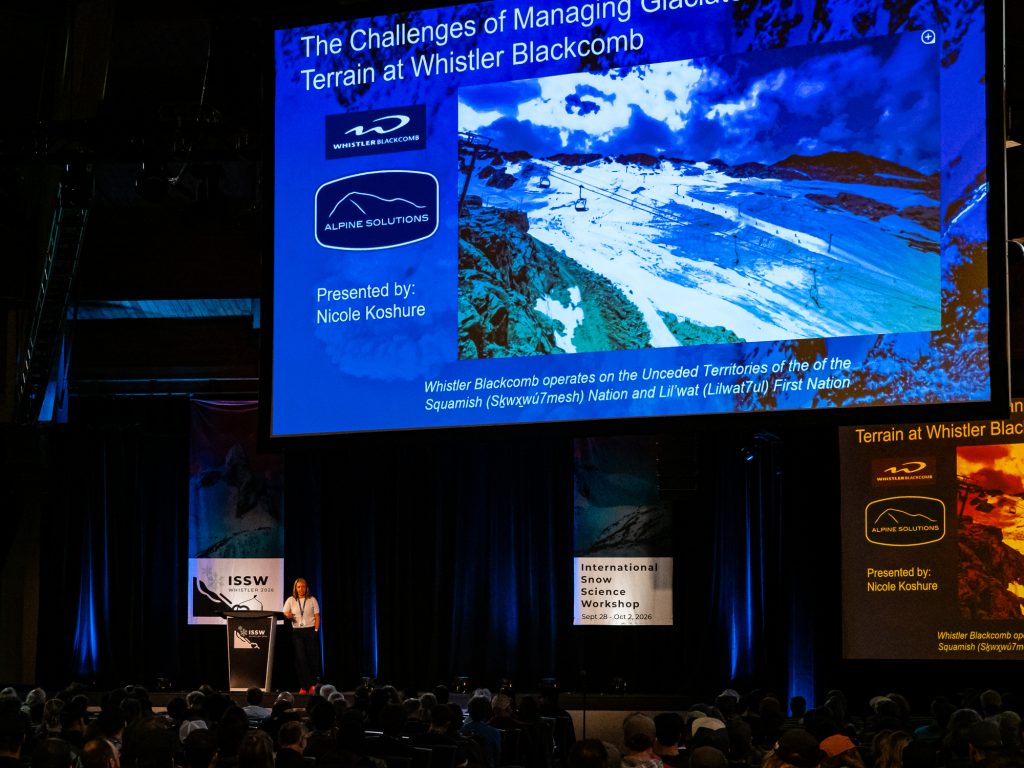
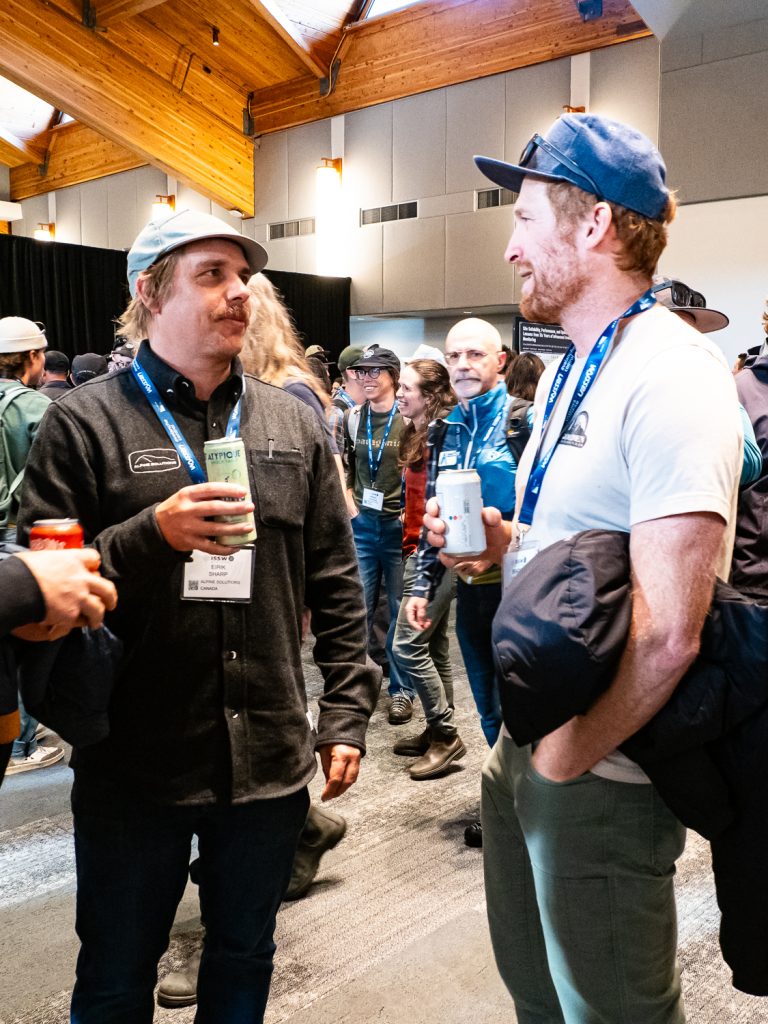
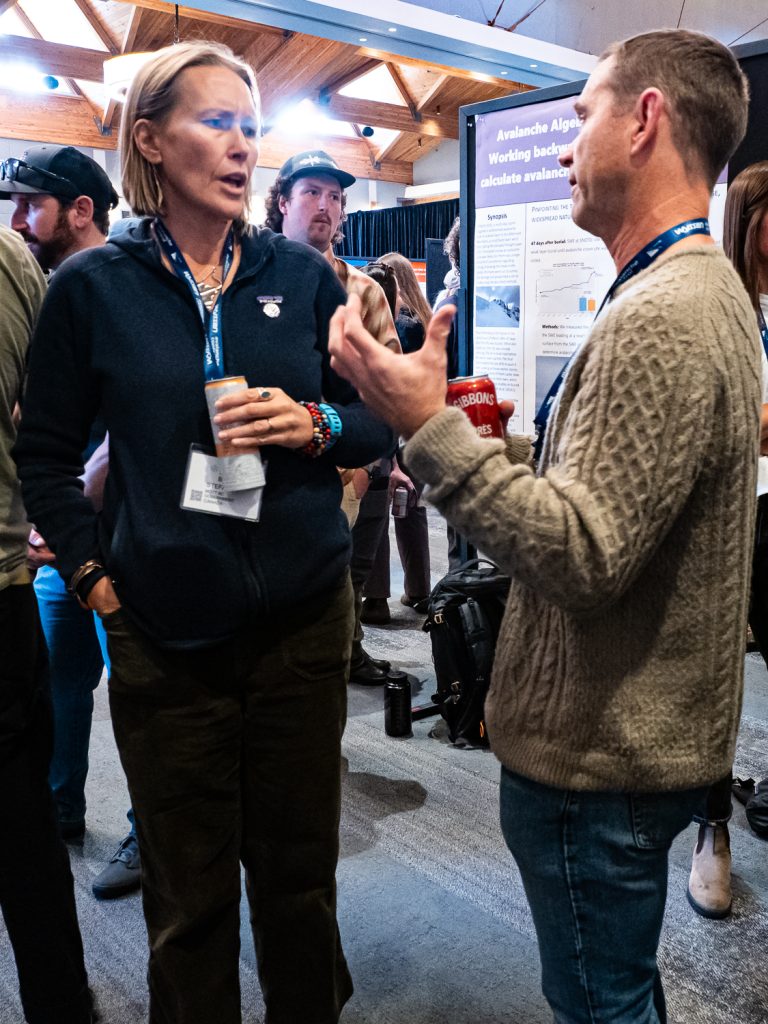
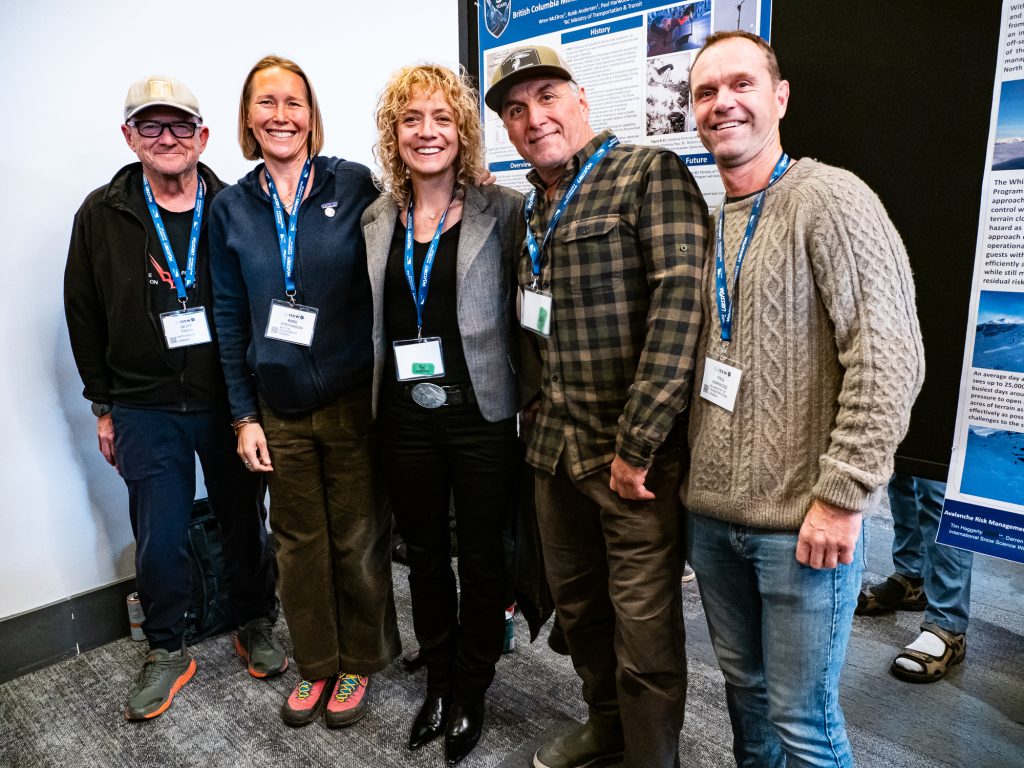
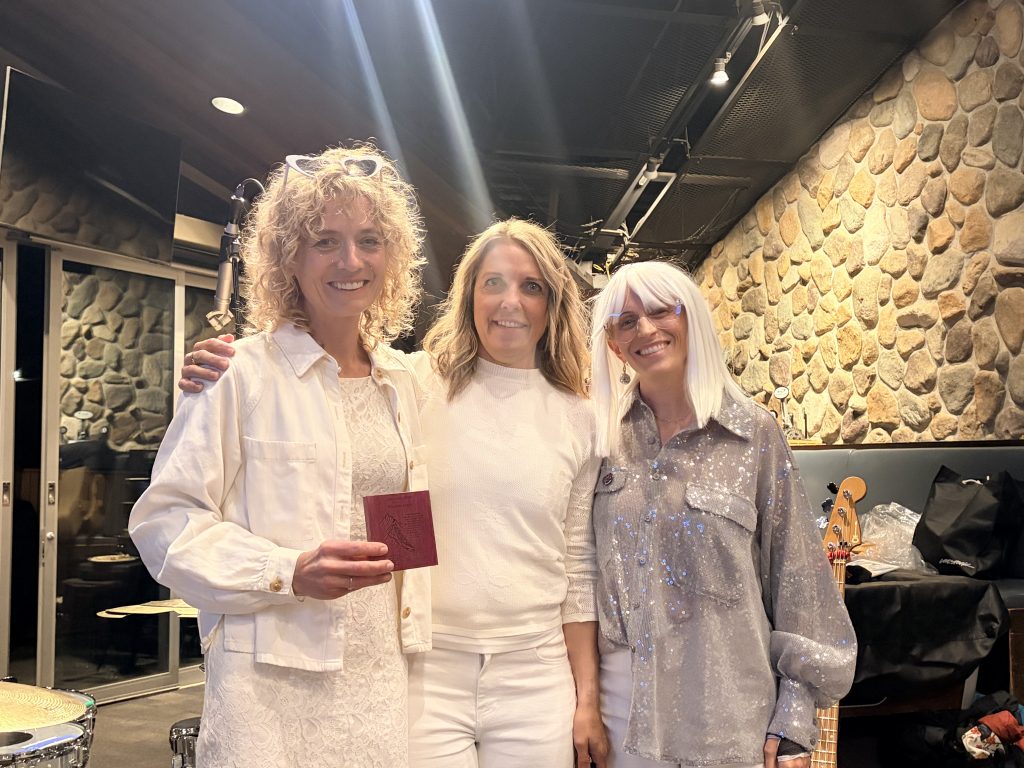
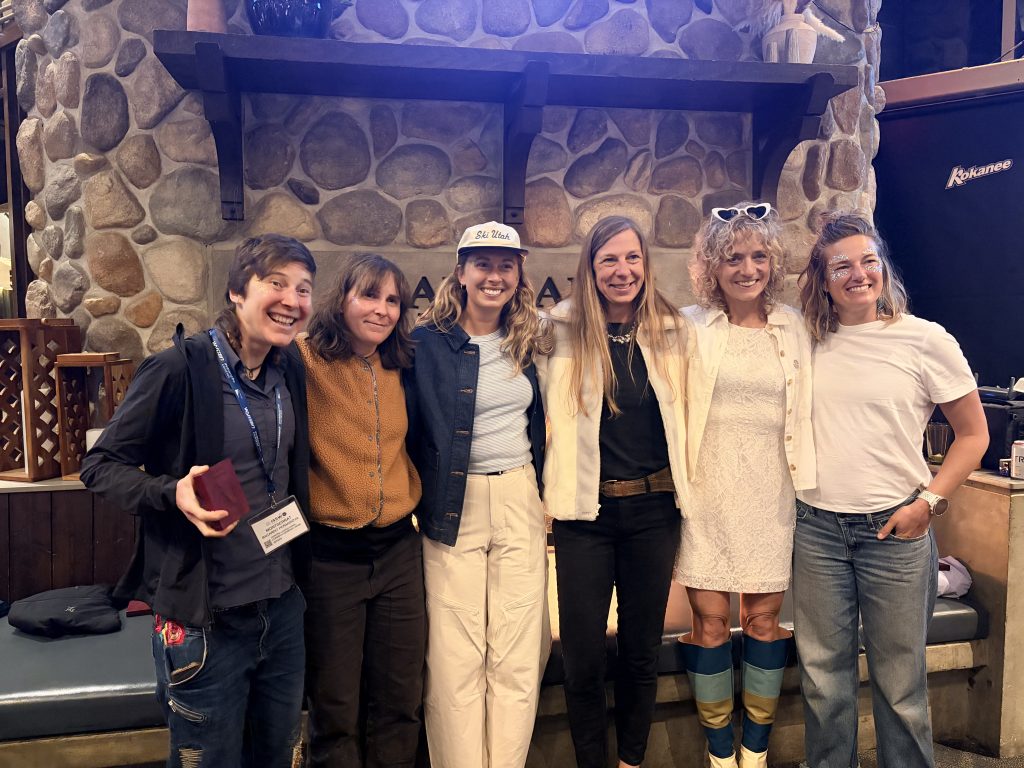
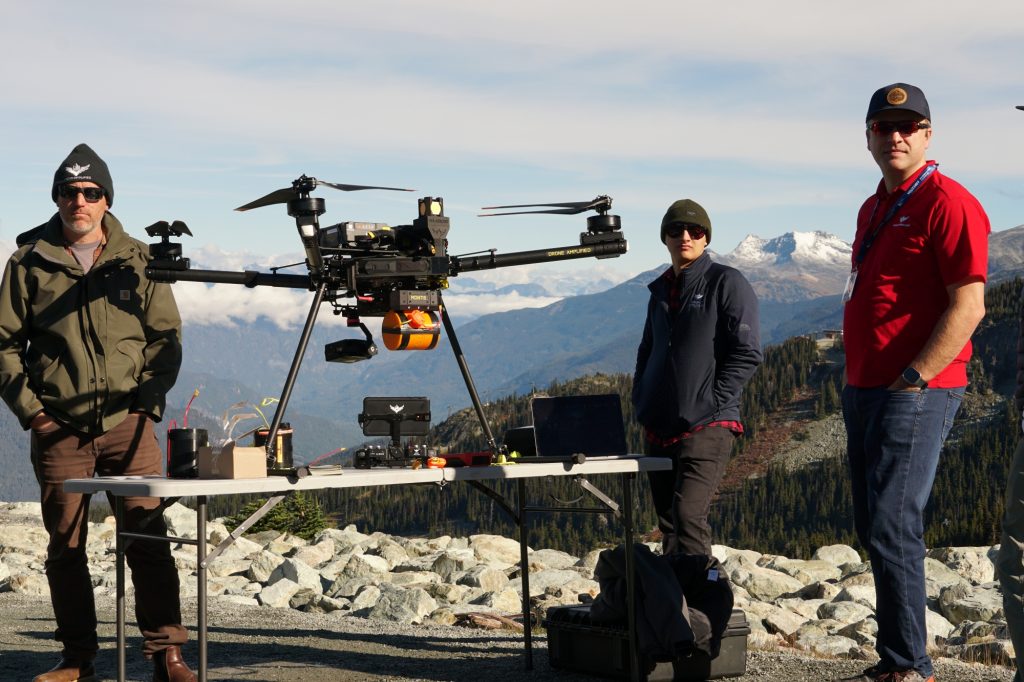
Wren McElroy and Matt Macdonald deliver a presentation on the challenge of atmospheric rivers.The presenters from the Tuesday morning session on avalanche forecasting take questions from the audience.Amanda Bischke talks about advances in drone avalanche control.Greg Johnson, owner of 6 Point Engineering, delivers a talk on avalanche loads for bridges.The presenters from the Tuesday session on infrastructure and operations take questions from the audience.Arienne Hanna asks a question.Wyssen Avalanche demonstrates their RACS system to an interested audience.Nicole Koshure, one of the organizers of ISSW, presents on the challenges of managing melting glaciated terrain on Blackcomb Mountain.Eirik Sharp (left) and Brad Lorriman enjoy a chat during happy hour.Bree Stefanson and Paul Harwood during happy hour.From left: Geoff Freer, Bree Stefanson, Wren McElroy, Johann Slam, and Paul Harwood, get together at a poster celebrating 50 years of B.C.’s highway avalanche control program. Freer was the founder of the program in 1976.CAA President Wren McElroy receives the Stellar Award at a celebration of women in the avalanche industry on Tuesday night.This year’s Stellar Award recipients.
Day 3: Wednesday, Sept. 30 – Field Trip Day
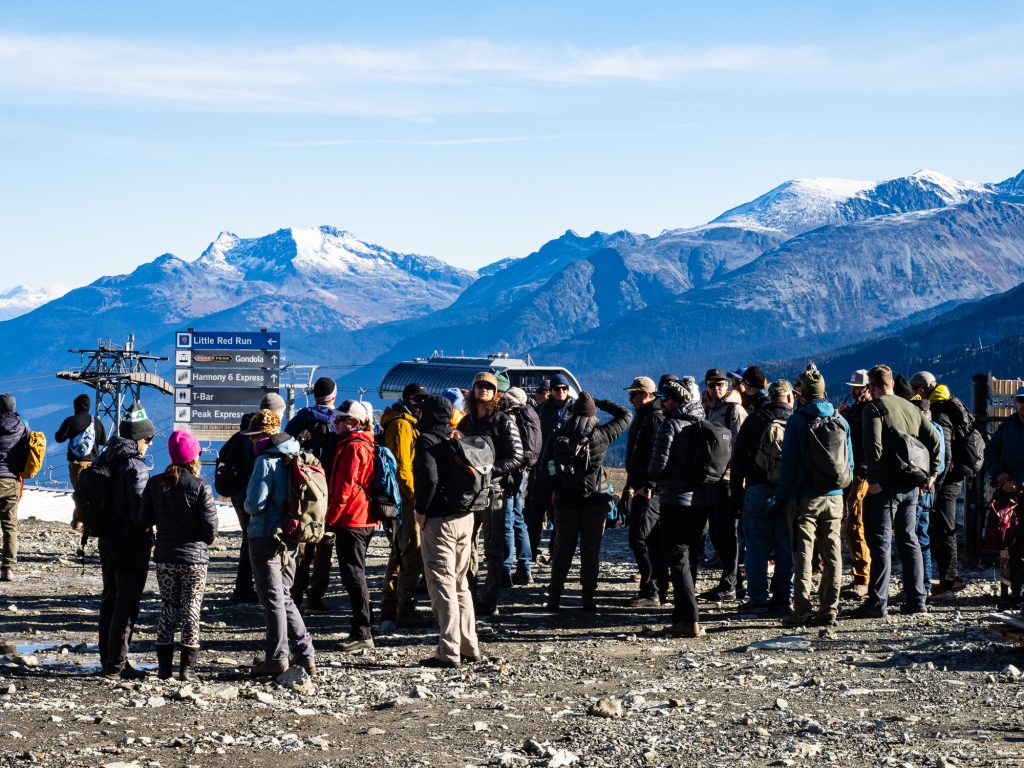
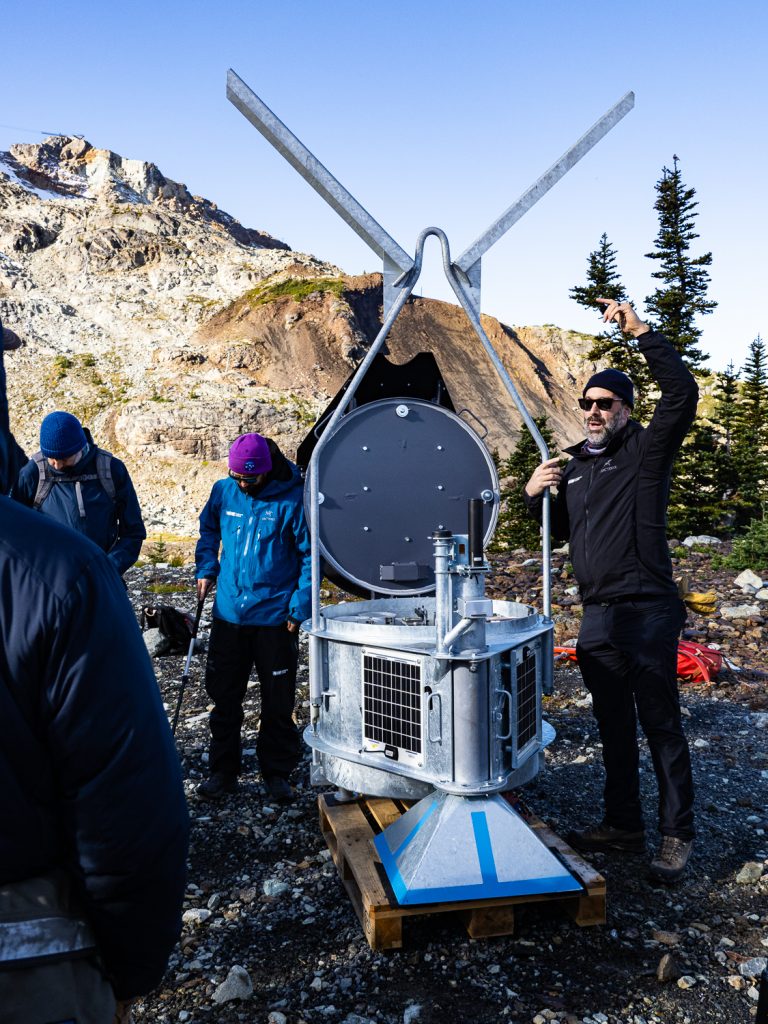
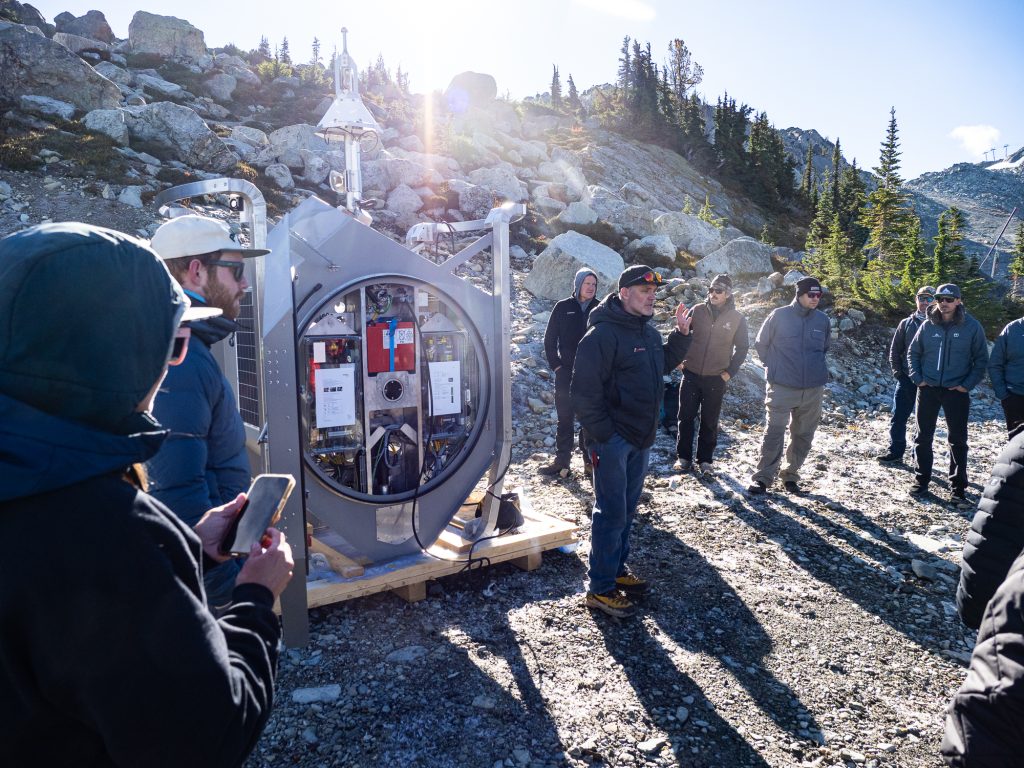
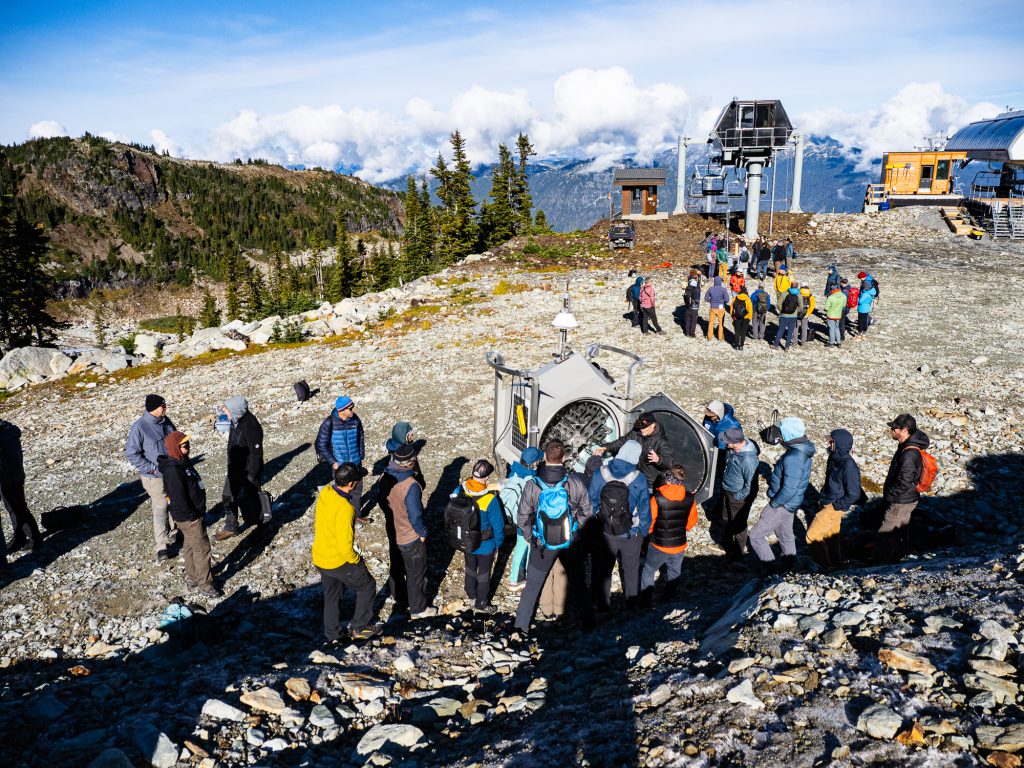
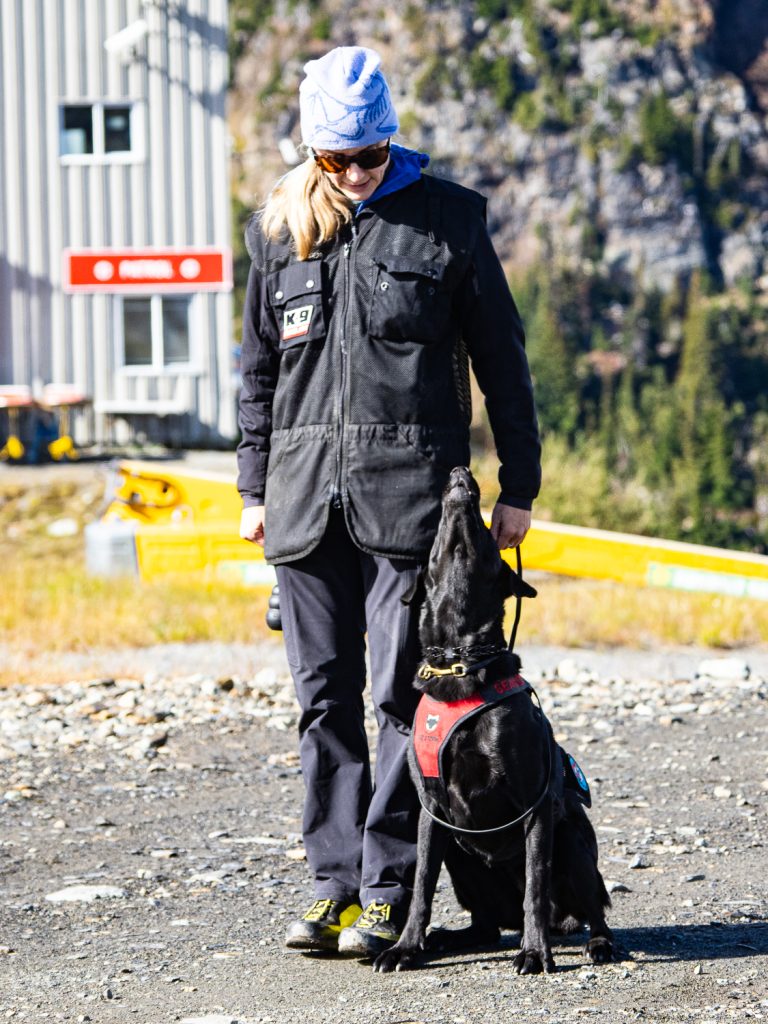
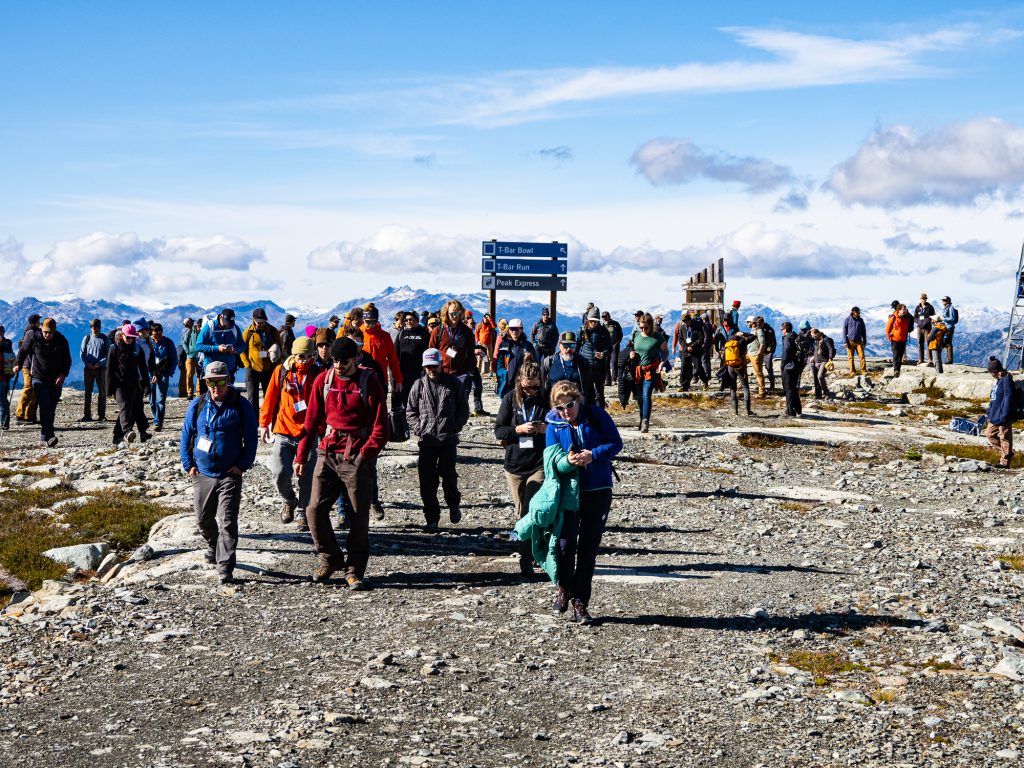
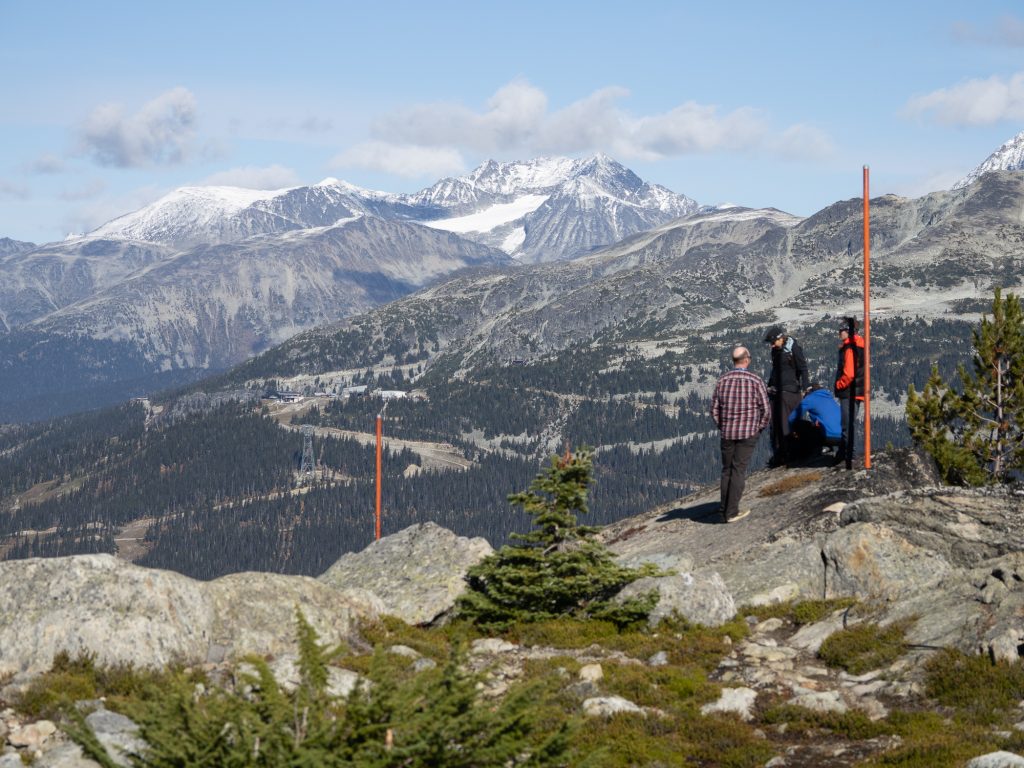
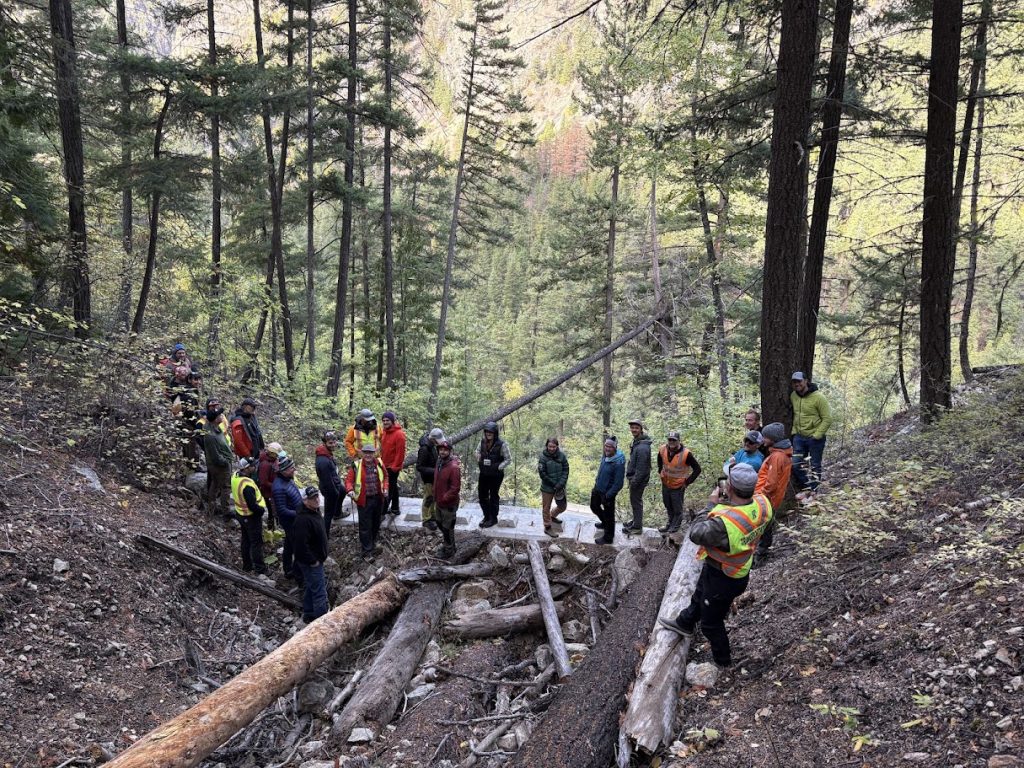
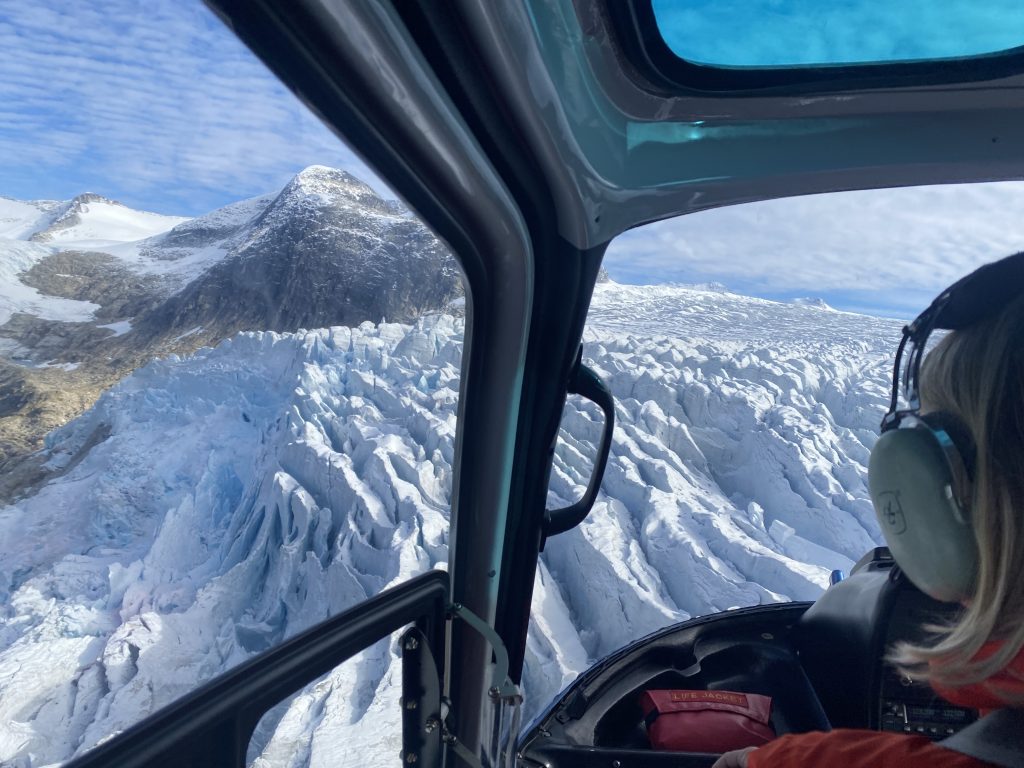
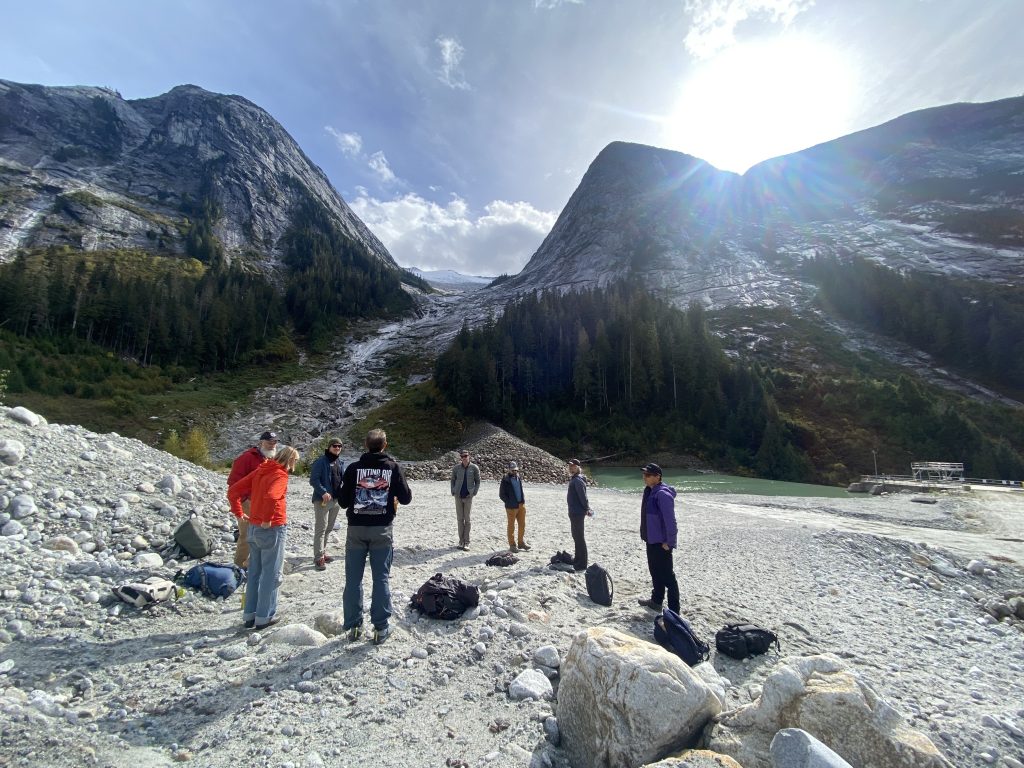
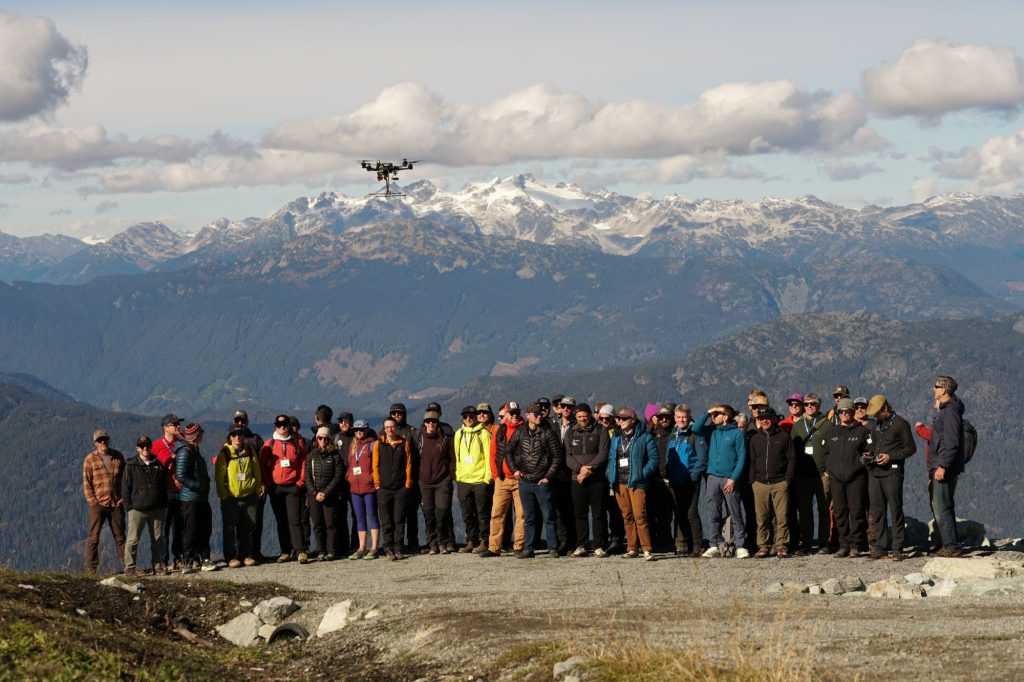
The field trip to Whistler Mountain to learn about its avalanche program attracted about 200 delegates.Marc Cossette from Wyssen Avalanche Control explains the workings of their LS12. Brendan Cronin of Avalanche Infrastructure Management, showcases nauen-Schätti’s LM32 RACS, with a capacity of 32 explosives.Jenn Coulter, a CARDA dog trainer, demonstrates her dog’s obedience skills on Whistler. The tour on Whistler included a look at their avalanche dog program.The tour of Whistler ended with a hike to the top of the t-bars.The view from the alpine on Whistler Mountain.Delegates look at lock block walls placed in the track of Path 16.0 during a tour of the Duffey Lake Road avalanche control program. Photo by Jean-Nicolas BertrandThe flight across the Coast Mountains on a tour of Dynamic Avalanche Solution’s avalanche program in Toba Inlet. Photo by Chris Argue.The tour of Dynamic Avalanche Solution’s avalanche program in Toba Inlet. Photo by Chris Argue.The Alpine Solution field trip on Blackcomb Mountain looked at emerging drone technologies such as lidar and explosives delivery. Photo by Kirill Kokorin
Day 4: Thursday, Oct. 1
Day 4: Thursday, Oct. 1
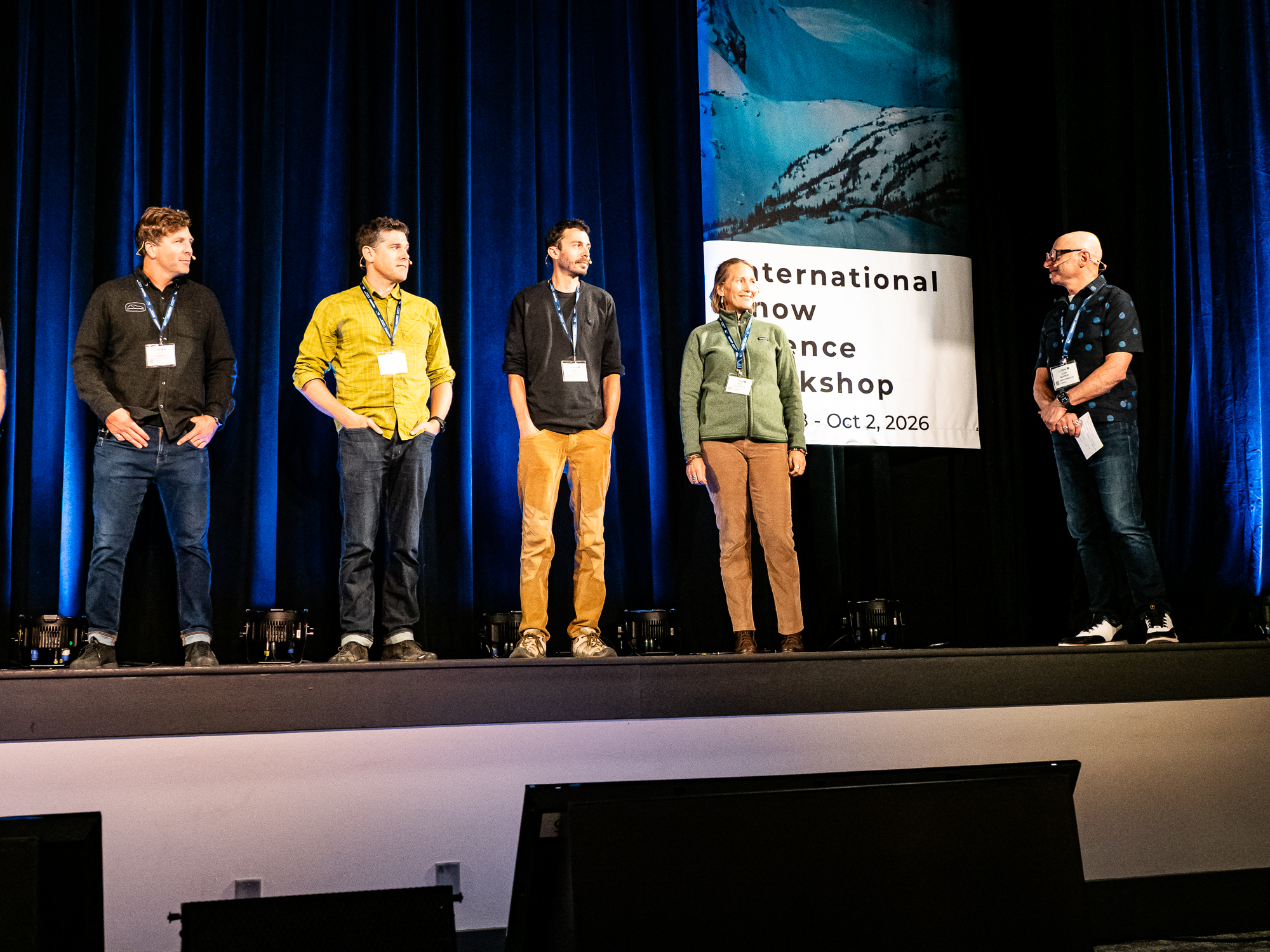
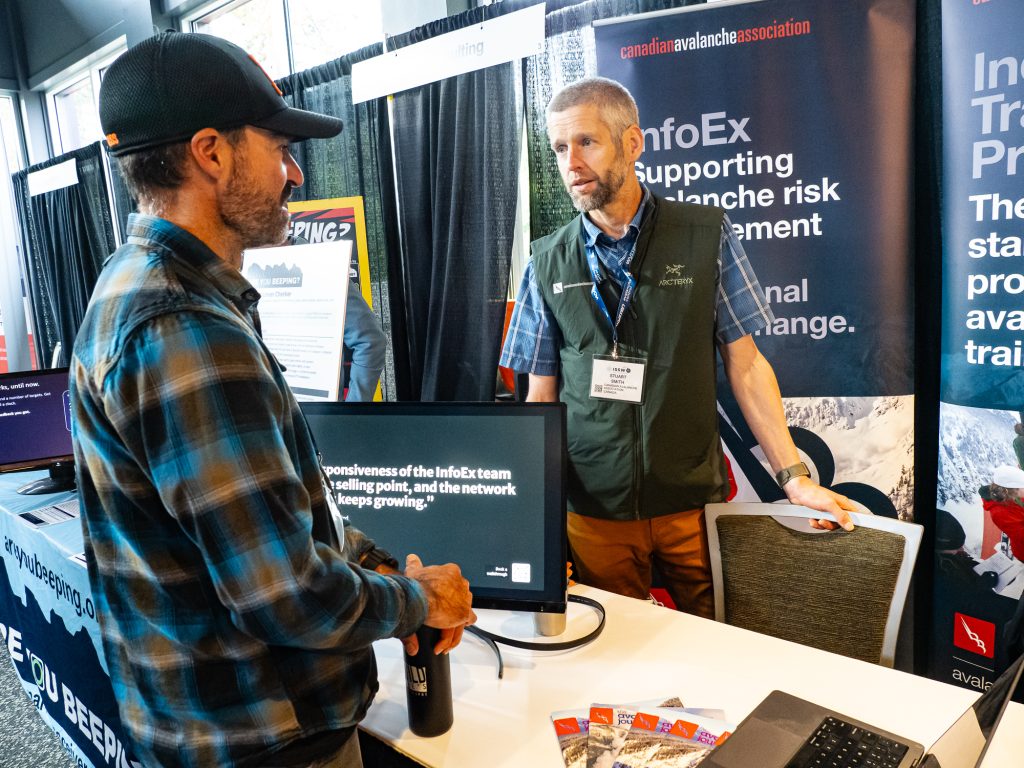
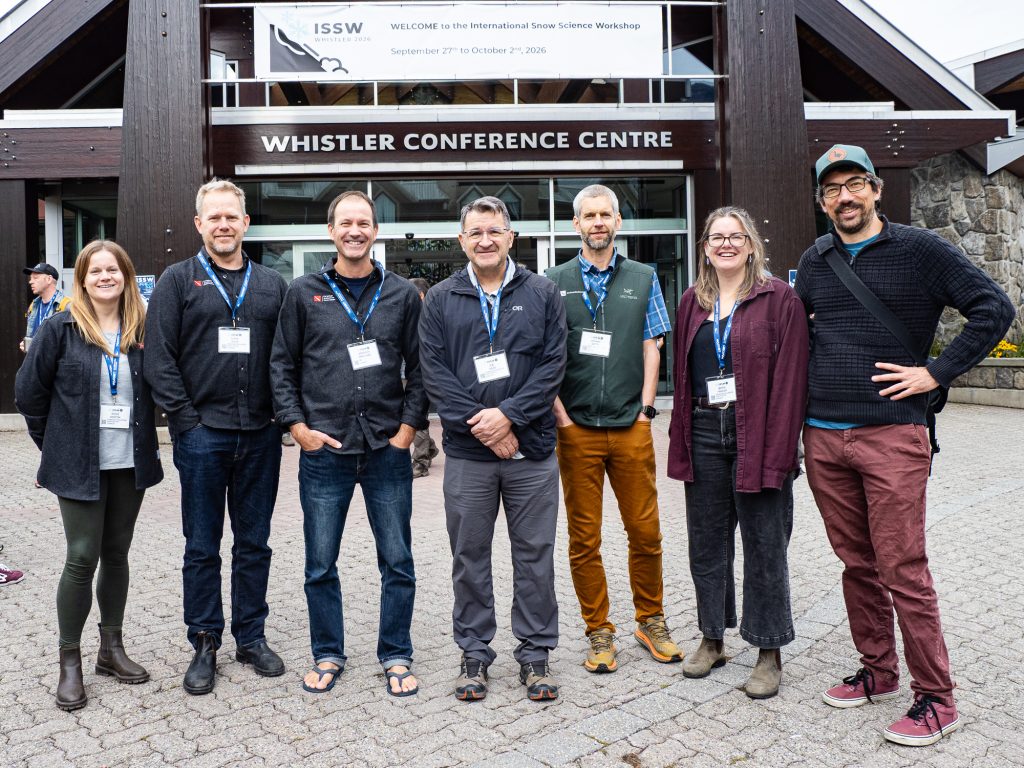
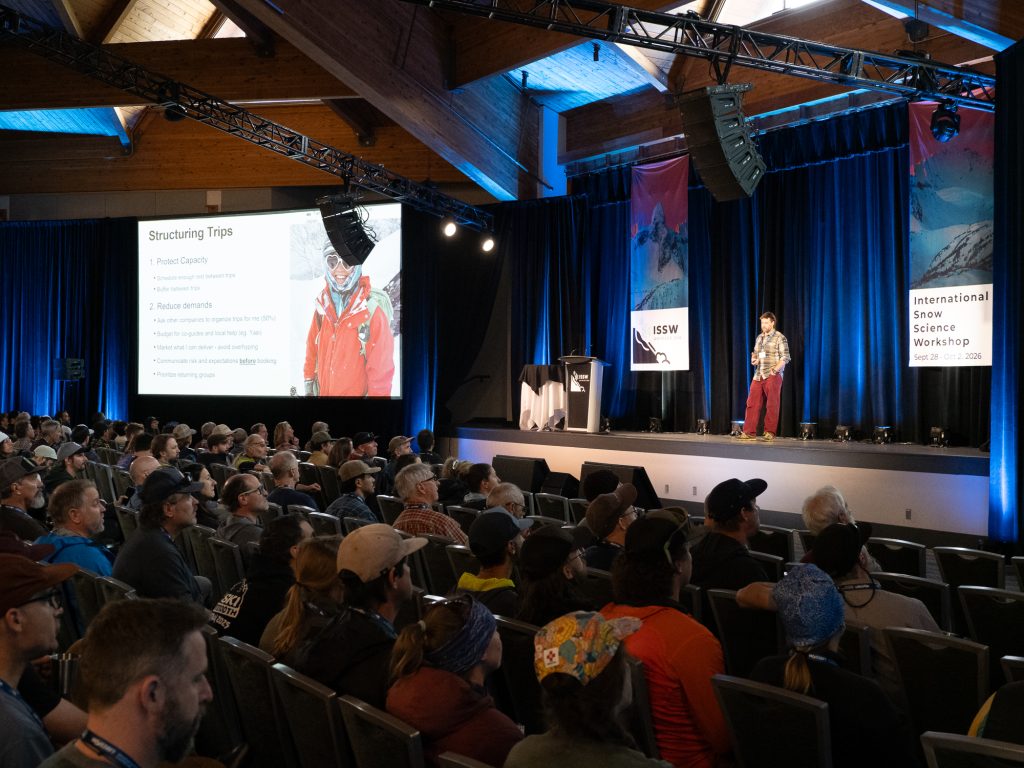
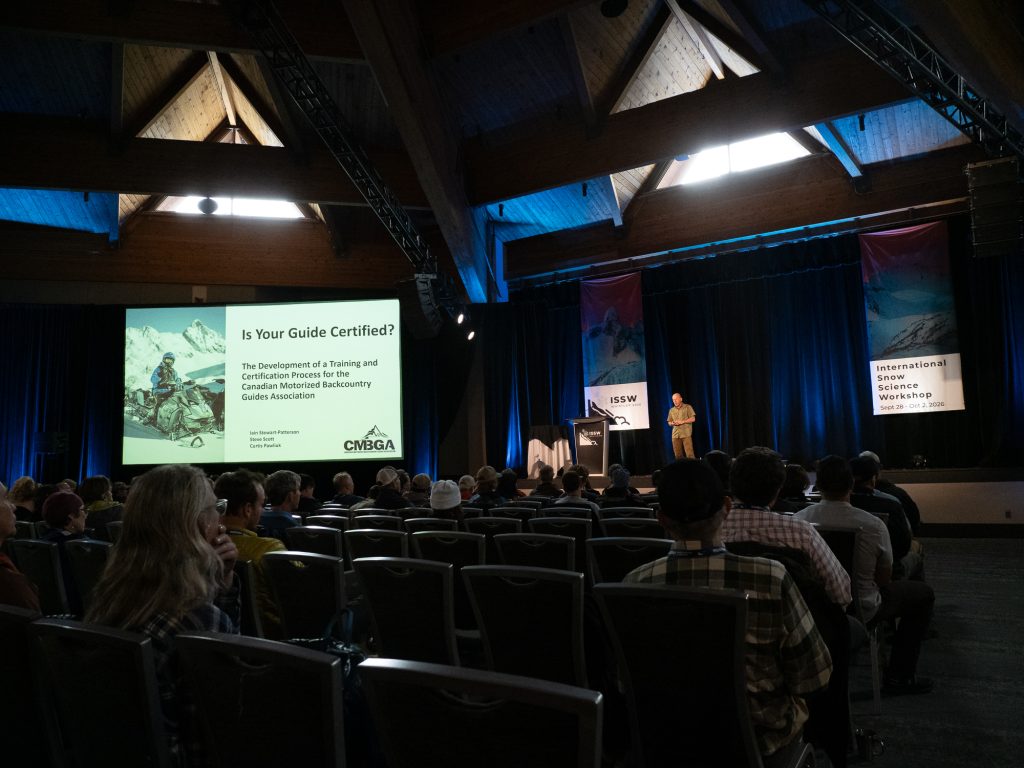
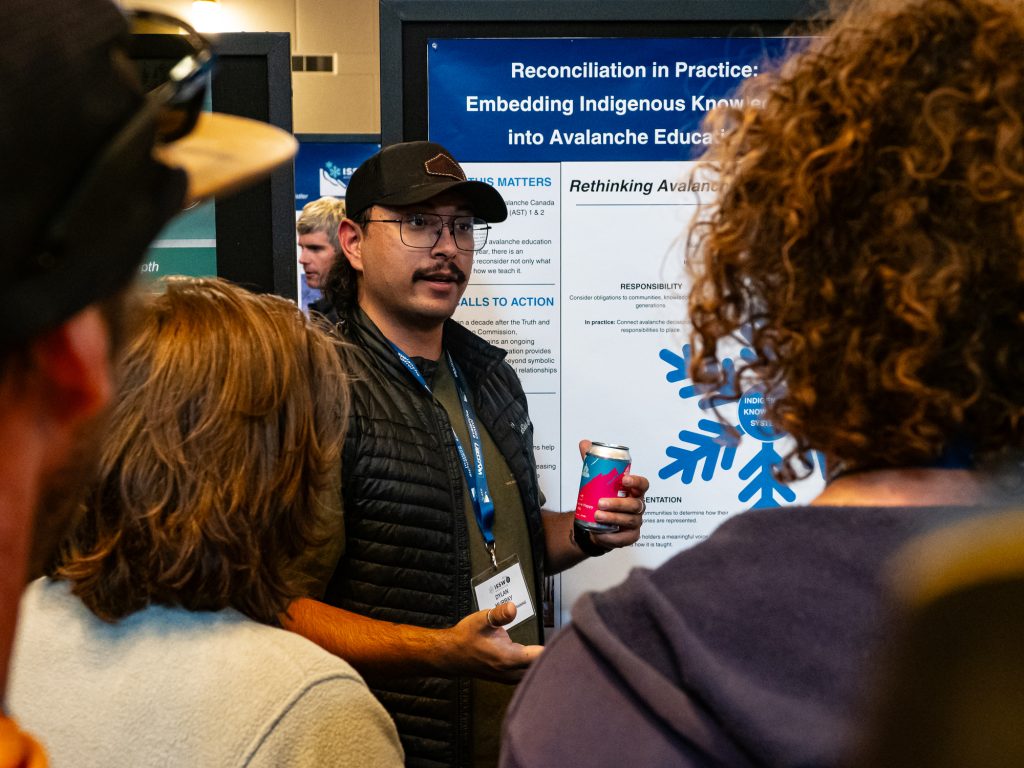
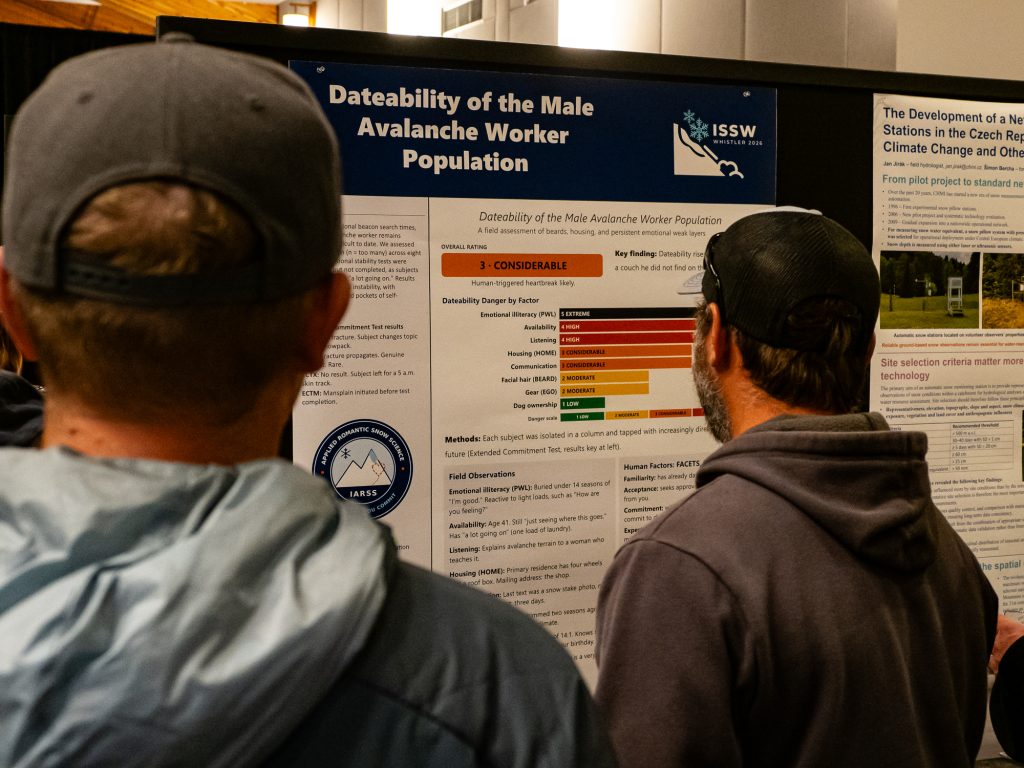
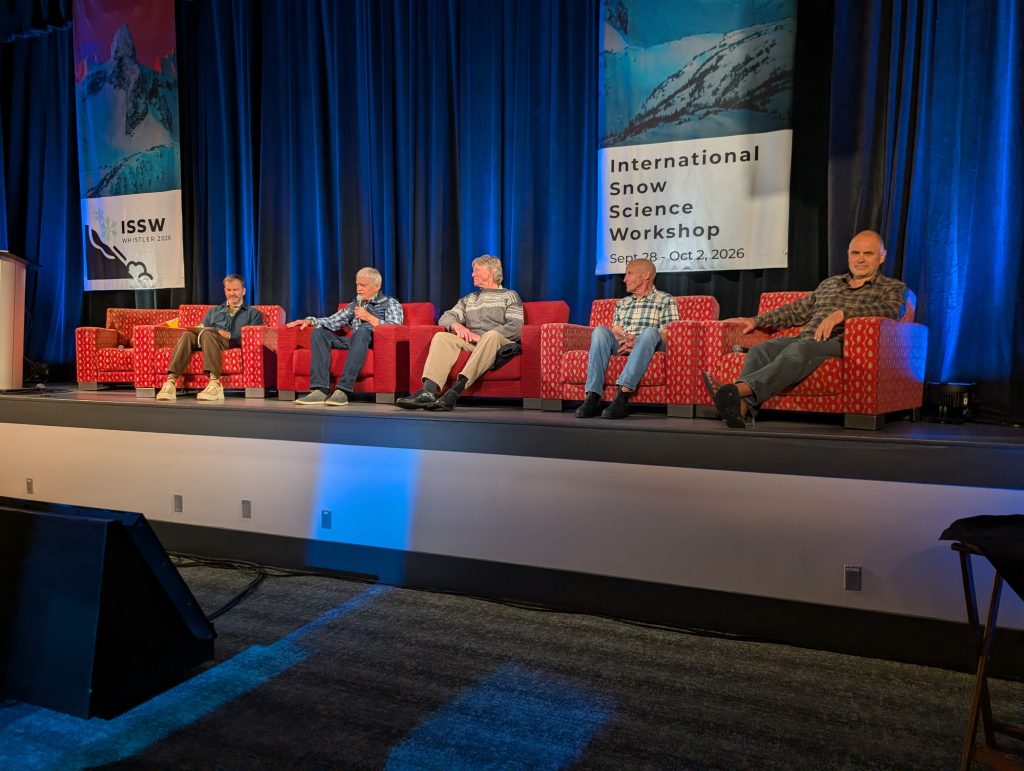
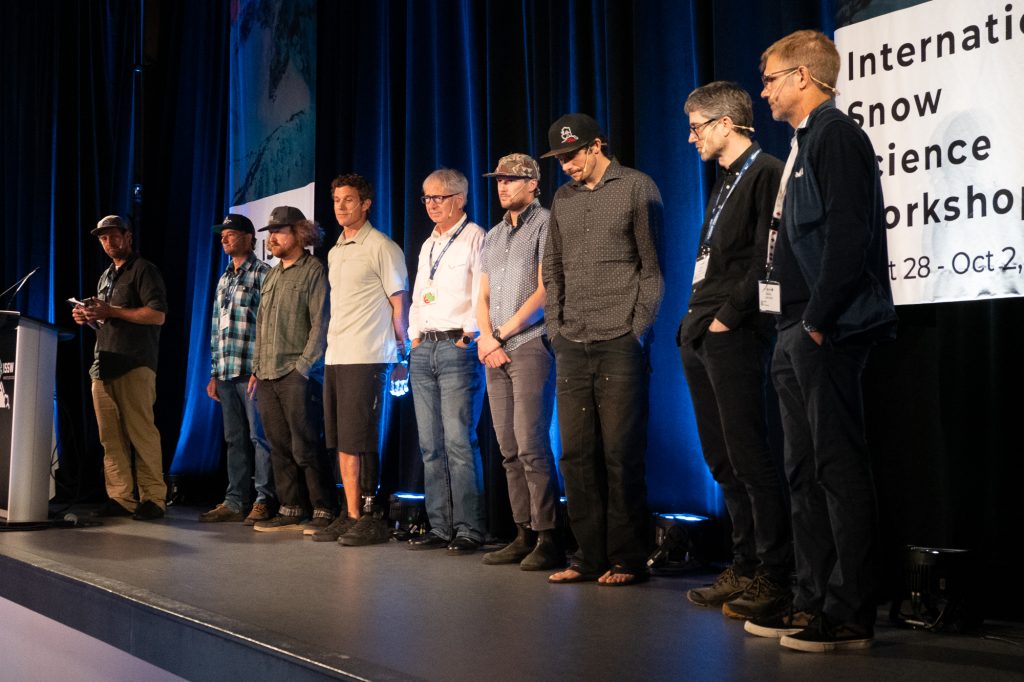
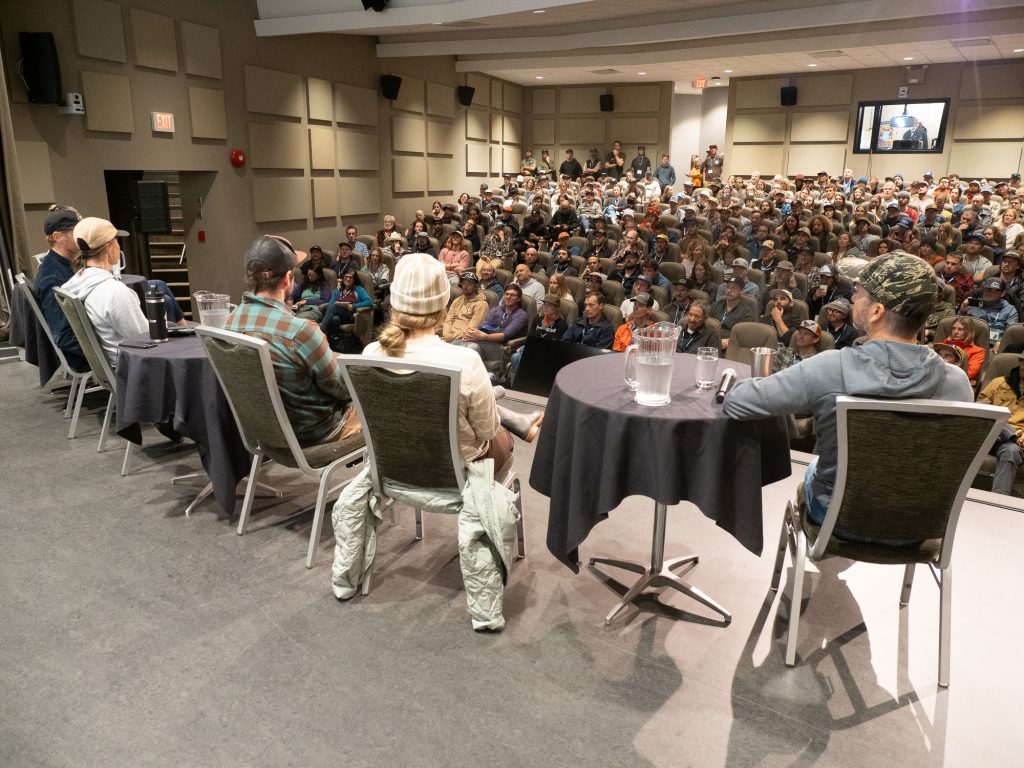
Simon Horton moderates the first panel of the day.The presenters from Thursday’s morning session, Forecasting With Emerging Technologies.Stuart Smith, InfoEx Manager, at the CAA booth.The CAA team, from left: Rosie Denton, Chris Dyck, Brendan Martland, Joe Obad, Stuart Smith, Maris Fraser, and Alex Cooper.Alex Geary gives a presentation on the challenges of a roaming backcountry guide.Erin Tierney from Whistler Heli-skiing and President of the CSGA, delivers a presentation on operational risk tolerance during periods of uncertainty.The presenters from the Thursday afternoon session on public forecasting.Iain Stewart-Patterson speaks about the creation of the Canadian Motorized Backcountry Guides Association.Rachel Reimer, a recipient of this year’s Stellar Awards, presents on her PhD research on risk, inclusion, and psychological safety among guides and avalanche professionals.Dylan Murray’s poster on incorporating Indigenous knowledge in avalanche education was very well received.This poster on the “Dateability of the Male Avalanche Worker” was the far and away the most popular one on display at ISSW (and possibly the most scientific.)The Thursday banquet featured stories from four legends of the Sea-to-Sky avalanche community (from left): Hugh Smythe, Chris Stethem, Scott Aitken, and Tony Sittlinger. Mike Douglas (far left) was the moderator.
Day 5: Friday, Oct. 2
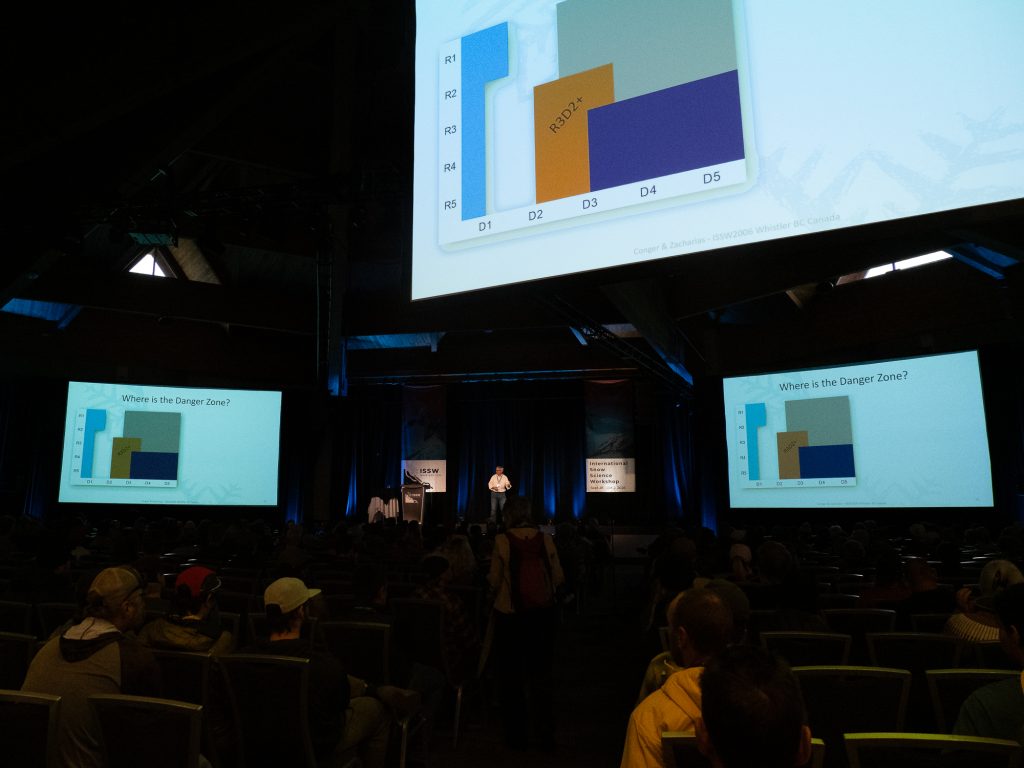
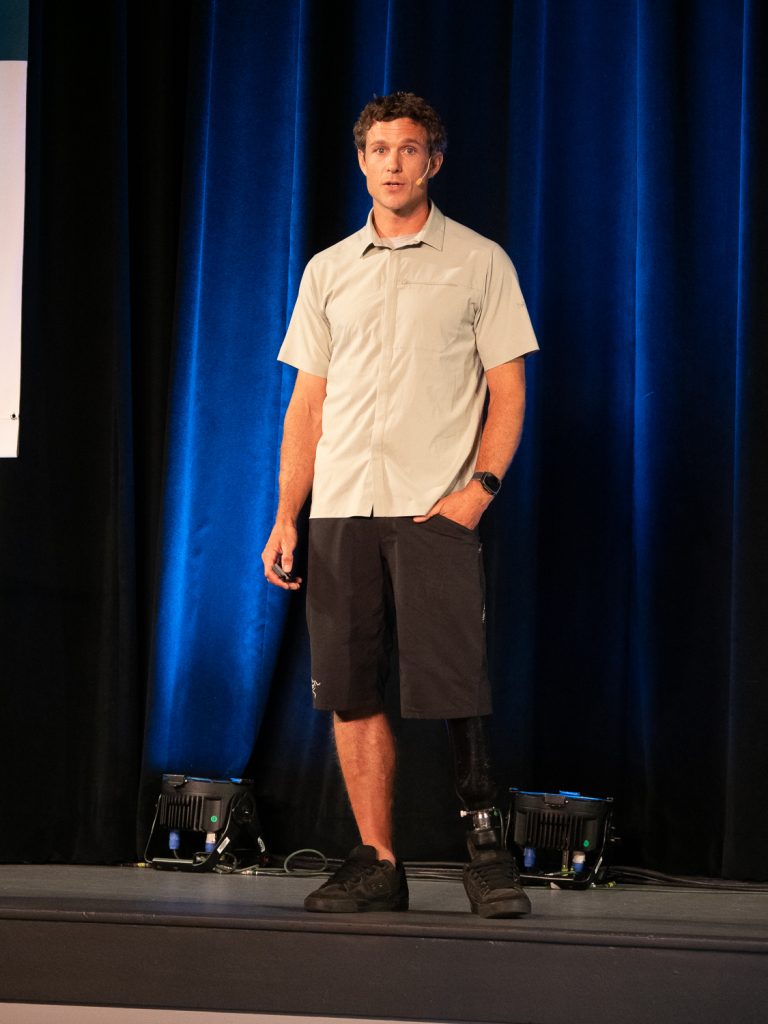
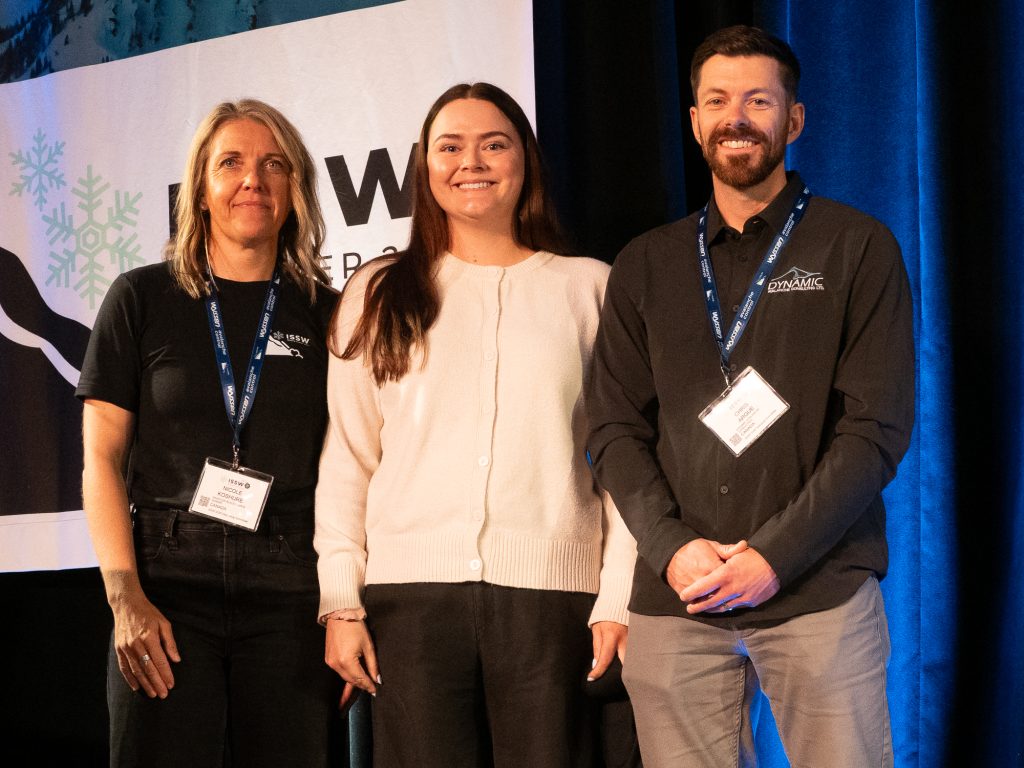
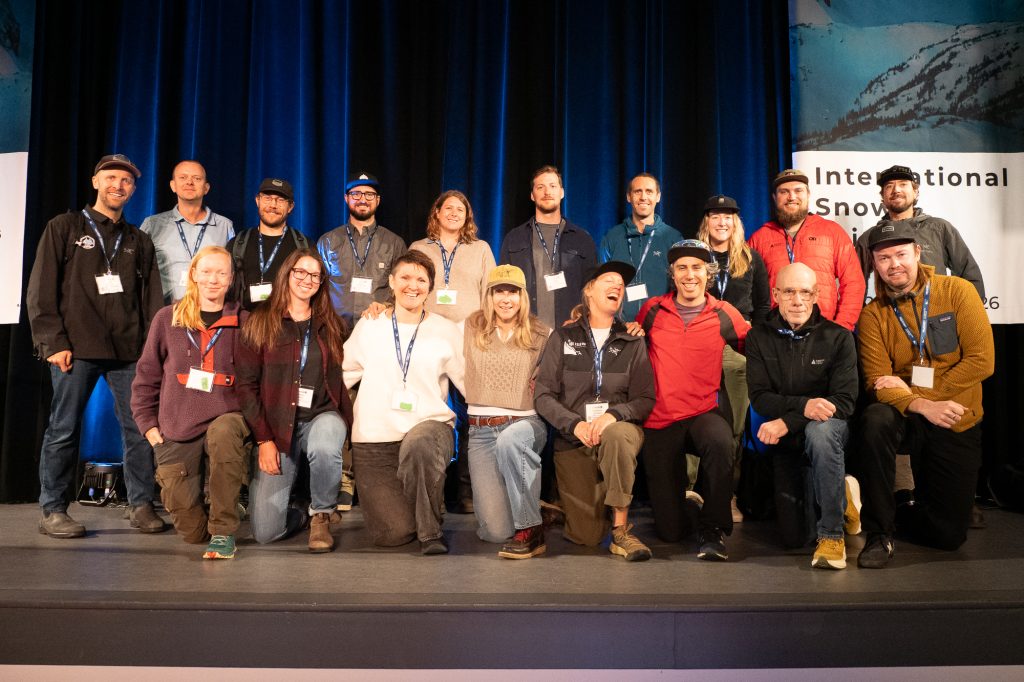
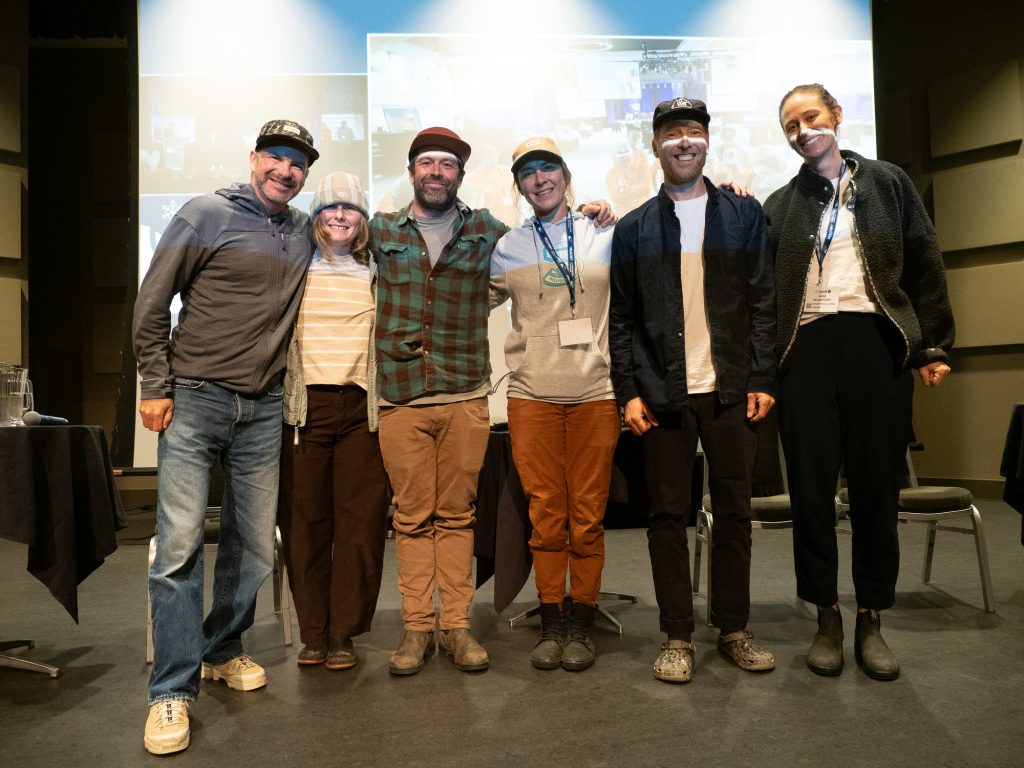
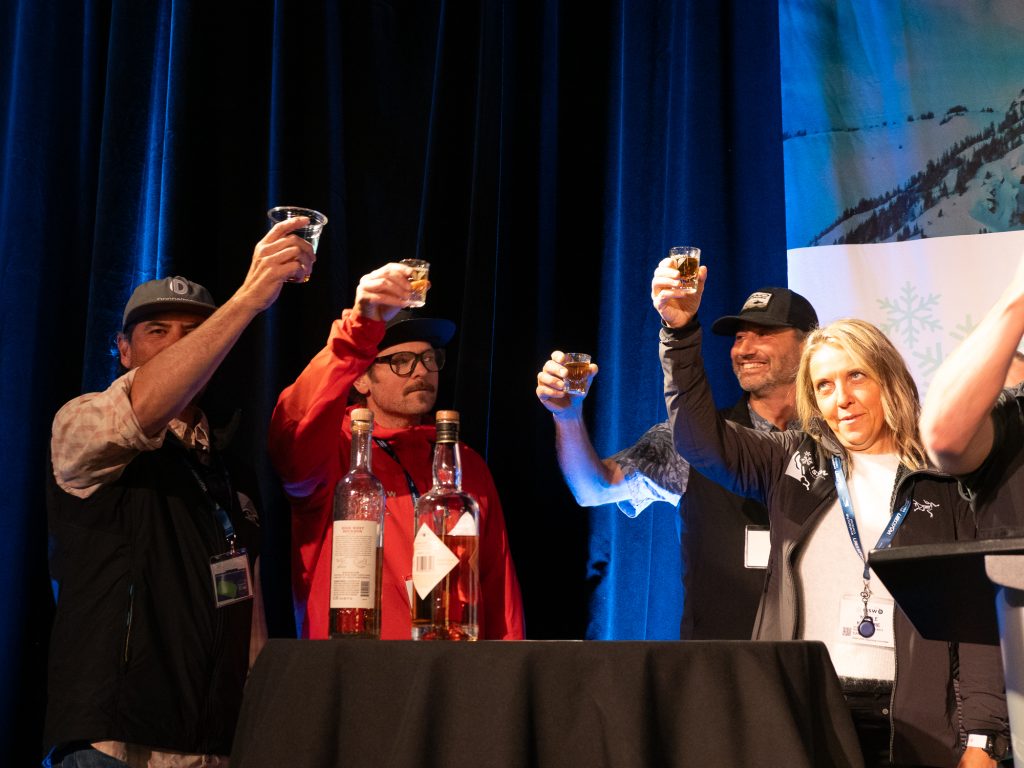
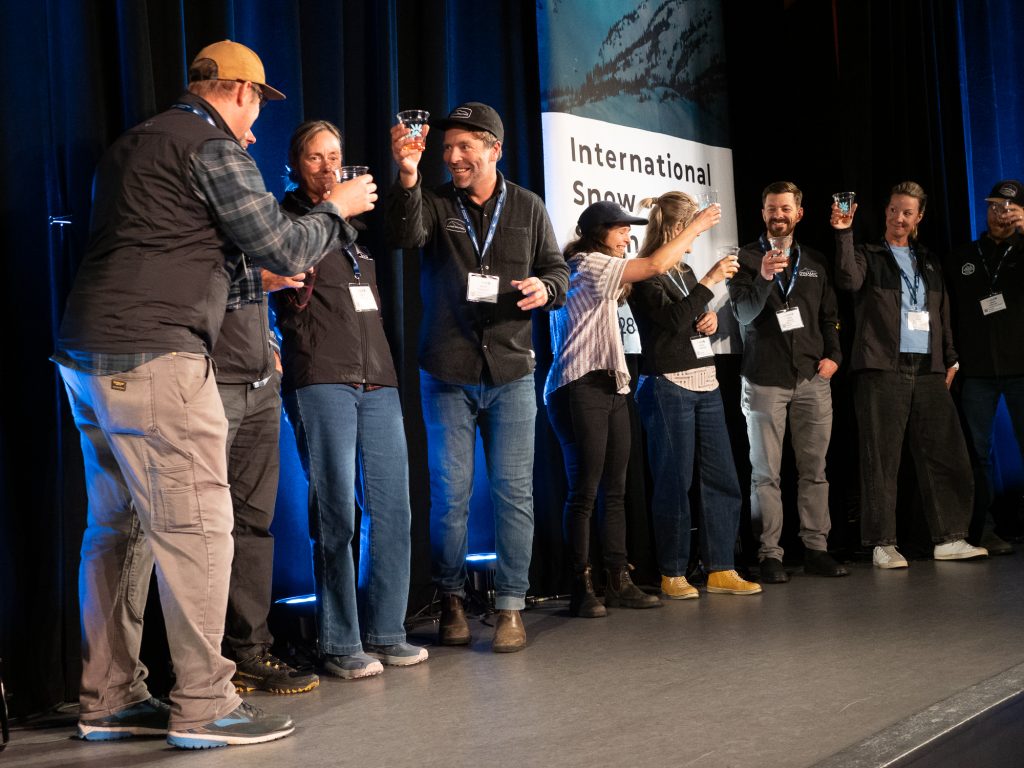
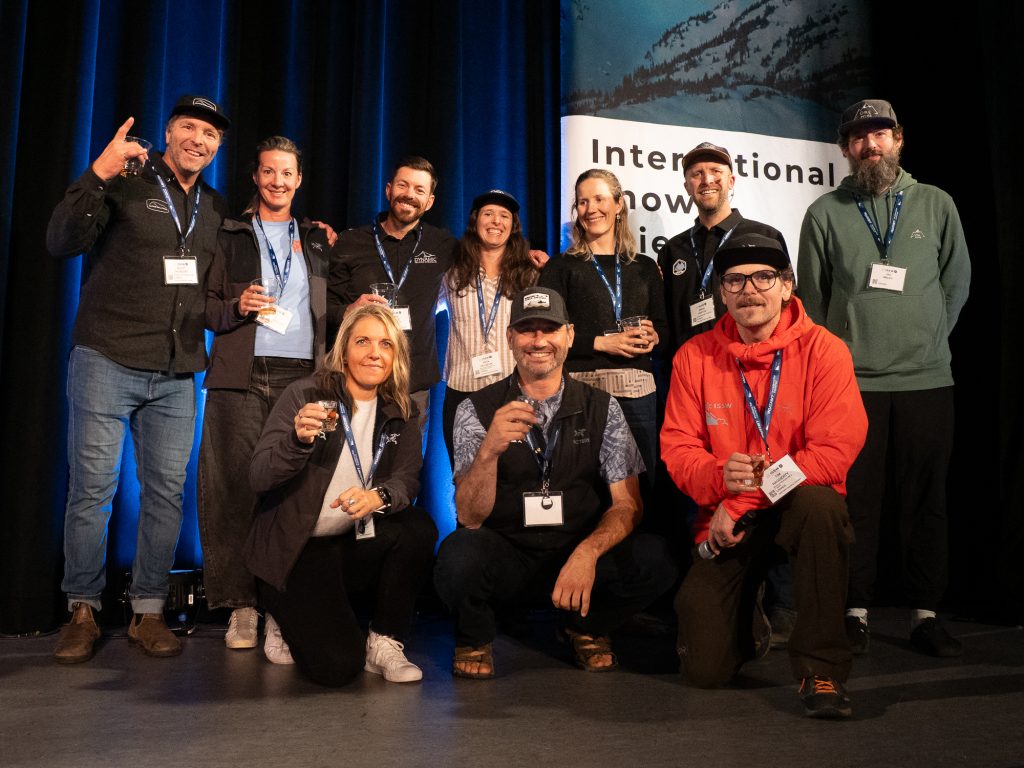
Penny Goddard and Tim Haggerty kick things off on Day 5.Dr. Simon Turner gives a presentation on what surgeons can learn from the guiding industry.Roger Atkins’ looks at the relationship between slope angle and persistent weak layer avalanches.Peter Macpherson from CMH talks about the evolution of the run list in mechanized skiing.Geoff Osler’s talk was on decision-making and risk management in guides’ training.Marc Piche completed the first session on Friday with a talk that looked at running morning meetings in an environment with increasing technology.The first session on Friday was a Canadian affair. It was moderated by Grant Statham and five of seven presentations were by Canadians.Steve Conger gives a talk on worker safety and where avalanche workers position themselves near avalanche paths during times of high danger.Mark Herbison talks about the challenges of avalanche control during a five-day atmospheric river event in Rogers Pass in March 2026.The presenters from Friday’s session on low-probability, high-consequence avalanches.Aiyana Anderson-MacIsaac from Indigenous Women Outdoors accepts the Indigenous Avalanche Training Grant from Nicole Koshure, ISSW 2026 co-chair, and Chris Argue, owner of Dynamic Avalanche Consulting, who created the award in partnership. Not pictured is the second recipient, Medāneghá Det’ele Ts’īyōné’ Tu tētlel.Team Avalanche Canada at ISSW 2026.John Buffery gives a presentation on avalanche risk in ski and snowboard movies.The final panel on big line riding was sold out and lined up down the hallway and up the stairs.The Big Line Riding panel featured of pro skiers, pro snowmobilers, and guides. From left: Mike Douglas, Alex Armstrong, Chris Rubens, Nadine Overwater, Kevin Hjertaas, and Anna Heuberger.The ISSW Snowbird 2028 and ISSW Whistler 2026 teams have a toast.The ISSW Snowbird 2028 and ISSW Whistler 2026 teams have a toast.Team ISSW 2026. Back row, from left: Scott Thumlert, Jenny Citherlet, Chris Argue, Nata De Leeuw, Penny Goddard, Simon Horton, and Jan Malek. Front row, from left: Nicole Koshure, Jerome David, and Tim Haggerty.