By Alex Cooper
An edited version of this interview was published in The Avalanche Journal, Volume 141, Summer 2026. The complete audio and transcript follows.
IN 1998, PASCAL HAEGELI CAME TO CANADA as an energetic and ambitious PhD student at UBC’s Department of Atmospheric Sciences. A passionate backcountry skier, he soon decided he “didn’t want to launch weather balloons for the rest of my life.” With a scholarship in hand, he approached Dr. David
McClung about pursuing his PhD in his avalanche research program.
That move was the Canadian avalanche industry’s gain. In the 28 year’s since, Pascal has made numerous important contributions to the avalanche profession, first as a consultant and then as the founder of Simon Fraser University’s Avalanche Research Program (SARP).
In May, he left Canada to take on a prestigious new role as the head of the Snow Avalanche and Prevention Research Unit at the WSL-Institute for Snow and Avalanche Research SLF in Davos, Switzerland. He will now oversee the world’s largest avalanche program. While his departure is a huge loss to the Canadian community, it is also being seen as recognition of the great work being done here.
I spoke to Pascal over video for nearly two hours at the end of March, while he was winding done his semester at SFU and preparing for his move overseas.
Hello, my name is Alex Cooper and I am the managing editor of the Avalanche Journal, which is the official magazine of the Canadian Avalanche Association. I’m joined today by Dr. Pascal Haegeli from Simon Fraser University. Pascal is one of the world’s leading avalanche researchers. He’s originally from Basel, Switzerland, but he came to Canada in the late-90s to pursue his PhD at the University of British Columbia, where he wound up researching under Dr. David McClung. He did his PhD on the concept of avalanche winter regimes. From there, he took part in many projects, such as the Avaluator, the North American Danger Scale, the Conceptual Model of Avalanche Hazard, and development of InfoEX.
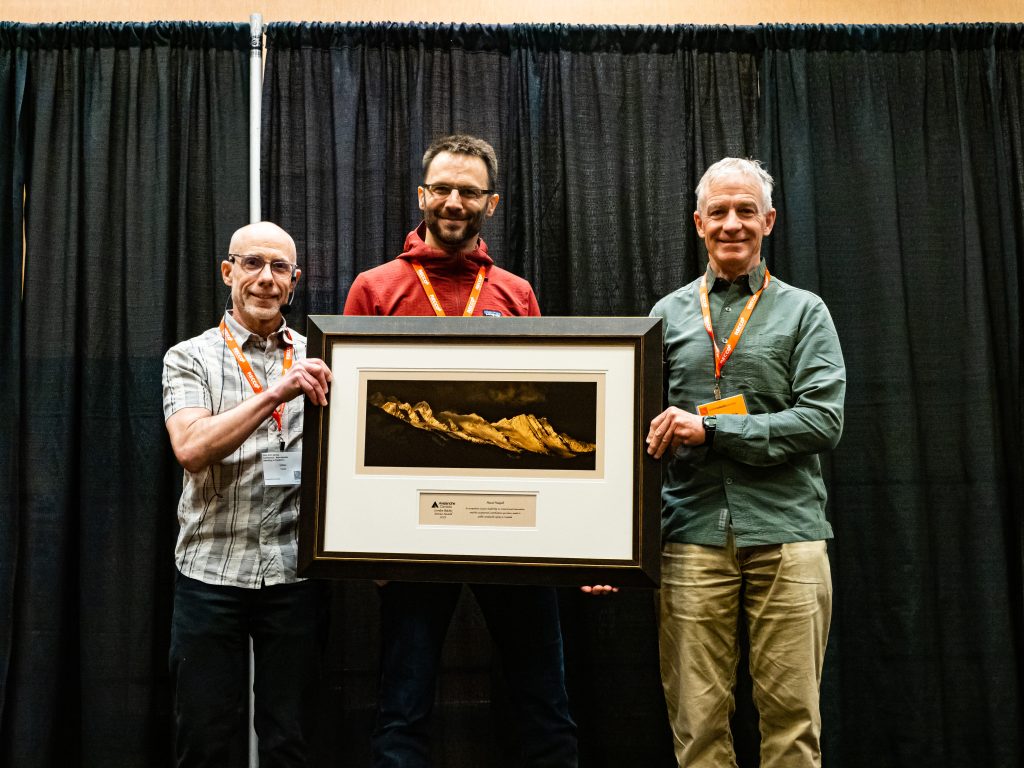
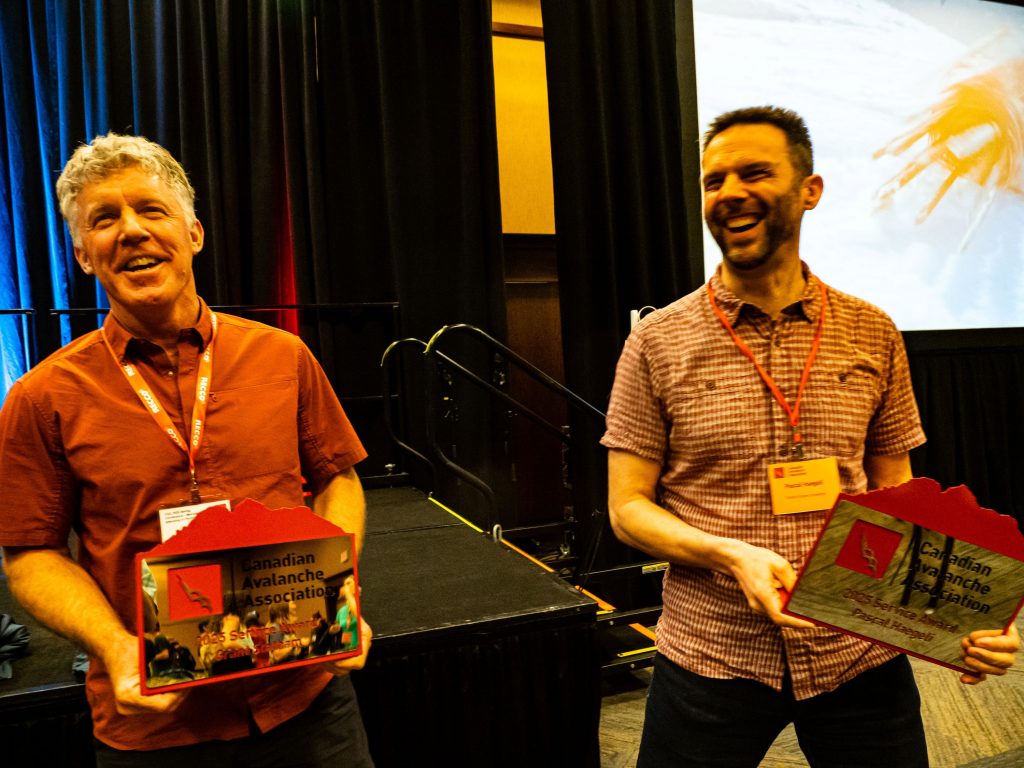
In 2015, he joined Simon Fraser University to lead the Avalanche Research Program. There, he’s helped advance research into the danger scale, terrain use, avalanche terrain mapping, snowpack modelling, and much more. He’s a CAA Avalanche Professional and was the recipient of the CAA Service Award in 2025 for his contributions to research in both the public and professional realms.
But sadly, his time here in Canada is up. He’s taken on a new role as the head of the Snow Avalanche and Prevention Research Unit at the Swiss Institute for Snow and Avalanche Research SLF in Davos, Switzerland.
Thanks a lot for joining me, Pascal. Does that all sound about right to you?
Pascal Haegeli: Thanks, Alex. Thanks for having me. Yes, that sounded all about right, and it’s a bit intimidating to hear it all at once.
Alex Cooper: We’re doing this interview on Friday, March 27. You’ve got, what, about a month or so left at SFU, in Canada? How are you feeling right now?
Yeah, my last day at SFU is on April 30 and then we have another two weeks before we actually hop on the plane. It is now sinking in what’s actually happening. It’s a little bit intimidating, and there’s lots of things to do until then. So yeah, it’s crunch time.
Great. Well, I’m going to start with how I like to start a lot of these interviews, and that is: what was your first experience with avalanches? And that’s whether it was something in-person or just witnessing it on TV or anything like that.
It was interesting to see that first question and then think about it. It actually goes all the way back to junior high school for me. In Switzerland, as you imagine, it’s a nation of skiers. In high school, when I was growing up, you would go on a week-long ski camp, basically. Most of the kids would go to a ski camp in a ski resort, but in my junior high, they also offered a backcountry skiing option. I was one of maybe
10 kids at my school who chose that backcountry ski option. So that was my first introduction into backcountry skiing. We were led by my PE teacher and a Swiss mountain guide—a stereotypical Swiss mountain guide, big beard, big personality.
That was my first introduction into backcountry skiing. We got an introduction into snow science, we dug my first pit, and did some avalanche safety training there. At the time, I was 14. That was just unbelievably cool. It then took a while for me to get into the backcountry again, because that wasn’t the thing my parents did. But that was really the start.
What was your journey from there into avalanche research? Because I understand you didn’t go straight into that. That wasn’t what you jumped into straight away at university. It only happened when you started your PhD.
Exactly. And even there, it was kind of this random pathway. I studied earth science with a focus on meteorology at ETH in Zurich. That’s where I met a lot of friends who were into the backcountry as well, so that’s really when I started going into the backcountry more frequently and doing exciting trips with my friends.
In 1996, I came to Vancouver for six months to UBC because as part of our undergrad, we had to do an internship somewhere else for a couple of weeks. My advisor at the time did his PhD at UBC, so he connected me to UBC. I came here for six months and really fell in love with the place. I went back to Switzerland, finished up my degree and the minute I graduated I was back here trying to pursue grad school.
Initially I was in the atmospheric science program. After a year, I realised I didn’t really want to launch weather balloons for the rest of my life. Dave (McClung) was in the same department, basically, and I had a scholarship, so I was free to choose what I wanted to pursue. I simply asked him whether he was interested in a new student. I was very fortunate he said yes at the time. This allowed me to combine my academic curiosity with my passion for mountains and skiing. So that’s how I got started with Dave.
I’m curious—what did you love so much about Canada that brought you back?
Well, it was just a different world. It was more relaxed, more space. It was just an exciting, different environment to be in, and it was kind of my own. Switzerland is maybe a little bit more rigid than Canadian culture. I’m sure we’re going to talk about that later in this interview. It was just different and new. Because I was so much into the backcountry, there was just endless opportunities here, so that was a good combination.
Where were you going backcountry skiing at that time?
Oh, all over. I mean, it’s kind of funny because I see it in my students now, where your world evolves around it. You start planning your weekend on Wednesday. That’s your main focus. Then you do some big trip over the weekend and you come back and you’re really tired on Monday and Tuesday. Then you start planning again on Wednesday. I did lots, like Sea-to-Sky, Duffey, Mount Baker—everywhere we could get to within a weekend.
Going back to your PhD, it’s on avalanche winter regimes, which I understand—or maybe don’t understand—but it’s related to snowpack climates. Can you just tell me a little bit of what avalanche winter regimes are and how it differs from the traditional mountain snowpack climate.
Let me tell you a little bit of how I end up with that. Dave, at the time, had an industrial research chair that was sponsored by CMH. Very early on when I was working with him, he introduced me to Roger Atkins, a well-known mountain guide from CMH, who built Snowbase, which was their operational database, where they entered all their avalanche safety observations and assessments. Dave was like, “We are working with CMH, here is a dataset. What can you do with that?”
I was the first student who looked into this dataset in detail. I interacted a lot with Roger and learned a lot about how this dataset was collected, what its purpose was, and also what its weaknesses were. It’s not a dataset that is collected for scientific purposes, it’s an operational dataset.
Similarly, I started to look at the InfoEx, too, which was the next, bigger dataset. At the time, the InfoEx was basically just a collection of manually written or transcribed reports in Word files. There was no database. As part of my PhD, together with Boris Gruber, I wrote some code that extracted all the information out of these Word files and basically created the first InfoEx database that we could use to look at patterns.
I basically had Snowbase and InfoEx and started to look at the patterns in there. I looked at avalanche activity patterns and information that was shared about the structure of the snowpack. I compared that with our traditional perspective on snow and avalanche climates, which is maritime, continental, and transitional. When I looked at that, it clearly came out that this transitional is more than just the in-between between maritime and continental, there’s actually unique characteristics that come out from that combination that are highlighted in this snowpack and avalanche activity data. That’s where the idea came from. “OK, there is more.”
And then we also saw dramatic variations from year to year. So, there’s no static snow climate in some ways. That’s where the idea of this winter regime came from. What is the characteristic and the nature of avalanche activity in a particular winter? What dominates that nature? That’s where that that idea came from.
Okay, so this is what you focused on for what—five, six years? Formulating that and developing that?
Exactly. Trying to squeeze something out of these datasets that provided some insight.
How have you seen that work be put into practice?
That’s a good question, and it’s been so long ago that it’s a little bit hard for me to tell you. I’ve worked on so many other projects since then that had bigger impact on the community. In some ways, thinking about the nature of avalanches and the dynamics associated with them, since nowadays we have avalanche problem types, and in some ways that was maybe one of the precursors to that. But I don’t want to overstate the impact of my PhD. I mean, there’s bigger work that I’ve done than that.
Which we’re about to jump into. But before we get into that, you were working on your PhD in 2003 when, I think everybody listening to this knows what happened that year: the two avalanches at Durand Glacier and Connaught Creek. Where were you and how did that impact you at that point in your career?
I was at CMH Gothics at the time when at least one of the accidents happened. I was visiting CMH Adamants quite a bit because Roger Atkins was there. And on my way out from the Adamants, Claude Duchesne, who was the manager or assistant manager of the Gothics at the time, he asked, “Do you mind staying here? We could use an extra body for snow safety.” So I stayed there and I was there doing that during that period where conditions were very challenging. Then those accidents happened.
I can’t overstate the impact of those accidents, both on the community and on my career as well, because it created opportunities afterwards that really then took me from finishing my PhD into actually working for the community and contributing. It was a tremendous impact. I probably didn’t realize it at the time, but looking back that, I can’t overstate the impact there.
Yeah. Everything that came out of it that, you ended up working on in some way. Before we start talking about those things, you had Avisualanche Consulting. When did you start that? Was that before or after this?
It came directly out of it. So, the accident happened in 2003, and then in response to it, the CAA put together a SARNIF proposal. SARNIF stands for Search and Rescue New Initiatives Fund, which has been a tremendous funding source for research and development in the Canadian avalanche safety industry. They put together this proposal for the design of a decision-support tool for backcountry recreationalists.
At the time, there were a number of these tools used in Europe. I had the advantage as a native German speaker, I could actually read all the literature that’s out there. I became a translator of that knowledge to the Canadian community. Werner Munther came over and gave some presentations. I helped translate some of his presentations. I also translated part of his book. I had this in into these decision support tools.
When the project was approved by SARNIF, I applied to manage that project. I feel very fortunate and grateful that Clair Israelson, who was the Executive Director of the CAA at the time, trusted me to manage this important project for the Canadian avalanche community. I hadn’t even graduated from my PhD at that point, so it was the perfect timing. I was at the right spot, the right time. Just a little advantage of knowing German to jump into this role.
That’s basically how I started my consultancy. All the projects that followed built from there. I was always very different from other avalanche safety consultants who focused more on the operations, like Dynamic and Alpine Solutions and 6 Point. They’re engineers who do operational work. I always focused more on just R&D. I had this niche there, basically, to help out the community in a different way.
That work you were talking about—the decision-making framework—that was the Avaluator is what came out of that. How did that come about? How did you research the Avaluator and produce it?
There were all these European decision-support tools out there that gave a little bit of a general direction. The project was a three-year project, it had multiple components, and the design of the Avaluator was the ultimate goal. For that development, I got to work with a whole bunch of very interesting and influential people. One of them was Grant Statham, who was hired by Parks Canada in response to those accidents to push things forward there. I got to work with him. He really pushed the development hard around ATES, around icons at the time. We started to think about what is needed in addition to just avalanche hazard information.
Another person I started to work with was Ian McCammon, an avalanche educator and researcher from the U.S. who was really influential around introducing the concept of heuristic traps. He also created this decision-support tool, The Obvious Clues, as an approach for recreationalists to assess the hazard in simple ways.
The last person I want to mention here is Wolfgang Haider, who was a professor at Simon Fraser University, who helped me look at the social science component of the project. It was the first project where there was a desire to better understand recreational users. What do they do? What’s their awareness? How could we help them make better use of our tools, basically? I contracted that portion of the project out to Wolfgang, and then I started working very closely together with him.
That’s how I got into the social sciences—because I’m originally hard-science trained. That led to this more interdisciplinary perspective and approach. Really it was working with these folks and others to create this foundation and then develop the Avaluator as a Canadian version of the tools that existed in other places.
When you started on this, did the ATES scale exist, or did that come up simultaneously?
It came up simultaneously. It was a little bit ahead, so that allowed us to then integrate it into the trip planning tool of the Avaluator, where we basically combined the danger rating with the ATES rating to create this risk matrix of conditions versus terrain, which is the fundamental thing you want to introduce recreationalists to. That’s how you manage the risk from avalanches.
I think it’s interesting because it seems it’s so fundamental now. Maybe it was fundamental back then, but to actually just put it on a page and have that chart you made, with the colours and showing terrain on one side, the danger scale on the other axis. It seems so natural now, but maybe it wasn’t so natural back then, because it didn’t even exist.
The use of terrain for managing avalanche risk has been around for decades, so we didn’t really invent something new there. But I think creating a relatively simple system that introduces people who are new to the sport to some of these fundamental concepts in an accessible way was something new.
Now, I understand there was actually some pushback to the Avaluator and even some legal challenges. I don’t think we need to get into that in-depth, but I am curious what you learned from that experience of creating this product and then having to defend it and make sure it goes ahead.
I think this was probably one of the most stressful periods of my entire career because it came out of the blue for me. Suddenly having to defend some of these fundamentals that you thought were unquestionable was really challenging. I was young at the time, I was early-30s. There were letters written to the President of SFU and to the Prime Minister, so it was a big deal, and it was a big deal for the community, too.
For me personally, it really made me double-check and really be thorough on everything. I had a tendency like that before, but I think it reiterated the importance of being thorough, having very solid research, and being upfront about assumptions and limitations of your research—and being very transparent about communicating all of that, so that you’re honest or transparent to the users. There’s less chance of a situation like this happening again. It was a stressful time.
I don’t doubt it. I’ve seen a few articles and old issues of Avalanche News about it. It was definitely something that surprised me when I saw that.
Sometimes students come across that and they’re like, ”So what happened there?” So, we can talk about it over a beer.
You did the Avaluator. I know you were involved with some other projects in between that and the start of the Avalanche Research Program at SFU, so we can touch on those. There was development of InfoEX. Is this InfoEx 2.0?
I didn’t develop InfoEx. InfoEx existed for a long time. What I was involved in was basically taking the InfoEx from a system where people faxed or emailed their observations in. There was a job of somebody who started at around 5 p.m. in Revelstoke at the CAA office and transcribed all those observations into a report that then was sent out back to the operations in the middle of the night.
We moved that into the 21st century by actually creating an online system. I was involved in that, and this was a super fascinating project because it allowed me to go to lots of operations and learn about how their daily process works and how the InfoEX fits into there. The challenge was to create a system that on one side supports the exchange, but on the other side also adds value to the individual operations who actually use the system. Because we have such a diverse community, the use or the daily practices differ dramatically from operation to operation, or from heli-ski versus a highway versus a ski area.
So, coming up with a flexible system that adds value to each of these operations internally and helps them improve their data-recording practices in a meaningful way was a really cool challenge. I think it was quite successful. I mean, the InfoEX has been overhauled a bunch of times since then, but the basic design is still the same. So, it was an exciting project.
Did visiting all those operations while working on this have an impact on your future research, or other future work you did?
This collaboration with practitioners has always been a key component of my research. I’ve always, like, I’m not a researcher that just studies snow science processes or something like that. I’ve always tried to build a bridge between research and application. So having this opportunity to get these deep insights, it definitely shaped my thinking and my understanding of the community for sure.
I know that you were also involved with developing the North American Public Avalanche Danger Scale and the Conceptual Model of Avalanche Hazard. What was your role on those projects?
I was the random researcher in the group of tremendous avalanche safety experts from Canada and North America. I was the odd ball in there. There were a group of U.S. and Canadian forecasters working on this for a while, but the follow-up project to the initial Avaluator project gave us an opportunity to actually put some funding behind this. Again, I worked very closely with Grant Statham leading this development. It was another project where I learned a lot about how avalanches are forecasted. I was able to contribute my analytical thinking and maybe the fact I wasn’t a forecaster myself allowed me to take one step back and look at it from a little bit of a higher level and see similarities and try to help with the conceptualization of the whole system.
It was a really fun project, and I’m amazed by its impact. It’s really the foundation now of how operations assess avalanche hazard, how it’s communicated within the professional community and with the public. And it has had impact beyond North America as well. The Europeans have their own system, but there’s lots of similarities between these systems.
As far as I know, those are the three major things you worked on in that period before SARP, but is there anything I missed? Anything people maybe don’t know as much about or should know about?
Yeah. There was a there was a whole range of studies that were more on the medical or rescue side. I did a study on the effectiveness of avalanche airbags, which might be one of my most cited papers ever.
I did a study on the Canadian avalanche survival curve that highlighted the initial drop off is probably more quickly than in Europe. And we looked at reasons for that. And then I worked with Jeff Boyd on a study around causes of death in Canadian avalanche victims.
These were all important studies because they showcased what the situation is in Canada, because lots of these types of studies were conducted in Europe, and the whole world looked at those as the reference. These studies showed things are maybe a little bit different over here. And they were also important for me personally, because they covered a different field again, so I became more and more interdisciplinary or broader, where I try to pick away at aspects that are insightful for the community.
Who were those studies done for? Was it on behalf of the CAA? Who was funding or propelling your research at that time? Was it independent research?
That’s a good question. The effectiveness of airbags, that was a study that was funded by WorkSafe at the time, because there was a big question around whether airbags should be mandatory. Of course, none of these tools are silver bullets because they have impacts on other things of the operation. Guides were concerned about the heavier backpacks having impacts on their backs—all that kind of stuff—and safety around helicopters. WorkSafe basically funded this study to get some objective information around this.
The other studies were self-funded, basically, because I was managing some of these big projects, I had good base funding and I was just curious about some of these things, so I self-funded them on the side.
The Simon Fraser Avalanche University Avalanche Research Program. We can start getting into that. How did that come about? And, actually, one thing I’m curious is, did you want to be a professor? Was this something you always dreamed about? And then, how did this programme get started?
Since I was a little child. *chuckles*
No, no, I didn’t dream about this. There’s a number of things that came together here. First, as you know, there’s a long tradition in academic avalanche safety research in Canada. Dave McClung at UBC, and then Bruce at the University of Calgary. And in the early 2010s, both Dave and Bruce retired. There was the question, well, how are we going to continue with this?
And again, I was at the right time at the right spot. I had already started to develop connections with SFU. I told you earlier that I contracted some of the social science work out to SFU, and I started working very closely with Wolfgang Haider. Eventually, I got a postdoc with him to pursue some of these questions in more detail. I taught a course at SFU. And so I started to push my foot in there, knowing that eventually the industry would be looking for a new partner for research.
When Bruce retired, I started to talk to all the stakeholders, and so we started this conversation about using the funds that were available and started to talk to SFU whether they were interested in this new program. Some people that were involved were Ian Tomm, who was the ED of HeliCat at the time. Gord Ritchie was instrumental—he was the president of the Avalanche Canada Foundation at the time. Joe Obad from the CAA and Gilles (Valade) from Avalanche Canada.
We all brought that together and were able to convince SFU that this is worthwhile pursuing. It was a lot of work. It took a lot of relationship building and it didn’t happen overnight. But eventually, with all that help and also a little bit of luck, I managed to secure this position. I feel very fortunate that the stars lined up for that. That happened in the early-2010s, and then the program officially started in 2015.
I’m curious, when you’re launching a new program, how do you decide what it’s going to look like and what you’re going to research—what you’re going to focus on?
Those were conversations I had with the industry for a long time. Compared to Bruce and Dave’s program, I was always interested in more of an interdisciplinary approach, basically bringing understanding from other fields into the avalanche safety community to address challenges. Bruce and Dave did tremendous work on better understanding how avalanches work, and then Bruce’s work with Jurg Schweitzer about avalanche release and how that works, and the development of the propagation saw test—those were tremendous advances for how avalanches release.
But in my perspective, there’s all these other components to it, too, that contribute to avalanche risk management. It’s not just about understanding the avalanche hazards themselves, it’s also then how do you manage it? How do you communicate it? How do you use modern analysis methods to identify patterns?
I was always interested in building those bridges, basically, so that’s what I’ve tried to do. That’s what I’ve presented to both the community and to the university as well. Because at SFU, I’m in the School for Resource and Environmental Management, which is a very interdisciplinary school. That’s very different from Bruce, who was in an engineering department.
You’ve talked about kind of four pillars of your research at SARP, and I was wondering if we could just talk about how what they are and how you came up with them.
We have these four pillars for general research themes. The first one is around snowpack and avalanche hazard modeling. This theme came about because models are the future, basically. If you look at the evolution of meteorology, for example, global weather models, they’re the main driver of better forecasting these days.
In the avalanche world, we’ve had these snowpack models since the early-2000s. They weren’t really used by practitioners. Part of it was because they were very science-focused and there was no easy way for practitioners to actually interact with these tools and learn what they can do, and what they can’t do, and so on. My thought was, well, for us to ever be in the position to take advantage of these tools, we need to start building the infrastructure for it, and we need to start interacting with these tools so we can collaboratively learn what works, what doesn’t, where do we need to put extra effort in to develop it further so that it can become useful for practitioners. That’s the reason behind that research theme.
I think we’ve done tremendous progress. The work of Simon Horton and Florian Herla, and now Martin Perfler and others, have really moved the needle a lot to make this more accessible to practitioners. I think they’re used a lot more by Avalanche Canada, and maybe some of the consulting companies that do remote forecasting use those tools, but we’re not quite there yet where they’re really valuable tool for practitioners. But it just takes time.
It’s pretty amazing to see it. When I first started working at the CAA, I’d see the automated snow profiles. And now to watch it evolve, now we’ve got the Snowpack dashboard that Avalanche Canada hosts. To see like what’s available there through the modelling is pretty impressive work.
They’ve done a tremendous job there. I think we’re now to the point where it can start to become useful. Now we just funded a new extension in the InfoEX where you can actually integrate it Into your InfoEx workflow, and we’ve funded the design of a feedback form in the InfoEx, so we can learn, was the simulation useful for you today or not? What did we miss? So that over time we can identify better what’s working and what’s not, and so push that further.
Do you think we’ll have spot avalanche forecasts? We can get a spot weather forecast. Do you think that’s something that’ll come down the pipeline anytime soon?
I’m not sure about spot, but maybe on slightly larger regions, I think we can get forecasts. We’re currently experimenting with ensemble forecasts, basically where we run the model multiple times with slightly different conditions. So, where we could provide practitioners with a better understanding of what the range of conditions are that you can expect in a certain region.
It’s not going to be perfect, and it’s not exactly going to represent what’s happening locally, but to give people a general sense of what is going on. I think especially with some of the persistent or maybe even the deep persistent avalanche problems, models can provide at least another data-stream around how those conditions evolve over time. The situations where we have the biggest amount of uncertainty, it’s just another data stream that hopefully helps.
OK. So that’s snowpack models. What’s next?
The second one was around terrain. So there, John Sykes has done a lot of work around AutoATES, trying to push that forward. We’ve also worked with operations to better understand terrain selection process under different types of conditions. The idea there was to eventually be able to provide a tool that could tell them under the current conditions in the past, you’ve primarily skied here or these runs were open, these runs were closed. We did a lot of work there and used some of those fancy AI tools, or machine learning tools, to try to find patterns in the dataset.
I think here as well, we haven’t gotten as far as we wanted because it’s really challenging to come up with a tool that… First of all, the datasets are so noisy. It’s really hard to try to extract patterns out of it that go beyond just proving the obvious, like predicting that all runs are closed when it’s really bad and the majority of runs are open when it’s really good. That’s not really added value. It’s around these edge cases where there’s more uncertainty and it’s more difficult to make the decision—that’s where we could really add value, but the data sets that describe these conditions are actually quite small, because they don’t happen very often. We continue to work along these lines, but it’s a challenging area to try to create something that’s truly of value to the end-user.
So, that’s a challenge, but it just takes time. And again, it takes collaboration between practitioners and researchers to find meaningful solutions so that we better know what would actually be useful to you. Or the practitioner better understands what is the limitation of the dataset? What can you expect from that dataset? And maybe how can you collect data in more meaningful ways that would eventually allow us to use these machine learning algorithms to get something out of it. It’s a shared learning experience.
Okay, that’s the second. The third is these studies around avalanche accidents, which basically relate to, well, we need to have a better understanding of when things go wrong to really know where we need to put effort on. Here as well, I try to help with collecting better data. We have good data around fatalities, but they’re only the tip of the iceberg. We have no great data around injuries. We have data around skier accidentals or accidentally triggered avalanches, but also inconsistent.
I’ve tried to help the industry to improve their record-keeping around this. I currently run the HIRE system, which stands for HeliCat Incident Reporting and Exchange, similar to the InfoEx, where it’s a system where operations can enter data about injuries.
So, that’s the third. The last one is around risk communication. The best avalanche forecasts are worth nothing if you can’t communicate them to either your fellow practitioners or to the public. So, better understanding the public: how do they understand our products, how can we make them more accessible, and who needs what to make meaningful decisions in their context? It’s an important piece of the puzzle to complete the full chain from hazard observations, hazard assessment, all the way to, well, eventually somebody is going to make a decision about going into the backcountry or not.
So those are the four pillars. And they basically tried to address that whole chain, which is a long chain.
One thing that impresses me is the diversity of those topics. How do you stay on top of so many different things? How do you manage that?
I feel as the only avalanche safety focused research program in North America, really, at this point, I feel the responsibility that we’re here to serve the community and that’s the range of challenges the community has. But it is broad. It’s hard to stay on top of everything, especially as I mentor master’s students who you really need to introduce to the basics. Doing that and at the same time trying to stay on top of all of these different topics, do stakeholder relations, raise funds.
It’s a broad range and I feel fortunate to have a good team. I feel fortunate that some of my former PhD students stayed with me and continued their work. It really wouldn’t be possible without them. That’s how I’ve been able to make it work. But it is broad and I see it when I compare myself with other professors at our school who have much narrower fields and are much more specialized. It’s a little bit easier to stay on top of that than trying to do everything at the same time.
Does that make it more interesting for you to have such a broad range of topics to look at?
On one side it does, yeah. I’m naturally interested in all of these aspects, but it is hard and I would say it has played a role in my decision to go to Switzerland, where the setup is a bit different. I’m sure we’re going to get into that a little bit later.
One of the things I’m curious is how your research is being implemented in practice. I think sometimes it’s hard to see how that happens, but can you think of examples of where we can actually see the results of it?
When I saw that question, I was thinking about it quite a bit. I think the impact of research is incremental. Over time, we raise awareness, or new ways of thinking come into play. I think just like people use the conceptual model in their daily workflow, that’s a big impact. The fact that Avalanche Canada is now thinking a lot about their users, about how those products land. I’ve seen this thinking evolve in other avalanche warning services as well. So, in some ways, it’s not a single thing that is used everywhere, but we’re moving the needle on some of the thinking over time. I feel very fortunate that that’s happening.
One obvious thing that jumped up to me recently was Avalanche Canada released a new beta for their app and it’s got some new forecast icons, which I think have come out of the research you’ve done where you’ve surveyed people about what icons they prefer. That’s something that jumped out. When I saw that, I was like, “Oh, this is something I saw in a survey five, six years ago, and here it is.”
Exactly. I think there’s lots of these little pieces that don’t always get implemented right away. Sometimes students get a little bit frustrated about this because they’re like, “Wow! I have these amazing results and they’re not implementing them.”
But I think it just takes time, and we do the best we can. I try to make sure all these research projects fit into a bigger picture. And then over time, some of these things get picked up, and that’s great to see.
Do you think your research has had a personal impact on yourself, like how you approach the backcountry or, in any sort of way?
Yeah, for sure. There’s a number of components to this. One is, unfortunately I don’t have that much time anymore to spend time into the backcountry. So that’s a little bit of an unfortunate component of this.
Another component is that I’ve spent a lot of time looking at avalanche accidents. And I definitely feel that because I don’t get out as much, those accidents are very present in my mind. Compared to other people who spend lots of time in the backcountry, have great experiences out there, and more occasionally read an accident report or so, my ratio of those two is completely flipped. That has definitely
made my risk tolerance go down.
These things are a little bit heavier on my mind, which I’ve just noticed over time that there’s a little bit of a different perspective on that. On the positive side, just seeing the impact of the research is very gratifying. And also there’s a big positive there.
That talk about fatalities, makes for a good segway into something I just learned from Grant Statham. You were in Banff on two separate occasions when there was avalanche responses called out. The first was in 2017 when two snowshoers were reported missing. There was a response called out that you were part of. Then again in 2020, with an ice climbing avalanche fatality, and you also happen to be in Banff at that time.
How did those impact you, just being there and being on the ground? What kind of impact did that have?
It’s real. It’s easy when you’re a researcher—and I try to make that point to my students—if you’re a researcher and you deal with avalanche accident data, it’s easy to just look at it as data points, anonymous data points, and you fit a regression line in it, and you can see a pattern or not. Being involved there it just highlighted to me these are all people. There’s personal stories. There’s big impact on the first responders. Yeah, that’s where that data comes from, and that’s where
our research can have impact. There’s lots of factors that play into these accidents. I have no illusion that research is going to save it all, but nevertheless, that’s where we need to have impact in the end. It’s very personal.
I tried to whenever I would have time in the winter—and it didn’t happen every winter because I teach often and it’s hard to get away—but I’ve tried when I had the time to go out and visit operations. I visited Banff and spent a week with the team there and these accidents happened in the first two winters I was there, so they were a bit reluctant afterwards to have me come again.
They sent me a mock-up avalanche forecast where it was like low, low, low, and then they were like, “On the weekend, Dr. Pascal will be in the park. Please stay away from all avalanche terrain.”
I’ll move on. Before we talk about going off to Switzerland, I was wondering if you have any last thoughts or anything particular you want to share about your work at SARP. Any research that stands out that you really want to highlight here, or students, or anything like that?
That’s a hard question. It’s like asking, who’s your favourite child?
I think I had about around 20 students in those 10 years, probably even a little bit more. It has been fantastic to work with these students, and I feel we’ve built a little bit of a family and many of them are working in the industry. Others are not, and they’ve moved on to other areas, but it’s always really fun to bring that crew together and see where they’ve ended up and how they’ve chosen their career path. I feel fortunate to have contributed to them being able to pursue whatever they want to pursue.
I think that’s really what stands out in the end is having that impact and see others evolve and follow their dreams.
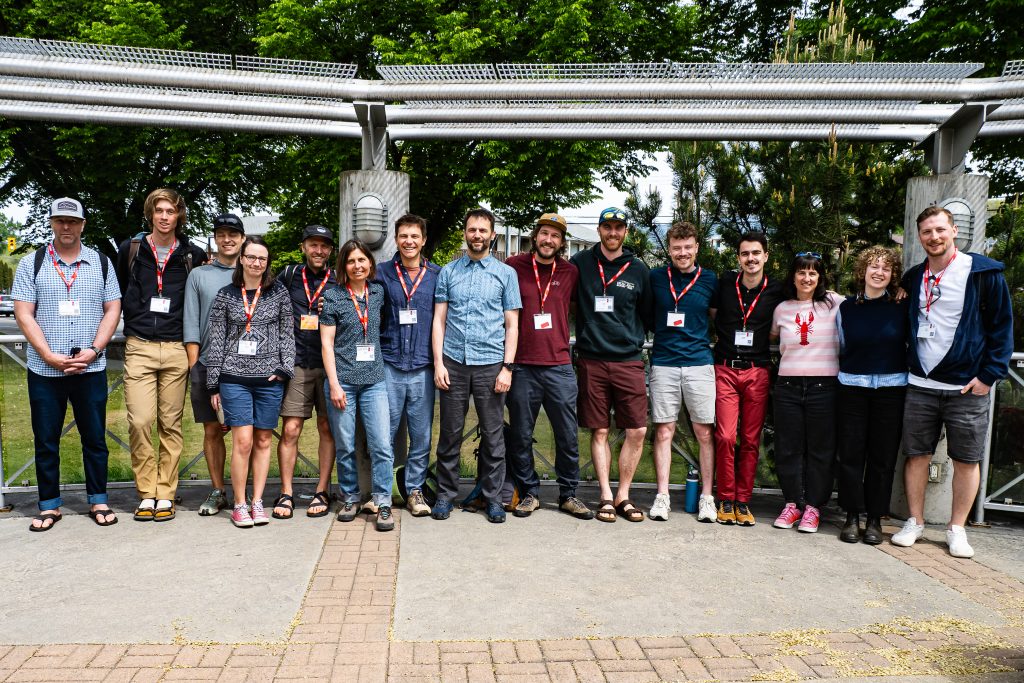
I know every ISSW I get sent a photo from the ASARC team reunion, so I guess we’ll be start seeing the SARP team reunion starting this year.
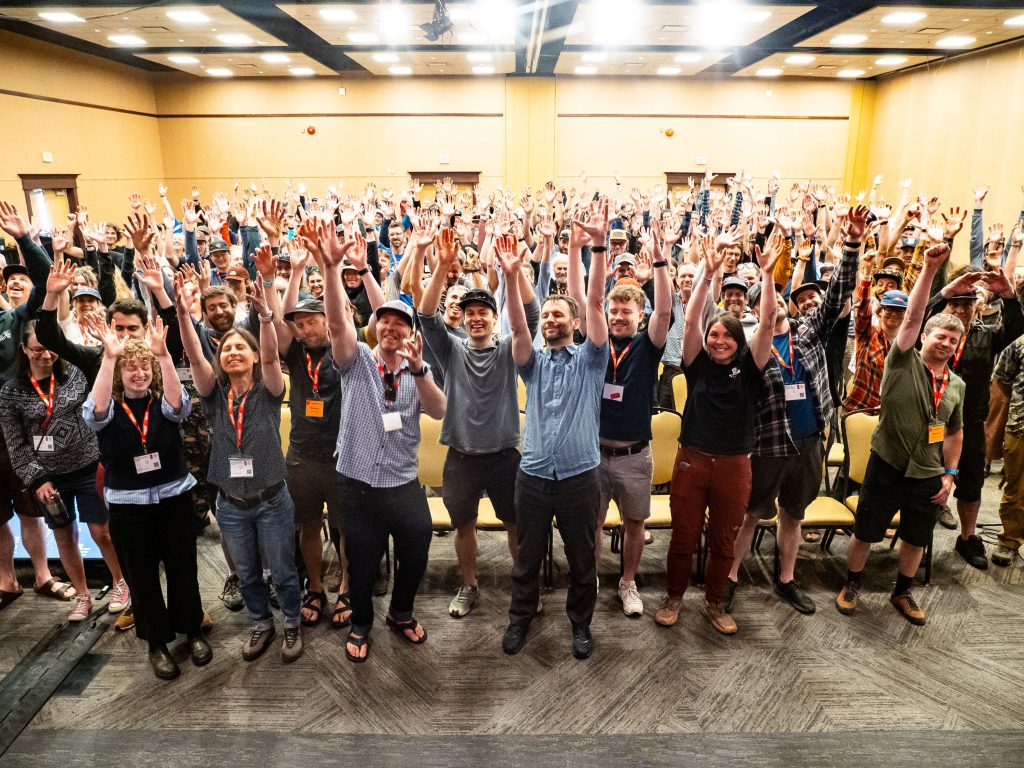
Yeah, totally. At the end of every spring meeting, we take a photo outside of the conference centre and we have these dinners in Penticton, and then one in Vancouver, and I’m sure we’ll have one at the ISSW. It’s fun to bring the team together.
You are about to move to Switzerland, and by the time people read this or watch this, you’ll already be there. Can you tell me how this role with SLF came about and when?
At the university, we’re fortunate that every seven years you get a study leave, which basically means you don’t have to do any teaching, or you don’t have to do any service, which gives you a lot more freedom to focus on research. I had the fortune to be invited to stay at the SLF for four months in total and see how the research works there and get a little bit more insight into the European community.
Jurg Schweitzer, who’s led the SLF for more than a decade—he’s been there for a long time, and he’s been there as the head for probably about 15 years—it came up that he’s going to retire soon. People approached me whether I would be interested in this position, which wasn’t really on my radar. I mean, I knew he was going to retire eventually, but it wasn’t that much on my radar. That led to some interesting conversations.
Then, when the job was posted, I thought, “Well, better give it a shot, see what happens, put an application in.” Which I did, and then I was shortlisted, I got interviewed, and last July, they offered me the position, which then put me into a very hard spot of actually having to make the decision.
After a lot of thinking back and forth, I decided to take on this challenge as the next phase in my career. I felt very honoured that they offered me the job and that they offered it to somebody who neither works or ever has been trained at the SLF. I feel that it’s a recognition of the Canadian community in some ways, that they value our approach and the stuff that I managed to create at SFU.
I think it will be very interesting to bring this perspective to Switzerland and see what I can do there, and influence avalanche safety research in a new way for me.
What was your pitch to the SLF that you think got you the job?
You would have to ask them.
I think I presented myself as an interdisciplinary researcher who has experience in working with practitioners. Compared to here, where I train students, I’m in the weeds with them on individual projects, where I really do that student mentorship—I will be focusing much more on strategic stakeholder relations over there, and try to enable other experts to do the best work they can.
Earlier we talked a little bit about the breadth of research that I do here. In some ways, we’re like a miniature SLF here. They do the same, but they have more actual experts in these different fields. I’ll be able to focus more on the overarching direction and stakeholder relations, and working with practitioners to set the research agenda. I think I have experience in that, and I know enough about the different fields that I can talk to people about it in a meaningful way, and then they can take it to the next level.
I think that interest in the interdisciplinary component, the connection with practitioners, I think that was one of the things that were attractive to them. But that’s just my guess.
Well, maybe I’ll ask about that if I get the chance.
SLF is the biggest avalanche program n the world—the biggest avalanche research programme in the world. Does this open opportunities for you? Are there topics that you think you can pursue, or want to pursue now that you’re going to have all these resources and you’re going to be working with some of the top minds in this field over there?
I have my ideas, but I really think my first step will be going there and better understanding their perspectives, and understanding the Swiss avalanche practitioner community and see where do they see the needs. How can researchers and practitioners work better together? Where do we think we can have the biggest impact? How can we collaborate more internationally?
When you look at the whole global avalanche safety community, we’re a small community. We have limited funds. There is no reason to compete. It’s better to work together. How can we do this in the best possible way? I have lots of ideas, but I think my first step will be to learn more about what’s happening there and understand how my Canadian experience applies or doesn’t apply, and how to work with the community there. That will be my first thing. Once I have a better understanding of that, then we can start to make strategic choices about what to pursue and how to orient the whole research program there to target those objectives.
Are there elements of your research that you’ve done here that you’ll want to take over to SLF?
I think some of my research in the area of risk communication is something that they don’t have over there. So, like in everything else, whether it’s snowpack modelling or dynamic avalanche models runout, or terrain mapping, there’s experts over there that do the thing. I think I can bring that risk communication research to the SLF, so that’s probably where I can still develop my own little research program there.
I guess a question people want to know is: are you going to make them implement the conceptual model of avalanche hazard? (laughs)
That’s a funny question. I’ll have to learn from them first. There’s lots of interesting conversations about the matrix of the European Avalanche Warning Services and the differences between the different models and why it was designed that way. I think both of these systems have strengths and weaknesses. Martin Perfler, one of my current PhD students, he will implement something along these lines in his models so that we can pull both avalanche problems and danger ratings straight out of the models.
I think it will be a very interesting part of his research, too. Sort of highlight, try to find the best combination of these two different approaches and see what modelling can do to overcome some of these challenges right now. The likelihood scale has been challenging, so how can we use models to bring better insight into that? I think that will be quite interesting.
Sorry, I asked that question somewhat jokingly, but I do know something being talked about is how do you merge the European matrix versus the conceptual model, and are there ways to create one system that can work internationally across different countries and different forecasting.
Yeah, totally. I mean, the conceptual model has now been around for a long time. We’ve learned what’s working and what’s not, and it’s not perfect. I think that would be an interesting opportunity to take it to the next level.
You touched on this a bit, but international collaboration, given your experience working in Canada and with people in the States, and now you’re going over to Switzerland, do you foresee, or do you think you’ll try to promote more international collaboration?
For sure. I mean, there’s already collaboration going on, but I think more exchange will be useful and it will be interesting to be at these meetings of the European Avalanche Warning Services and look at them from a Canadian perspective or North American perspective, and try to bridge or bring those communities more together. Even though I will move to Switzerland, I still feel very connected to the Canadian community.
What’s the future of SARP? I understand you’re taking a 2.5-year leave-of-absence, which is designed to provide a transition period for the program to keep going and find somebody else who can lead it in the future.
It’s very important to me that this continues, or that that academic avalanche research in Canada continues. Knowing from my own experience how hard it is to set something like this up, I think it would be best for us to build on what we have and have the program continue in some form or fashion.
I mean, in the end, it will depend on the person who takes this on to decide in what direction they want to take it. But that something continues so we don’t have the same situation again, like last time, where it just died at UBC, it died at the University of Calgary, and we have to build it from scratch again. So, using that momentum that we have would be beneficial.
Now that takes work from the industry to maintain that relationship to the university. We need to convince the university that avalanches are important and that this research position is important for the community here. And I think SFU is quite open about something like this, because they’re very proud of their community engagement. We fit within their tagline of the engaged university.
The idea is that I won’t resign immediately from SFU. I go on leave, because that allows me to remain being the supervisor of all my students and so I can bring them to graduation. And it also creates a little bit of time for us to bring somebody along or to create a pool of potential applicants for that academic position.
We’re currently interviewing applicants for a postdoc position (note: an individual has since been hired), and the idea is that we would give them two years to get to know the community, start working on a project in collaboration with the community to get their feet wet in some ways. and give them time to strengthen their academic CV so that by the time I will actually resign, that we have a pool of applicants that both know the industry and are also competitive in the academic world, because that’s the combination we need.
In the end, it will be SFU deciding who they hire, and we basically need to work with SFU to make sure they continue support this field. I have meetings set up with the key stakeholders: Joe from the CAA, Gilles from Avalanche Canada, Ross is going to come from HeliCat, and we meet with the dean, making sure they know each other before I leave. Hopefully by the fall we’ll have this postdoc in place who can then get started with their path. That’s what we’re currently working on to ensure we can use what we’ve built and move it forward.
You mentioned you still have several master’s students and PhD students that are doing their theses and their research right now. So, they’ll continue working and you’ll supervise them until this postdoc is in place? Is that the plan?
I’ll supervise them until graduation. We have two postdocs, with Florian (Herla) and John (Sykes). I think we have three PhD students and four master students. I will continue to support them and fund them. Because there’s nobody else in SFU who has this expertise, it’s not possible to pass them on. We’ll continue with their work until they’re graduating.
I have this question phrased, “What do you hope the legacy of SARP will be?” But I actually don’t want to say that because hopefully SARP keeps going. What do you hope your legacy will be with SARP?
I hope we can keep this alive. I hope that we we’ve contributed to the community in meaningful ways. I have the advantage to work with great people. There was this amazing tradition of avalanche research here before, and I hope that I was just able to carry that torch for a little while, and now hopefully successfully pass it on to the next generation.
What are you going to miss most about working in the Canadian avalanche industry?
The people. I’ve worked with some tremendous people here who’ve really shaped my thinking and helped me to contribute. The most successful projects were these collaborations with practitioners, where we both had skin in the game, and we were both together in the weeds. I know I still have these relationships, but it will be different across the Atlantic. I’ll have to rebuild, I’ll have to find new connections like this in Switzerland. I’m aware of how important these connections are. I bring certain skills and certain perspectives to these projects, but they would go nowhere without the practitioner’s perspective of why this matters, how can we actually create change. Those connections are really important and that’s what I’m going to miss those the most.
I’ve got two questions left, which are about the Canadian Avalanche Association, since that’s who we’re doing this interview for. But before that, I tried to dig up some dirt on you. Unfortunately, I didn’t get much—I was kind of disappointed. I did learn you used to be a pretty competitive handball player.
That is true.
I know Canada doesn’t have much of a handball scene, so are you looking forward to getting back to that?
No, there’s not. I think there was one team in Vancouver and it was just a group of Europeans, Germans, and Scandinavians, and some from the Slavic countries, and so on. So I did play a little bit here at one point. Edmonton has a league, it’s a little bit bigger there. It was big in my high school years and early-20s. As you said, I was playing quite competitively, but that’s a long time ago.
All right. Sounds good.
I think I might have an idea of where you got that information from.
My lips are sealed. I just wanted to get that one in there. Something a bit more lighthearted before we finish.
The questions we ask everybody for these interviews. In your opinion, what do you think is the biggest impact of the Canadian Avalanche Association?
I think it’s really the foundation of our community. We all go through the same courses, we all come together at the spring meetings, The Avalanche Journal is the common platform for exchanging ideas. I think it’s really holding our community together and it’s creating a common language or a common understanding that allows practitioners and researchers to see the commonalities, even though we work in different contexts. When compared to other countries, I think we’re a much more coherent community, and we work together. I think that really shows, and the CAA is the foundation of that. I think that’s the key—the biggest impact that the CAA has, whether it’s creating the standards or running the InfoEx, or putting on these events, it all builds communities.
Finally, what do you think the CAA needs to do to stay relevant going forward?
Keep doing what you’re doing is one thing, because as I just said, it’s the important foundation.
I think the other thing that I would say is to be more involved in research and development. And that comes obviously from somebody who does research and depends on this relationship with the community, where that’s really important.
But I think it would be useful at a time where we’re going through a substantial change where technology and AI are new tools that have the potential to change our industry quite a bit.
In order to do this meaningfully, I think we need some leadership that can bring all the community together, and create a shared vision of where this is supposed to go, and then work with partners to make it happen in a meaningful way. I hope the CAA can take on a bit of a leadership role there, because otherwise it’s these individual projects or companies that are going after certain things, but it’s going to contribute less to an overall direction in the community.
It needs a leader like the CAA who can do that. And it will take time and it will take an awareness that, like our community in general, we’re very operationally focused, it’s a day-to-day business, and that requires a little bit more looking far into the future. I think. individual practitioners and operations don’t really have the time to do this. The CAA has the opportunity to make space for that and create a platform for facilitating this. Maybe that was a bit of a pitch in terms of how I hope researchers and practitioners can work together in the future, where that relationship and that shared visioning is really important.
Thanks so much, Pascal. I really appreciate your time doing this, because I know how busy you are. Every time I’ve asked you to write an article, just looking at your workload, I really appreciate your contributions in my time doing The Avalanche Journal. I wish you the best of luck in Switzerland and we’ll see you at future ISSWs.
Thank you. It was really fun to have this conversation and reflect on my time here with the community. It’s not going to end because I’m moving on. I’m looking forward to staying connected. And I’ll see you in Penticton.